Public-Private Partnerships Will Not Save U.S. Infrastructure

This week, while Donald Trump ensnares himself in the most serious threat to his presidency to date, Congress is, to some extent, continuing with the typical business of government. A series of hearings during “Infrastructure Week” are focusing on the administration’s rumored infrastructure plan.
Although the White House has been talking up private infrastructure investment as a replacement for public funding, a panel of experts told Congress that, even with perfectly executed public-private partnerships, the federal government still needs to provide its own support — especially for projects, like transit lines, that aren’t guaranteed to generate toll revenue for profit-seeking investors.
This morning, Transportation Secretary Elaine Chao appeared before the Senate’s Environment and Public Works committee. Chao didn’t reveal much, but she did say that the White House will release a statement of “principles” about infrastructure later this month before handing off an actual infrastructure plan to Congress sometime later this summer.
Whether that’s actually going to happen is anybody’s guess. So far, the administration has given two substantive clues about its infrastructure agenda. One is a budget proposal that guts transit programs. The other is a campaign white paper that recommends using tax cuts to promote private financing of public infrastructure projects.
While Chao was circumspect, both topics got airtime at a Senate subcommittee hearing yesterday, where a panel of experts weighed in with advice on privately financing infrastructure.
Public-private partnerships have a role, said Virginia Transportation Secretary Aubrey L. Lane, but they are not a silver bullet that allows taxpayers to get something for nothing. The public pays for infrastructure one way or another, whether through tolls, taxes, fares, or fees, and it’s up to the government to make sure taxpayers are getting the best deal possible.
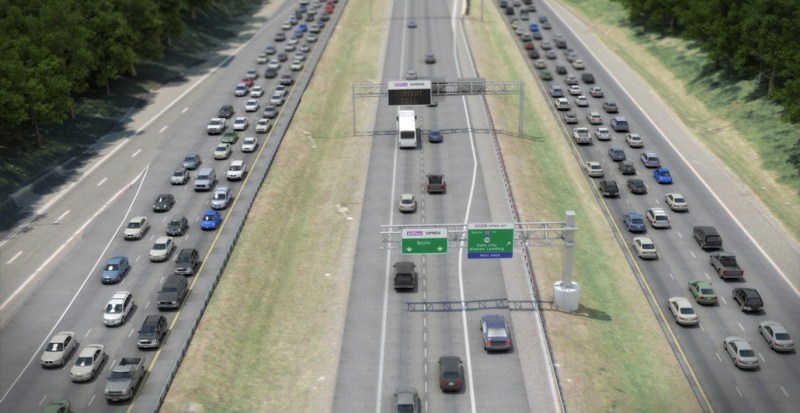
Virginia’s state DOT has done five public-private partnerships since 2007 — all for tolled highway expansions. For HOT lane construction on Interstate 66, Lane said, VDOT modeled how it would pay for the project using public financing before asking the private sector if it could come up with a better solution. That way, the state had a fallback position during negotiations with private firms.
Not every state has the know-how to navigate these complex negotiations. And not every project is going to generate the profits that will attract interest from the private sector. In fact, there are just 42 public-private surface transportation projects in the entire United States, according to FHWA statistics Lane cited. There are 35 states that have never had a single public-private transportation project.
With so much talk about promoting public-private partnerships coming out of the Trump administration and Congress, Lane is concerned that federal incentives could tilt the playing field to private financing, even if it isn’t the best deal for taxpayers. “Many of these concepts would provide an incentive that is only available if a project is financed privately,” Lane said in his testimony. “This creates distortions in procurements that will undercut the public’s negotiating position.”
Even with an expertly negotiated public-private deal, transportation projects ultimately require taxpayer dollars.
Los Angeles Mayor Eric Garcetti, who chairs the U.S. Conference of Mayors’ newly-formed infrastructure task force, said that means pairing dollars raised locally, like with the multi-modal Measure M ballot initiative in Los Angeles, with a reliable source of federal funds. “In the election in November, when everyone was focused on the presidential election, in cities throughout America, $230 billion in infrastructure initiatives were approved by voters,” Garcetti testified, referring to ballot initiatives that primarily fund transit. He added later: “Could we have our federal tax dollars along with our local tax dollars to make this happen?”
Supporters of urban transit like Garcetti weren’t the only ones looking for a reliable partner in the federal government. “Long-term, consistent federal funding remains vital,” testified Tim Gatz, executive director of the Oklahoma Turnpike Authority. “States must be able to anticipate the availability of resources in order to plan, design, and build projects.”
“The binding constraint facing state and local governments is insufficient tax revenue. Public-private partnerships and investor tax credits do not solve this problem,” Kevin DeGood, director of infrastructure policy at the Center for American Progress, told the subcommittee. “There are no shortcuts to rebuilding America’s infrastructure.”
Streetsblog has migrated to a new comment system. New commenters can register directly in the comments section of any article. Returning commenters: your previous comments and display name have been preserved, but you'll need to reclaim your account by clicking "Forgot your password?" on the sign-in form, entering your email, and following the verification link to set a new password — this is required because passwords could not be carried over during the migration. For questions, contact tips@streetsblog.org.