Amtrak Wants to Compete With Planes and Roads

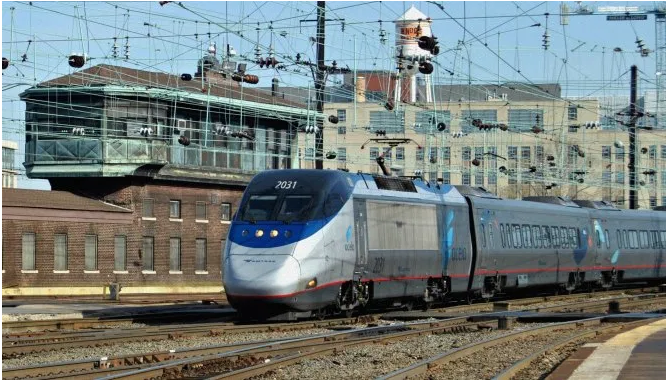
Amtrak could become profitable as soon as next year as it beefs up short-distance service across the country as more Americans explore cost-efficient, less-polluting alternatives to driving and flying between cities.
The railroad company carried a record 32.5 million customers in the fiscal year that ended in September, a 2.5-percent increase from the previous year, Amtrak officials said on Friday. Its rise in rail ridership mirrors the growth in commuter rail, which has added passengers in suburban areas nationally this year compared with last year.
And Amtrak is poised to continue growing after it posted it best operating performance in history, losing about $29.8 million out of a total operating budget of $3.3 billion — or 82.6 percent less in losses than the previous year, the company said.
Officials now expect the company to earn a profit next year for the first time it the railroad’s 50-year history.
“It is an inevitability that intercity short-haul passenger rail is going to have to grow in America,” Amtrak Board Chairman Anthony Coscia told reporters. “Congestion is going to get worse and high-quality, efficient service only way we’re going to make inroads in carbon emissions. We have to figure out a new methodology to serve that 300-mile short haul market with modern trains.”
The company has bold plans in the near future to expand routes, update its fleet, and improve reliability as Congress begins discusses renewing hundreds of billions of dollars in transportation spending next year.
Amtrak has already started experimenting with new routes and increased frequency on the Northeast corridor and other localities. In September, the railroad launched nonstop service once per day between New York and Washington, D.C. — a two hour-thirty-five-minute, $130 ride that could actually eliminate the need for air travel. And there’s a long-term plan to provide a less-expensive ticket in the New England and Mid-Atlantic regions to make Amtrak more of a long-distance commute option.
In the Midwest, Amtrak will add trains to the popular 86-mile Hiawatha line between Chicago and Milwaukee. And the company is planning to spend more money expanding frequency on the West Coast with more trains between Los Angeles and San Diego and between Portland and Seattle where demand for passenger service is growing.
“You cannot cut your way to financial performance. There isn’t a formula to allow us to reduce cost,” Coscia added. “You have to grow revenue by adding customers and providing more opportunity to travel around by railroad.”
Amtrak’s focus on short intercity trips that compete with car rides and flights in dense urban corridors is a sound strategy. But the passenger railroad shouldn’t abandon its long-distance routes through rural communities, transportation advocates say.
“It is important for these smaller cities and less-densely populated states to be connected by passenger rail. It’s an economic issue for people who live there,” Transportation for America Chairman John Robert Smith told Streetsblog.”If it gets to be only Northeast corridor, you’re going to lose the political support from senators and members of congress spread across the country who suddenly no longer have any passenger rail across the state, which means the Northeast corridor costs will become a burden of the states served by the train.”
Amtrak noted that ridership on its long-distance routes was up 1 percent from the previous fiscal year. A series of positive discussions among Republican lawmakers in the Deep South could revive passenger rail service between New Orleans and Mobile, Ala., and the railroad company is also hopeful civic and business leaders in Michigan would support an extension of the Wolverine Line to Toronto
But on-time performance has lagged severely on several of Amtrak’s preeminent cross-country routes costing the railroad tens of millions of dollars and hindering its future plans, according to a recent Amtrak inspector general audit.
Congress may ultimately have to take the lead to ensure that Amtrak’s passenger trains can run more promptly and at faster speeds without being delayed by freight companies.
“Until then you’ll have people waiting on trains running late for 30 minutes, three hours, or five hours and that’s not a system you can sustain that way,” Smith said. “States and localities can’t solve that. It has to be solved at federal level.”
Streetsblog has migrated to a new comment system. New commenters can register directly in the comments section of any article. Returning commenters: your previous comments and display name have been preserved, but you'll need to reclaim your account by clicking "Forgot your password?" on the sign-in form, entering your email, and following the verification link to set a new password — this is required because passwords could not be carried over during the migration. For questions, contact tips@streetsblog.org.