Policy in Practice: Hilton Wants to End the LCFS. What does it actually accomplish?

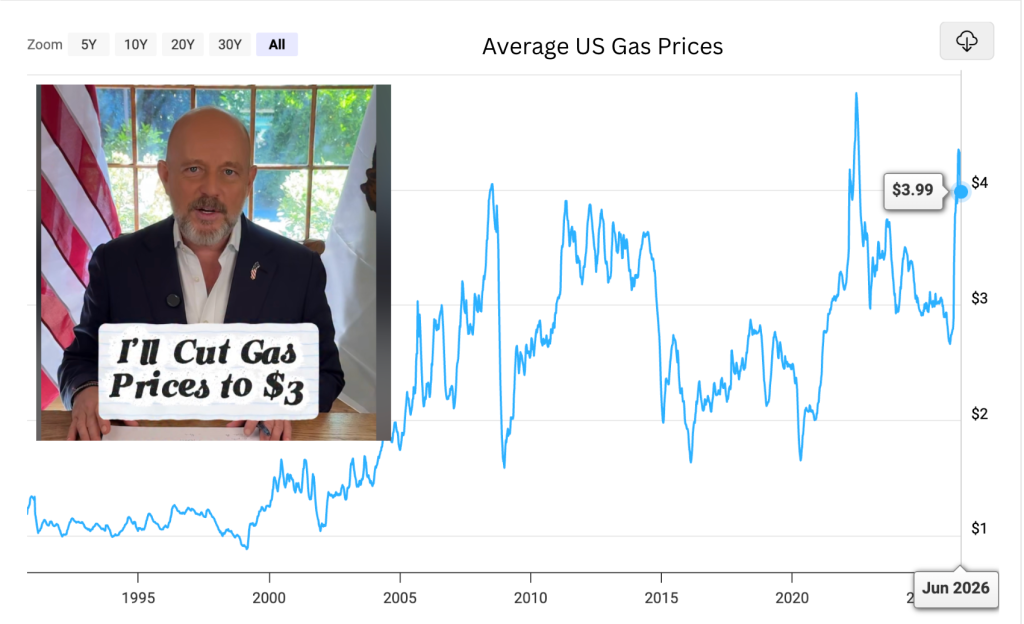
Despite running in a near-tie with former U.S. Health and Human Services Secretary Xavier Becerra in the primary, recent polling shows Republican Steve Hilton trailing in a potential general election matchup.
To close that gap, Hilton has taken aim not only at Becerra but at the Democratic Party that has controlled the governor’s office since Republican Arnold Schwarzenegger left office in 2011. One of Hilton’s favorite targets is California’s climate policy, which he frequently blames for the state’s high gasoline prices.
Hilton has promised to reduce gas prices to $3 per gallon, which is wildly unrealistic given that no state has prices at that level today. However, California does have the highest gas prices in the country, and he could probably reduce the cost somewhat by reducing or eliminating California’s gas tax, cap-and-trade program, Low Carbon Fuel Standard, and other fuel-related charges. Of course, that would lead to badly underfunded and hamstrung transit systems, trapping people in their cars and increasing the demand for gasoline, so any gains in gas prices would likely be short lived anyway.
However, it’s important to note that Hilton does not believe in Climate Change and thus sees any effort to combat it as a cost on taxpayers and not a benefit to the state and the world. While this leads to snappy slogans and quick-fix promises, it ignores the real-world costs of policies that would save pennies but destroy our air quality while hastening the already devastating impact of man-made Climate Change.
Between now and November, Streetsblog will examine transportation and environmental proposals from both major-party candidates in our “Policy in Practice” series. This story looks at Hilton’s pledge to eliminate California’s Low Carbon Fuel Standard (LCFS) through executive action on his first day in office.

What Is the Low Carbon Fuel Standard?
California’s Low Carbon Fuel Standard is a market-based climate policy designed to reduce greenhouse gas emissions from transportation fuels. First adopted by the California Air Resources Board in 2009, the program requires fuel providers to gradually lower the carbon intensity of the fuels they sell. Carbon intensity measures the total greenhouse gas emissions associated with a fuel throughout its lifecycle, including production, transportation, and use.
Rather than mandating specific technologies, the LCFS uses a credit system. Fuels with lower carbon intensity—such as electricity, renewable diesel, hydrogen, and some biofuels—generate credits, while higher-carbon fuels such as conventional gasoline and diesel generate deficits. Fuel suppliers must either lower the carbon intensity of their products or purchase credits from cleaner fuel providers.
The program is intended to encourage investment in cleaner transportation technologies while giving companies flexibility in how they meet emissions targets. Since its adoption, the LCFS has become a central part of California’s climate strategy, helping support electric vehicle charging infrastructure, renewable fuel production, and other efforts to reduce emissions from transportation, the state’s largest source of greenhouse gases.
According to state estimates, the LCFS added approximately 18 cents per gallon to gasoline prices in April 2026.

What Happens if California Eliminates the LCFS?
Hilton has promised to eliminate the LCFS on his first day in office. If the entire cost of the program were passed directly to consumers, removing it would lower the average price of gasoline by about 18 cents per gallon. That 18 cents per gallon doesn’t go into a state fund or get collected by the government i.e. it’s not a tax. Instead, it reflects the cost of complying with the Low Carbon Fuel Standard’s credit market.
With California gasoline currently averaging roughly $5.84 per gallon, that would reduce the average price to about $5.66—far short of Hilton’s broader promise of $3 gasoline.
Eliminating the LCFS is the easiest, since it was created by executive order it can be removed by one as well. Also, because by itself it doesn’t run as a government-grant program, there’s no immediate visible impact to transit service. But what that 18 cents does fund is $4-$5 billion annually in transitioning from a gas-powered vehicle system to an electric one.
Utilities, EV charging providers, transit agencies, and fleet operators earn LCFS credits when electricity is used as a transportation fuel. Revenue from those credits helps fund public charging stations, electric bus infrastructure, fleet electrification projects, and other investments intended to reduce transportation emissions.
Transit agencies operating zero-emission buses also receive LCFS revenue, helping offset the costs of purchasing, charging, and operating electric fleets. Eliminating the program would not force agencies to abandon electrification, but it would make future transitions more expensive at a time when many transit systems already face budget shortfalls.
The program has also become a major driver of California’s renewable diesel market and other clean-fuel investments. Without it, demand for lower-carbon fuels would likely decline, and future investment in alternative fuel production could slow.
The immediate impact on local air quality would likely be modest because the LCFS is primarily a greenhouse-gas reduction program rather than a conventional air-pollution program. Over time, eliminating it would remove one of California’s primary tools for reducing transportation emissions and encouraging cleaner alternatives to gasoline and diesel.
Hilton, like President Donald Trump who endorsed him, may not see value in transitioning to an electric-based transportation system. But, over the first decade and a half of the program, it has reduced transportation emissions by over 10%, removing 320 metric tons of carbon from the air. It’s also proven to be popular with transit riders. Bus fleets that have transitioned to electric buses report upticks in ridership with the cleaner, quieter buses. And of course in the Bay Area the electrified Caltrain saw a whopping 76% increase in ridership just months after electrification.
Your average voter may not know the name of the LCFS program, and that may make it a target in the hands of a governor who wants to cut regulations and doesn’t worry about pollution. But if the program were to go away, it would take away the funding that will help California’s transportation network move to the future.
Streetsblog has migrated to a new comment system. New commenters can register directly in the comments section of any article. Returning commenters: your previous comments and display name have been preserved, but you'll need to reclaim your account by clicking "Forgot your password?" on the sign-in form, entering your email, and following the verification link to set a new password — this is required because passwords could not be carried over during the migration. For questions, contact tips@streetsblog.org.