California’s Cap-and-Invest Crisis, Explained

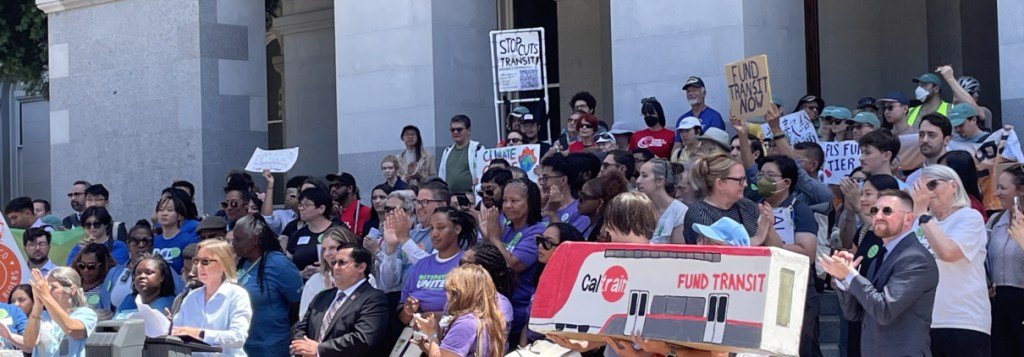
The following post was first published by Transform California and serves as a companion piece to yesterday’s coverage of the rally in the Capitol.
Last year, Governor Gavin Newsom and the California Legislature reauthorized Cap-and-Trade as Cap-and-Invest, extending our state’s signature climate program. Transform and our housing, transit, and environmental justice allies worked with the Legislature to craft a program that preserved continuous funding for critical transportation, housing, clean air, and clean water programs. The outcome should have led to about $2 billion annually for affordable housing near transit, intercity rail, low-carbon transportation, community air protection, and safe drinking water.
Then, this May, the California Air Resources Board, which oversees the Cap-and-Invest Program, announced an unscheduled and unexpected rule change that wiped out the $2 billion slated for those programs.
If your eyes glaze over at the words “rule change,” you’re not alone. The logistics of this fight can feel arcane and obscure, making it difficult to follow. But this issue is too important to leave in the hands of lobbyists and policy wonks. It would lead to cuts to free fares for youth and low-income discount programs, stop needed affordable housing developments, and undercut equity-focused community transportation planning.
We break it down so everyone who cares about climate change, equity, and affordability can understand what’s going on in Sacramento.
What is Cap-and-Invest?
The idea behind Cap-and-Trade, and now Cap-and-Invest, is to penalize big polluters that contribute the most climate-changing chemicals to our atmosphere and incentivize the transition to clean energy and industry. Industrial emitters were given a certain amount of credits, reducing over time, and those who reduced emissions faster could sell their credits to others. Tesla has famously gotten much of its income from selling carbon credits.
How is Cap-and-Invest money invested in California?
The money California receives from its carbon credit auction goes to fund a specific set of programs. Under the agreement reached last year, the funding is doled out in tiers, with the first billion going to High-Speed Rail, and so on, as we explained in an earlier post about this issue. The transportation, housing, and clean air and water programs are in Tier 3 and only receive funding after the first $2 billion to High-Speed Rail and the legislature’s discretionary programs is disbursed.
Revenue in Cap-and-Invest can vary depending on the price of carbon credits at auction, so funding is never guaranteed, but Tier 3 was projected to receive around $2 billion in 2026.
Then CARB changed the rules governing Cap-and-Invest. Board members appointed by the governor voted, over loud objections from advocates, to extend additional free credits to polluters, including oil companies raking in record profits as oil prices soared.
This budgetary bait-and-switch is emblematic of California’s self-defeating climate policy. We continue to expand highways, undermining the goals of our state’s Climate Action Plan for Transportation Infrastructure (CAPTI) to reduce transportation emissions, which account for half of California’s greenhouse gas emissions. The governor has repeatedly cut funding for the Active Transportation Program, which funds better infrastructure for biking, walking, and public transportation. Our public transit systems have been on the brink of crisis for several years due to lack of government support. Now, with this reduction of Cap-and-Invest funding, California is cutting off programs with a proven track record of combating climate change.
Impacts of housing and transportation programs on climate
A 2025 report analyzed the effects of the Affordable Housing and Sustainable Communities Program (AHSC), a program that supports affordable housing development near transit. Since its inception eight years earlier, the program had facilitated the building of over 20,000 units of affordable housing and removed 5.7 million metric tons of climate-killing pollutants from the air.
Investing in transit and affordable, infill housing benefits everyone. State housing investments attract private and federal investment, making it possible to construct more homes for low-income families and easing California’s housing crisis. Public transit provides affordable transportation, reduces tailpipe pollution, eases air pollution’s health burdens, and reduces traffic congestion.
Without continuous funding from the Greenhouse Gas Reduction Fund, the AHSC won’t be able to support the construction of 2,500 homes this year, leaving 5,000-10,000 people without stable housing for another year. Transit systems will delay repairs and improvements, increasing their eventual cost, without funding from the Transit and Intercity Rail Capital Program (TIRCP) and Low Carbon Transit Operations Program (LCTOP). Starved of GGRF funds, the AB 617 Community Air Protection Program and the Safe & Affordable Drinking Water Program (SAFER) will leave vulnerable frontline communities unsupported in their struggle to protect their health and their families.
Transform and our allies aren’t giving up.
How can we preserve funding for critical programs?
California’s budget was finalized in June, but the legislature can pass trailer bills to amend it until the end of August. That’s why, on August 10, Transform rallied with hundreds of other advocates on the steps of the Capitol to call attention to these unacceptable cuts.

We then met with 47 legislators and left hopeful that at least some funding might be restored this year. We also laid the groundwork to restore funding for these programs next year.
You can help. Call or email your assemblymember and senator and make the demand from our coalition letter: “First, use increased revenues in the general fund this year to fund ‘Tier 3’ affordable housing, transit and clean air programs at the level promised in SB 840 last year, and Second, in light of the CARB cuts potentially zeroing out these programs in future years, to find a permanent solution for GGRF so Tier 3 programs receive the full funding promised in SB 840.”

Streetsblog has migrated to a new comment system. New commenters can register directly in the comments section of any article. Returning commenters: your previous comments and display name have been preserved, but you'll need to reclaim your account by clicking "Forgot your password?" on the sign-in form, entering your email, and following the verification link to set a new password — this is required because passwords could not be carried over during the migration. For questions, contact tips@streetsblog.org.