Gold Runner Bus Study Sparks Push for a Seamless Statewide Transit Network

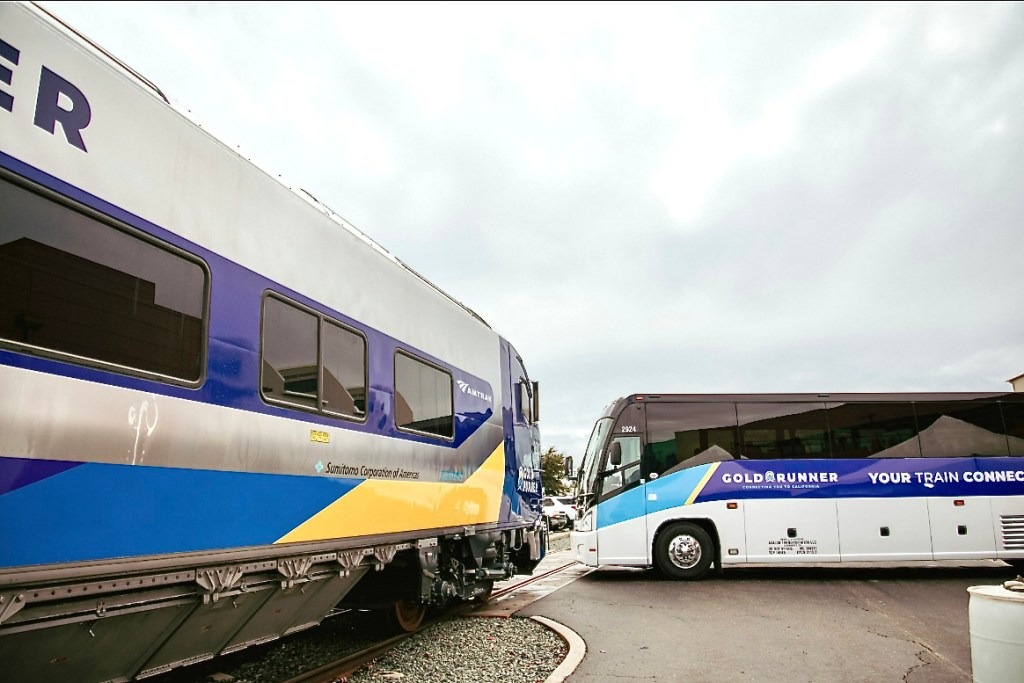
For decades, California has invested billions in passenger rail while leaving travelers to navigate a patchwork of local bus systems, disconnected schedules, and separate ticketing systems. A new planning effort could begin to change that…if state officials are willing to think beyond incremental improvements.
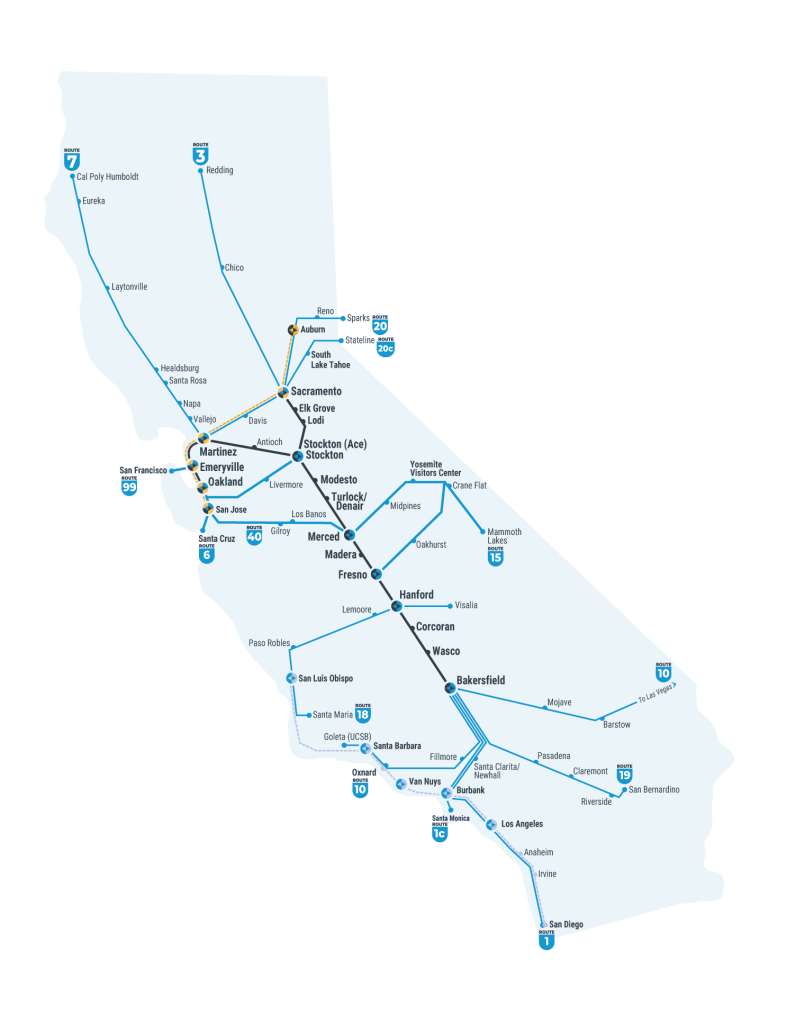
The San Joaquin Joint Powers Authority (SJJPA), which manages California’s Gold Runner rail service, has released chapters one and two (study overview and existing conditions) of a draft study examining the future of the Gold Runner Thruway Bus network, the web of connecting buses that extends rail service to more than 100 communities across California and neighboring states. Draft recommendations are expected later this month, so if you have thoughts, make your comments now. There are two ways to give feedback: through an SJJPA survey, or a feedback form on the bottom of the main study page.
While the draft focuses on improving reliability, customer experience and future expansion of the existing network, a coalition of transit advocates is urging the agency to use the study as a blueprint for a truly statewide transit network where buses, trains and regional transit providers operate as a seamless system.
The draft Gold Runner Thruway Bus Study examines opportunities to strengthen service reliability, improve passenger amenities, coordinate schedules and identify future expansion opportunities. The agency is seeking public feedback before completing a final report later this year.
Transit Advocates: Now Is the Time to Think Bigger.
In a joint letter to SJJPA staff and board members, representatives from Seamless Bay Area, the Transbay Coalition and Hiking by Transit call the Gold Runner Thruway network “a critical part of California’s integrated regional transportation network” while arguing that the final report should focus on building a statewide network rather than simply improving existing bus routes.
Instead of creating entirely new services, the coalition recommends expanding partnerships with transit agencies that already operate long-distance routes. Their letter highlights existing services such as the Sequoia Shuttle, V-Line between Fresno and Visalia, Sage Stage in northeastern California and Eastern Sierra Transit as examples of routes that could become part of a more unified statewide system through coordinated schedules, integrated ticketing and joint marketing.
“People throughout California need and want to get to all sorts of destinations around the state, and a Gold Runner system that works to seamlessly integrates thruway buses, rail, and other regional services makes California a more accessible place for all,” said Carter Lavin, co-founder of the Transbay Coalition.
The coalition also argues that the passenger experience should drive future planning. Among its recommendations are reducing long transfer times by better coordinating bus and train schedules, adopting “service-led planning” principles for future expansions, establishing minimum comfort standards for contracted coach operators, expanding bus-only ticketing throughout the network, extending contactless Tap2Ride payment to Gold Runner buses, and providing riders with real-time bus tracking and clearer information about guaranteed connections.
For advocates focused on expanding car-free access to California’s outdoor destinations, better coordination could unlock trips that are technically possible today but impractical because agencies don’t coordinate their services.
“Major California outdoor destinations like Sequoia National Park and the Lost Sierra have transit service, but without a statewide vision for a true network with coordinated schedules, there’s no good way for Californians to take advantage of transit for their trips,” said Evan Tschuy, founder of Hiking by Transit.
“The Gold Runner thruway network has been growing post-COVID with partnerships with transit agencies around the Central Valley, acting as schedule coordinator and ticket vendor for buses to Redding, Chico, and Visalia. Extending the network and continuing to focus on making better, more efficient transfers to existing routes operated by potential partner agencies would allow riders to get further, faster.”
The advocates are encouraging Californians to weigh in while the draft is still under review, arguing that the final report should not simply improve today’s Thruway network but lay the groundwork for a statewide system where passengers can travel from almost anywhere in California to almost anywhere else on a single, coordinated trip.
Streetsblog has migrated to a new comment system. New commenters can register directly in the comments section of any article. Returning commenters: your previous comments and display name have been preserved, but you'll need to reclaim your account by clicking "Forgot your password?" on the sign-in form, entering your email, and following the verification link to set a new password — this is required because passwords could not be carried over during the migration. For questions, contact tips@streetsblog.org.