Streetsblog San Diego: Finish the Rapid 215

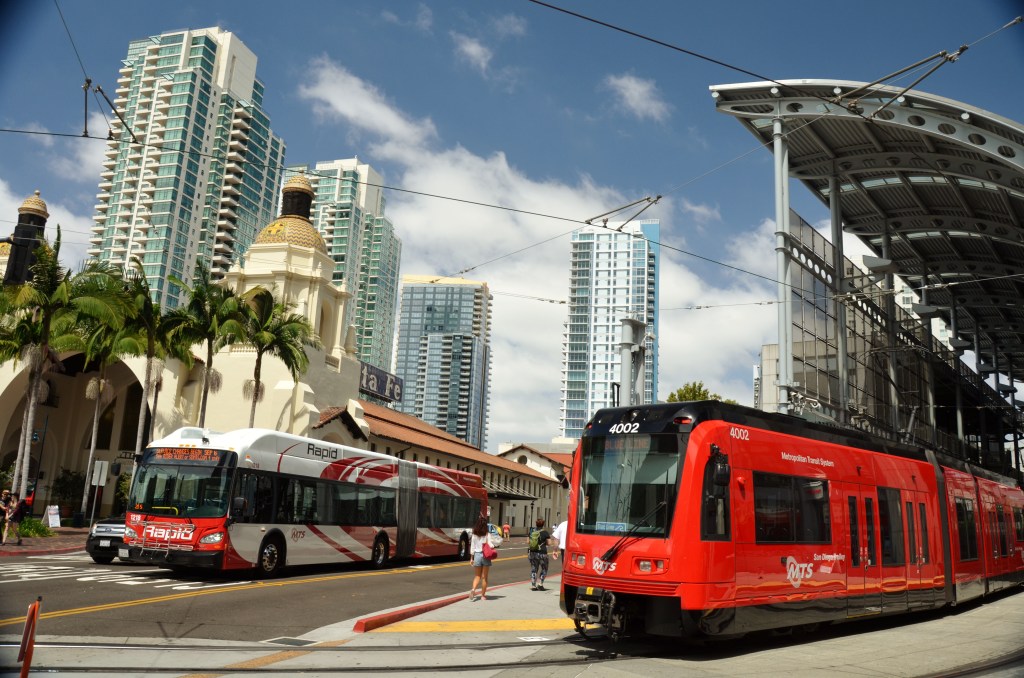
In advance of the launch of Streetsblog San Diego later this week, we’re going to start posting a few stories as though the site had launched to give readers a real sense of how SBSD will read. Kesav “KC” Gupta is the transportation lead at SD350.
San Diego likes to talk about climate action, equity, and building neighborhoods where people can live without depending on a car. Spend a week riding MTS’s “Rapid” 215 and you’ll realize how difficult this is.
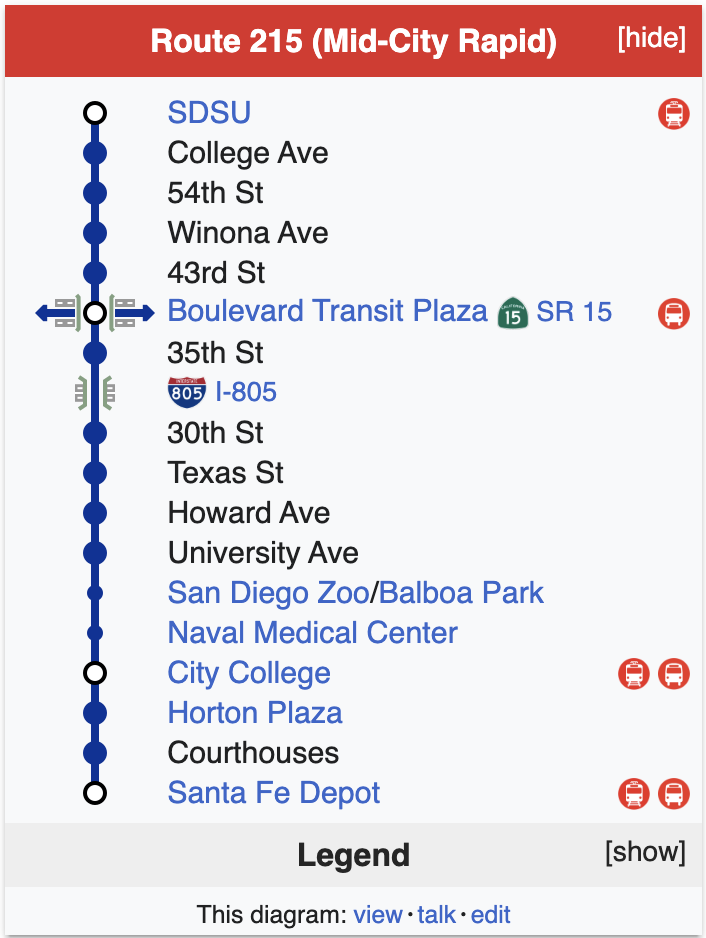
The 215 is San Diego’s third highest ridership bus route and the closest thing we have to true rapid bus transit. Running along El Cajon Boulevard, it connects some of the city’s densest and most diverse neighborhoods with Downtown, Balboa Park, Mid-City, and and our newly minted R1, SDSU. For thousands of people every day, the 215 is how they get to work, make it to class, see a doctor, pick up groceries, or visit family. On top of this, the Central Mesa, despite its density and pre-war urban design, is not connected to MTS’s trolley network. The Rapid 215 can fill this gap while we wait for the Purple Line to be built (or maybe even the revitalization of the streetcar).
The Rapid 215 was supposed to be fast, frequent, and reliable. It was envisioned as a corridor that could make transit feel competitive with driving in a city built around the automobile. Instead, buses routinely get stuck in the same traffic as everyone else because many of the features that make bus rapid transit work remain inconsistent or absent altogether. What was once envisioned as roughly a 30 minute end-to-end trip can now take more than 50 minutes during peak periods.
As transit rider Camry Wilkins, a Navy veteran and USD student who relies on the 215, put it:
“The Rapid 215 remains my primary way of getting around San Diego, yet week after week it falls short of its rapid designation. Buses are stuck in traffic, signal priority provides little benefit, and slow boarding turns routine trips into long, unreliable journeys that make it harder for everyday residents to depend on transit.”
San Diego leaders should commit publicly to restoring the original vision for the corridor: a bus that can make the trip from Downtown to SDSU in approximately 30 minutes during peak travel times. Riders deserve a system that is measured by outcomes they can actually feel in their daily lives.
Continuous Bus-Only Lanes
The 215 cannot be rapid if it spends large portions of its route sitting in mixed traffic. The city should close every remaining bus lane gap and upgrade the corridor to continuous, red painted, 24/7 bus-only lanes designed to modern standards.
Those lanes also need to be enforced: California law now allows camera enforcement, and San Diego should use it.
All Door Boarding
All door boarding was promised when the route was first planned, and it remains one of the simplest ways to make service faster.
Research from UCLA’s Institute of Transportation Studies found that all door boarding reduced dwell times by an average of 16% on Metro’s Route 720 in Los Angeles.
Real Transit Signal Priority
Buses should not sit through full signal cycles while riders watch minutes tick away. Studies have found that effective transit signal priority can reduce overall travel times by roughly 15% and cut intersection delays in half.
Cities around the world use them every day. They are practical, proven improvements that would make transit faster, more reliable, and more attractive to people who have other transportation choices while improving daily life for the riders who already depend on the service.
It should not be controversial to prioritize a full bus over a line of single occupancy vehicles. San Diegans deserve a bus line that functions like rapid transit, not one that gets trapped in the same congestion as everyone else.

Streetsblog has migrated to a new comment system. New commenters can register directly in the comments section of any article. Returning commenters: your previous comments and display name have been preserved, but you'll need to reclaim your account by clicking "Forgot your password?" on the sign-in form, entering your email, and following the verification link to set a new password — this is required because passwords could not be carried over during the migration. For questions, contact tips@streetsblog.org.