Op/Ed: CEQA Reform Bill Will Get Final Assembly Hearing on Wednesday

(Sean Noonan is an environmental planner. He also teaches urban planning at CSU, Fullerton.)
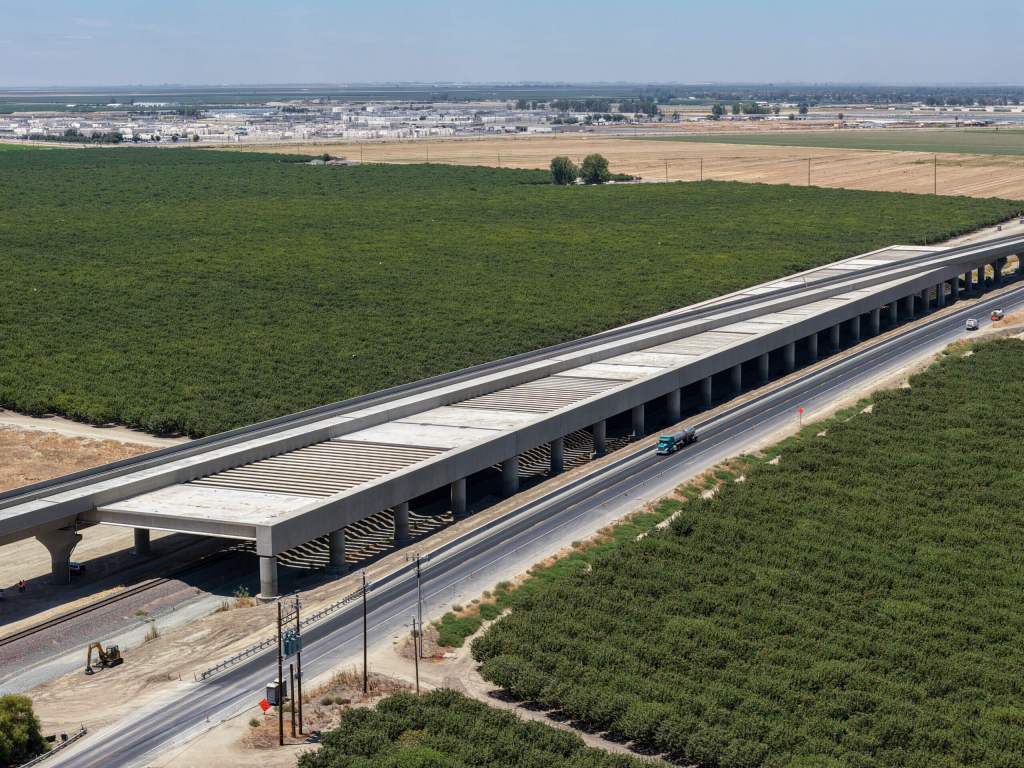
By facilitating road and highway widening projects, Assembly Bill 2059, introduced by Lori Wilson (D-Suisun City) could reshape rural development patterns in California. AB 2059 would modify the California Environmental Quality Act (CEQA) to specify that most transportation projects located primarily in “nonmetropolitan counties” would be presumed to have a less than significant impact related to vehicle miles traveled (VMT).
This presumption would apply to transportation projects that are located at least 80 percent within one or more “nonmetropolitan counties.” Road and highway widening projects would need to demonstrate an evacuation or safety purpose, which is a standard that would likely be easy to satisfy, given roads’ routine use by first responders. Proponents emphasize that the bill is intended to facilitate critical transportation projects addressing evacuation, safety, and goods movement needs in rural areas, including road widening and other capacity-increasing improvements.
Passed the Assembly Natural Resources Committee on April 20, 2026, and subsequently amended on April 22, 2026, AB 2059 will be heard on Wednesday, May 13, 2026 by the Assembly Appropriations Committee. If approved by Appropriations, the bill would proceed to the Assembly Floor for consideration, and, if passed, would then move to the Senate for further policy and fiscal review before potential consideration by the Governor.
Earlier versions of AB 2059 included a provision that would have capped the cost of VMT mitigation measures at 5 percent of total project cost, but this provision has since been removed. Prior versions of AB 2059 applied to “rural counties” defined by population thresholds; however, this language has since been replaced with the broader term “nonmetropolitan counties,” narrowing and clarifying the bill’s applicability, as defined by the California Tax Credit Allocation Committee. This would include 22 of California’s 58 counties, including Nevada, Tuolumne, Amador, San Benito, and Lake counties. By providing new vehicular access and/or by increasing capacity on existing roads in these counties, projects could influence land use outcomes by altering accessibility, a key factor in determining where and how development occurs.
Several key arguments advanced by proponents of AB 2059 are summarized below along with a few critiques of AB 2059 from a humble urban planner’s perspective.
A Modest Course Correction
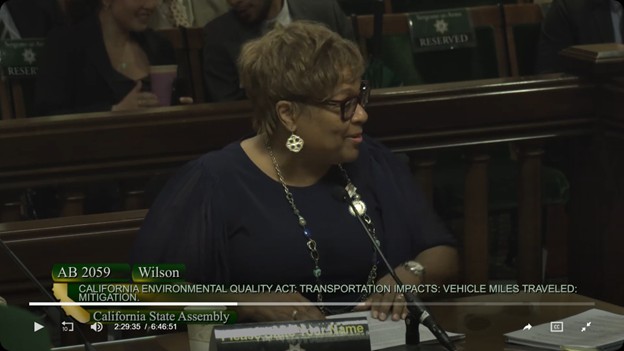
Proponents frame AB 2059 as a limited refinement to how SB 743 is implemented, rather than a fundamental change to CEQA. At the April 20, 2026 hearing, Assemblymember Lori Wilson described the measure as a narrow, practical update to how transportation impacts are analyzed in rural communities. Wilson argued that SB 743 has become too rigid and that it does not allow for consideration of rural conditions. From this perspective, they argue, AB 2059 represents a targeted adjustment rather than a policy reversal.
Playing devil’s advocate, it is my interpretation that AB 2059 would allow for new roads, highways, and other transportation projects to occur that would not occur under the current VMT framework, which would allow more sprawling development than would occur under current VMT standards. For better or worse, AB 2059 would allow for more dispersed development patterns in “nonmetropolitan counties” of California, which would thereby lead to a continued reliance on automobiles for personal mobility within and between “nonmetropolitan counties” of the state (Alexander et al 2024; Millard-Ball et al 2025).
As such, AB 2059 is not a modest tweak; rather, it represents a structural policy shift that would enable more road expansion, induce sprawl, and reinforce automobile dependence.
Rural Areas Believe They Are Disadvantaged by Current VMT Implementation
Supporters argue that rural communities are disproportionately affected by current VMT thresholds and mitigation expectations. Travel distances are longer, transit options are limited, and land use patterns are more dispersed, making automobile travel a necessity for accessing jobs, healthcare, education, and basic services. These conditions arguably reflect patterns that are present across much of California, not solely within “nonmetropolitan counties”.
Also, supporters of AB 2059 contend that applying VMT analysis to transportation projects has increased project costs and complexity, and in some cases the current VMT framework has impeded project delivery. They emphasize that many rural transportation projects are undertaken primarily to address life safety, emergency access, and goods movement purposes.
From this perspective, they argue that requiring extensive VMT mitigation can divert limited funding away from critical infrastructure improvements. Again, this sounds like the same story we are hearing from nearly all transportation agencies across California. The VMT system is broadly stalling roadway widening, toll lane, and other projects across the entire state.
Limited Effectiveness of VMT Mitigation in Rural Contexts
Another key argument presented in support of AB 2059 is that commonly used VMT mitigation strategies, such as transit expansion, trip reduction programs, or mode shift policies, are often impractical or ineffective in rural settings. Supporters of AB 2059 argue that when mitigation measures do not materially change travel behavior, they impose costs without delivering corresponding environmental benefits.
However, it’s been difficult for transportation analysts to reliably calculate the benefits of VMT mitigation measures in all areas of the state, not just within these “nonmetropolitan counties” of California. For example, if we build new sidewalks and bike lanes to mitigate a project’s VMT impacts, we cannot reliably estimate how many VMT would be reduced when compared to not building those sidewalks and bike lanes. Similarly, as I’ve argued in a separate article, it is very difficult to demonstrate that affordable housing actually reduces VMT as we purport it does in the current VMT framework that we use for the purposes of CEQA (Noonan 2026). As a result, I do not believe that “nonmetropolitan counties” have a unique problem that does not exist elsewhere in the state.
SB 743 “Was Not Intended to Constrain Infrastructure”
Proponents have argued several times that SB 743 was intended to influence land use patterns and to reduce emissions by encouraging infill development, and that SB 743 was never intended to constrain essential transportation infrastructure. From this perspective, supporters argue that AB 2059 helps clarify the application of SB 743 to transportation projects, particularly in areas where travel behavior is driven more by geography than by development patterns.
Based on my reading of SB 743, it is not entirely clear whether transportation projects were to be evaluated or not. I presume that if the legislature wanted transportation projects to be exempt, then they would have included that language within SB 743 explicitly.
Public Testimony and Position on AB 2059
AB 2059 has garnered support from rural transportation and regional planning agencies, including the Nevada County Transportation Commission, as well as labor and industry organizations such as the Southern California Contractors Association, California Construction and Industrial Materials Association, Bay Area Council, California Trucking Association, and the California-Nevada Conference of Operating Engineers.
No organizations or individuals testified in opposition to AB 2059 at the April 20, 2026 Assembly Natural Resources Committee hearing. However, several environmental and conservation organizations indicated evolving positions following recent amendments. Jeanie Ward Waller, representing ClimatePlan, Leadership Counsel for Justice and Accountability, Transform, MoveLA, Streets for All, 350 Bay Area Action, and 350 San Diego, stated that these organizations had shifted from opposition to a neutral position after the bill was amended. Representatives of the Planning and Conservation League and the Sierra Club indicated they were encouraged by the amendments but had not yet taken a formal position on the bill.
Conclusion
The limited pushback from environmental advocates is notable given the potential implications of AB 2059 for land use and travel behavior. For a policy area that has historically prompted strong reactions, this relative silence is somewhat unexpected. This may indicate that recent amendments have softened concerns, but the long-term effects of the bill still warrant careful scrutiny.
References:
Alexander, Serena; Bo Yang; and Owen Hussey. 2024 (July). Examining the Land Use and Land Cover Impacts of Highway Capacity Expansions in California Using Remote Sensing Technology. Transportation Research Record: Journal of the Transportation Research Board. Accessible online at: https://doi.org/10.1177/03611981241262299.
Millard-Ball, Adam; and Michael Rosen. University of California, Institute of Transportation Studies. 2025 (February). Road Expansion is a Fundamental Cause in Vehicle Travel. UC Office of the President, Policy Briefs.
Noonan. 2026. Op/Ed: Why Affordable Housing Doesn’t Offset Vehicle Miles Traveled. https://cal.streetsblog.org/2026/01/14/op-ed-why-affordable-housing-doesnt-offset-vehicle-miles-traveled

Streetsblog has migrated to a new comment system. New commenters can register directly in the comments section of any article. Returning commenters: your previous comments and display name have been preserved, but you'll need to reclaim your account by clicking "Forgot your password?" on the sign-in form, entering your email, and following the verification link to set a new password — this is required because passwords could not be carried over during the migration. For questions, contact tips@streetsblog.org.