This Year’s Park(ing) Day Hopes to Inspire Big Policy Change

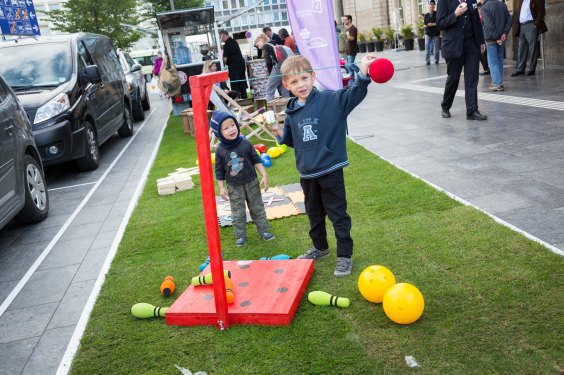
A three-day global art and advocacy project will transform parking spaces into parks and other places people actually want to enjoy — and this year, the event organizers are sending a message about how policy can help make those changes permanent.
From Sept. 20 to 22, a coalition of placemakers, artists, and advocates is launching the 19th annual Park(ing) Day celebration, which will encourage cities around the world to repurpose their curbside car storage in a creative way for at least 24 hours.
And in most cities, participants got a lot of spots to choose from. The Parking Reform Network estimates that most major U.S. cities dedicate more than 20 percent of their total land to parking spots, lots, and garages; in list-topping San Bernardino, it’s a staggering 49 percent.
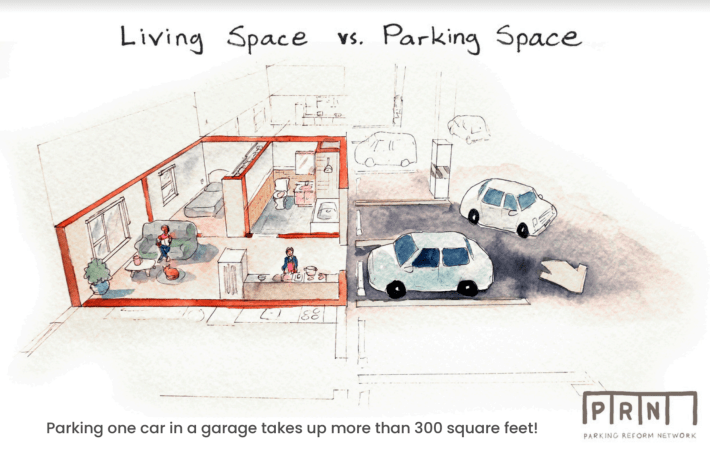
This year, the Park(ing) Day is hoping to prompt a deeper conversation about why cities have so damn much asphalt — and what policy changes could help change that status quo, like decreasing or eliminating spots developers are required to build, letting employees who refuse their employer-sponsored parking benefits get cash back instead, and raising meter fees and using the money to improve non-automotive modes.
With new funding from mobility companies Lime and Waymo, the first 100 registrants will receive a packet of handouts, stickers, and other goodies aimed at helping their neighbors see how getting rid of excess pavement could help solve city problems; the theme of the 2024 event, fittingly, is Parking Reform Activism.
“Park(ing) Day is about envisioning and showing people the value of the space that we’re currently using to store cars, and, by extension, the opportunity cost of using that space as parking versus all of the other things that it could be,” said Daniel Herriges, policy director at the Parking Reform Network, which is co-sponsoring the event. “There’s a really subversive aspect to it, in that it highlights that we’ve made a political choice to turn streets over to motor vehicles, instead of more broadly understanding the street as public space.”
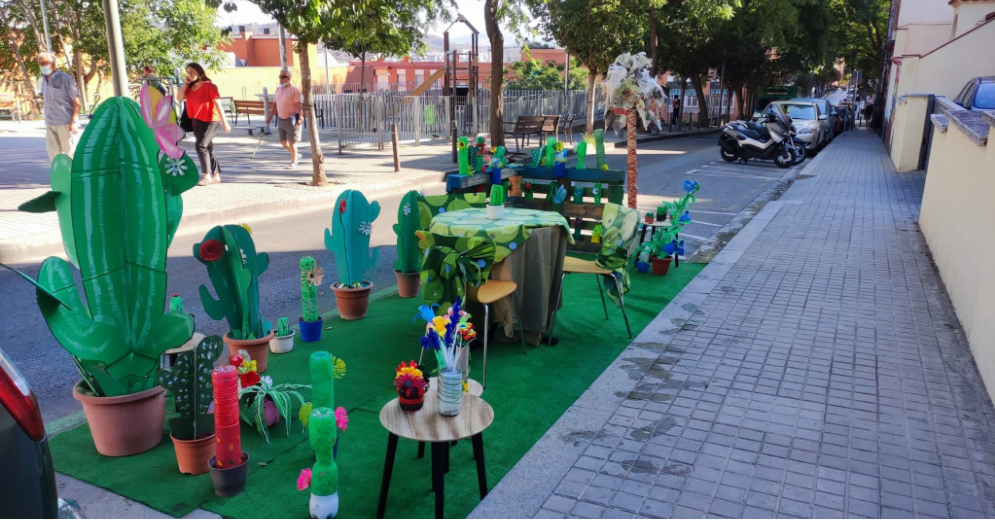
Initially launched in 2005, Park(ing) Day began as an art project by San Francisco-based designers who figured out that feeding a meter was far cheaper than renting a gallery to show their work. In the years since, though, it’s become a global phenomenon that some have credited with creating the very idea of a “parklet,” while inspiring others to build everything from mini restaurant patios to pop-up public health clinics and more.
In some cities, it’s even inspired permanent installations, as well as off-street demonstrations of how garages and lots could be redeveloped as apartments.
Some Park(ing) Day demonstrations, though, come and go in a weekend, without being documented and held up as an inspiration for others. That’s part of why the Parking Reform Network is encouraging participants to add themselves to a new map and connect with the global network of participants.
“We really want to get those projects on the map, not just so the map has more dots on it and looks more impressive, but also as a form of communication,” added Herriges. “We can help [organizers] share their projects with the world, and really create this crowdsourced, amazing document of what a movement to rethink public space [can look like].”
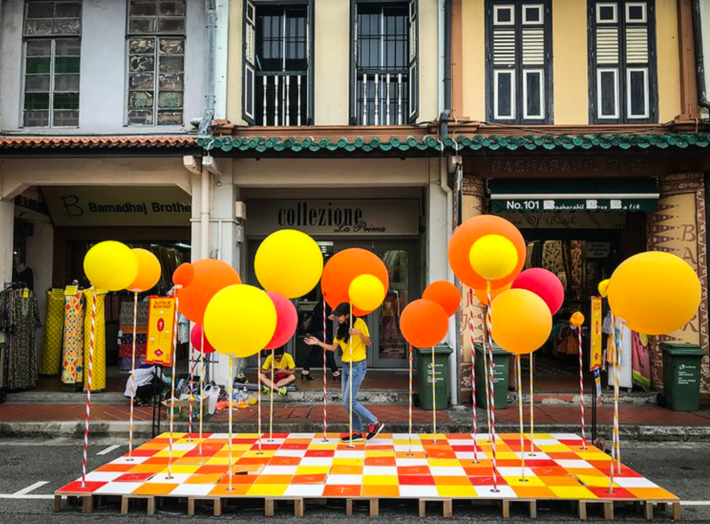
Herriges also hopes participants will get creative and use this year’s demonstration to underscore the theme of activism. He’s particularly fond of installations that raise questions not just about how parking space could be better utilized, but “which community functions can be brought more into the public realm”; past participants have shared great lists of ideas, including miniature libraries, swimming pools, bike repair stations, and so much more.
“The prototypical parking day installation is one of two things: it’s either an art project, or it’s some seating and some greenery and a place to hang out and chat,” he added. “And those are great! But I love the more out-of-the-box ones that fulfill some sort of a community need, [that are] drawing attention to all the different trade-offs that might exist in how we use space.”
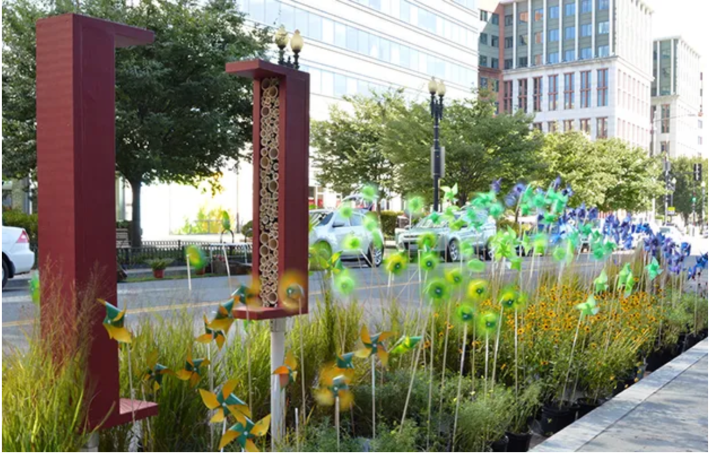
Done right, Herriges says communities might embrace their Park(ing) Day demonstrations, and take actions to support policies that put people over cars year-round.
“[A demonstration] might last a weekend, it might last a week,” he said. “Or it might inspire a conversation: ‘Hey, everybody loves this. How can we bring it back? How can we make it permanent?'”
Planning hosting a Park(ing) Day demonstration Sept. 20 – 22? Add it to the map here. And send us pictures here!

Streetsblog has migrated to a new comment system. New commenters can register directly in the comments section of any article. Returning commenters: your previous comments and display name have been preserved, but you'll need to reclaim your account by clicking "Forgot your password?" on the sign-in form, entering your email, and following the verification link to set a new password — this is required because passwords could not be carried over during the migration. For questions, contact tips@streetsblog.org.