Showdown Looms Over Successful Culver City Bus/Bike/Walk Improvements

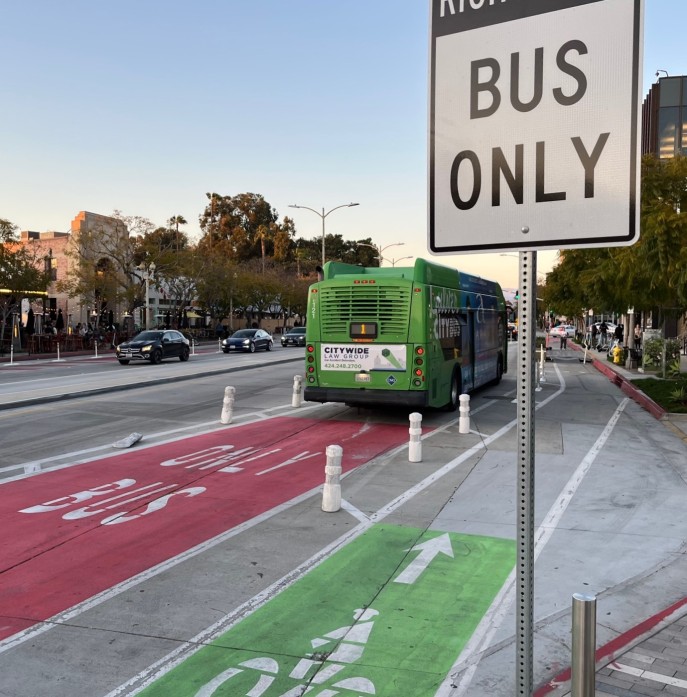

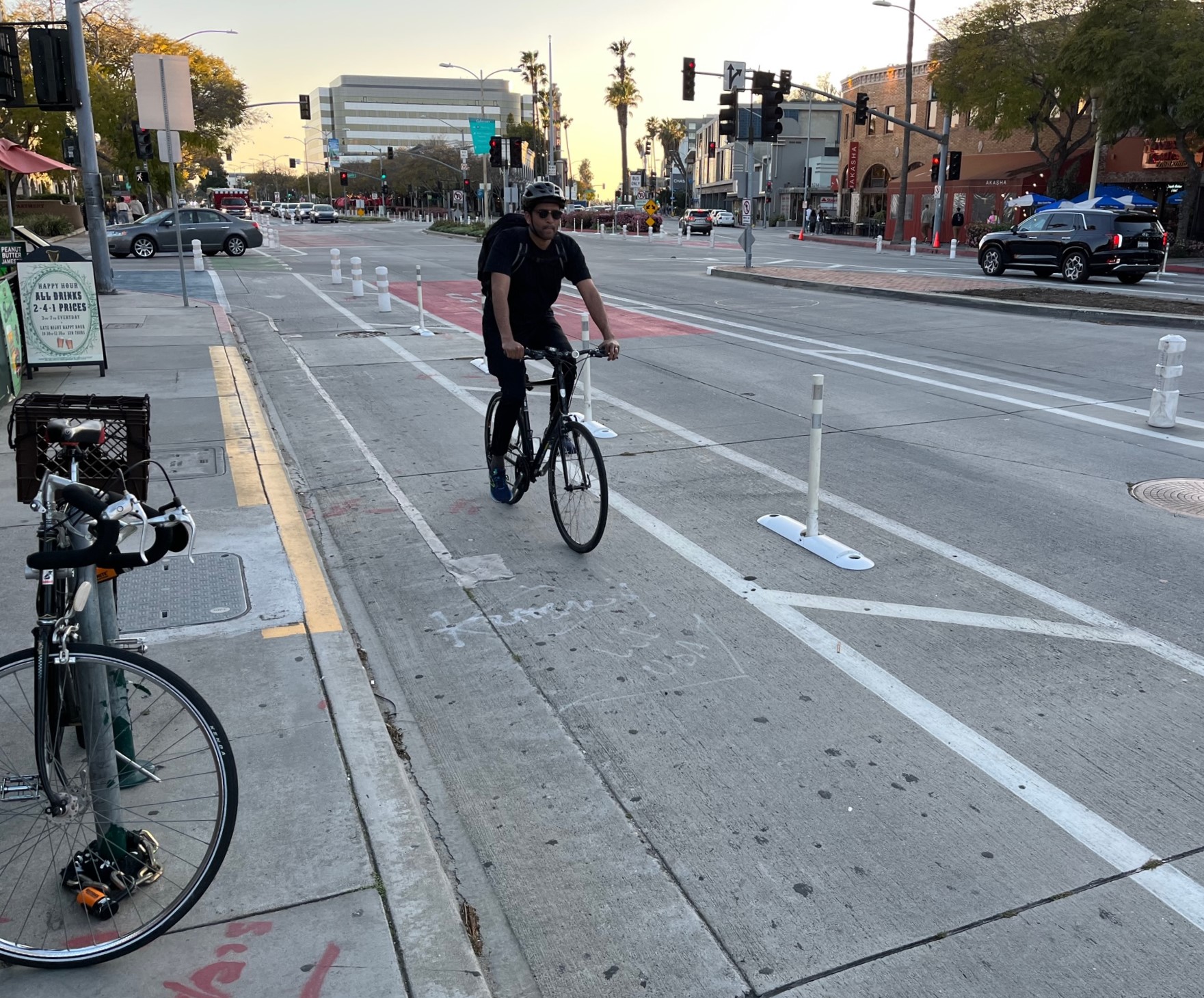
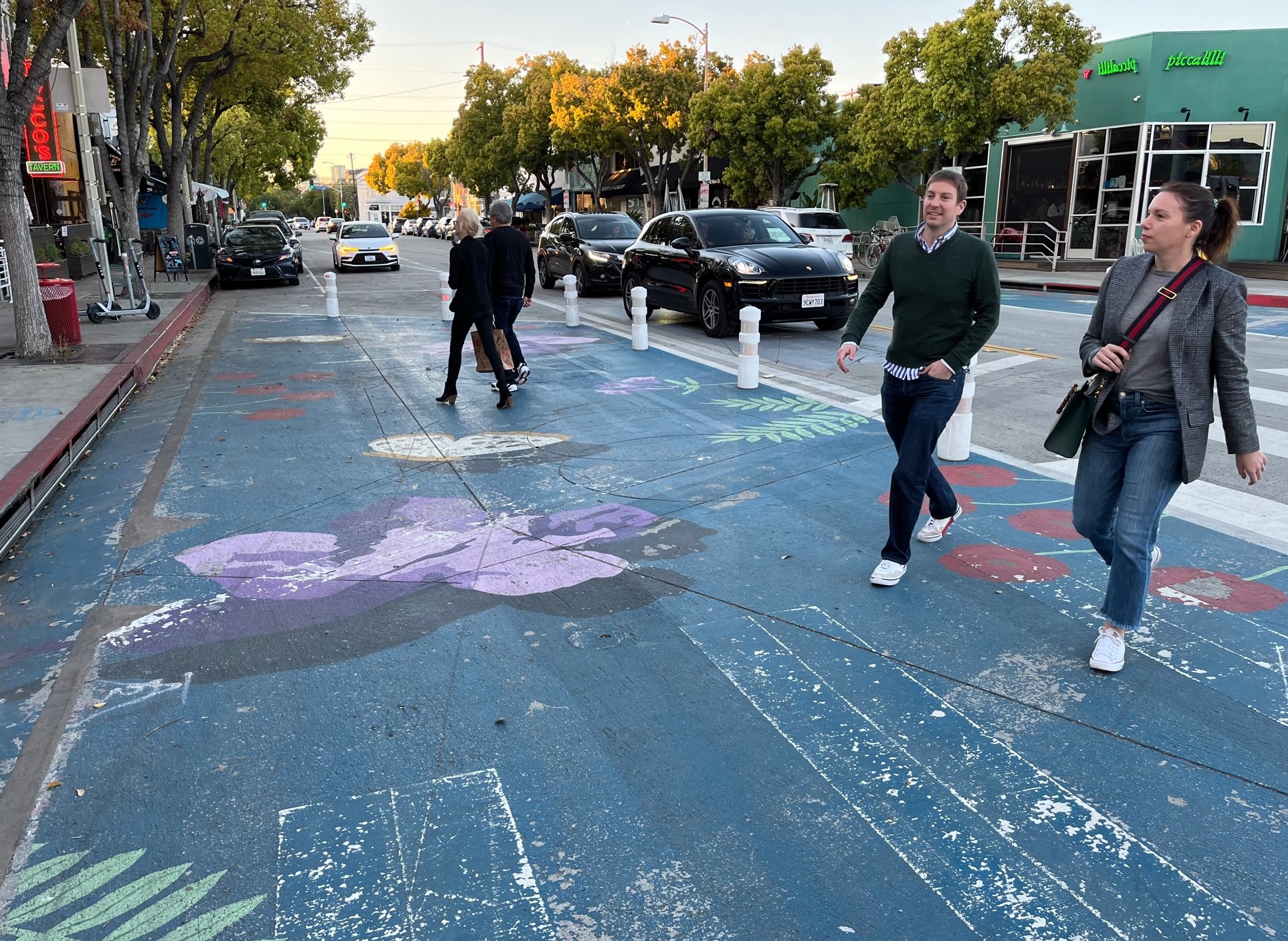
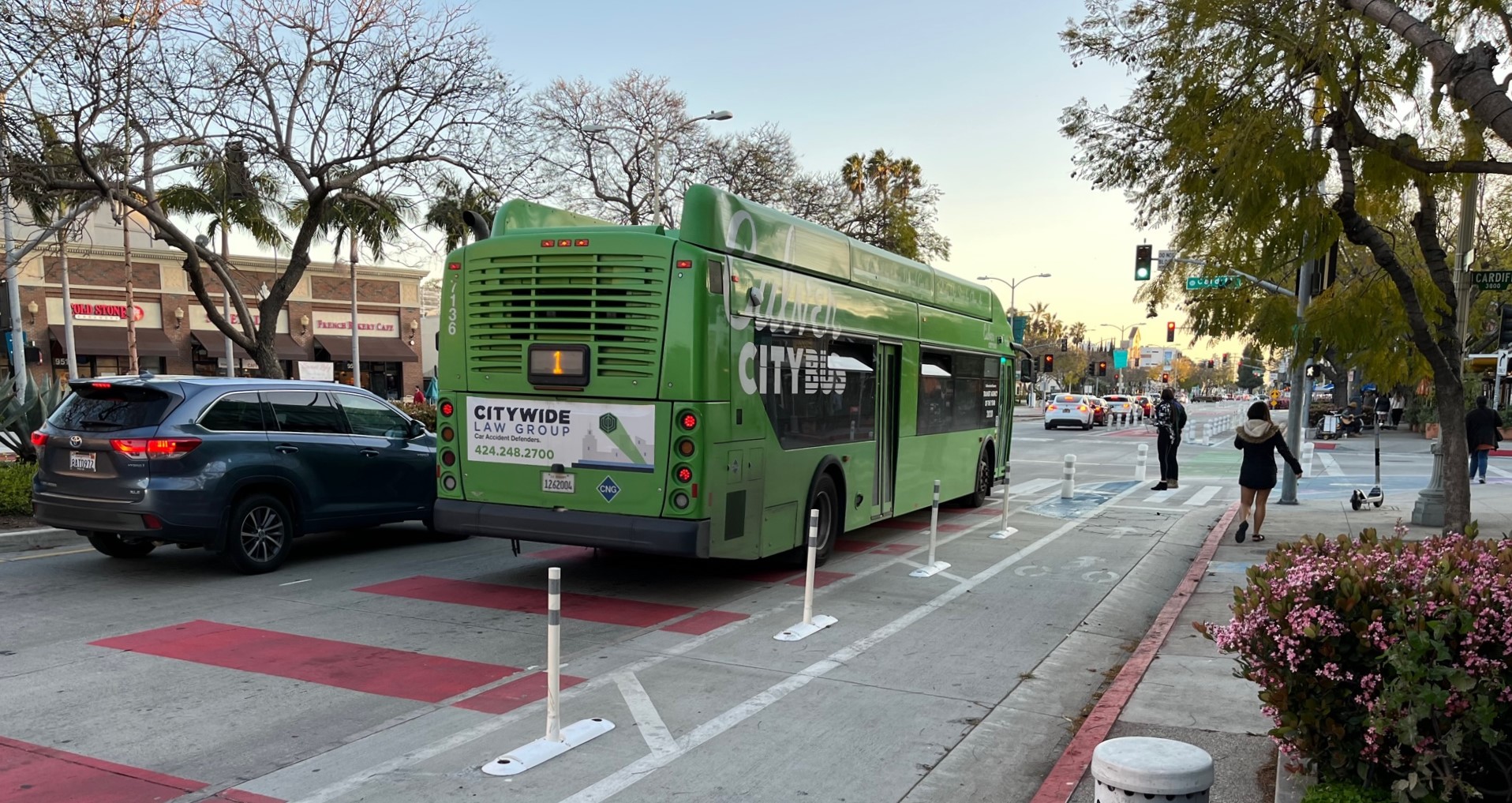
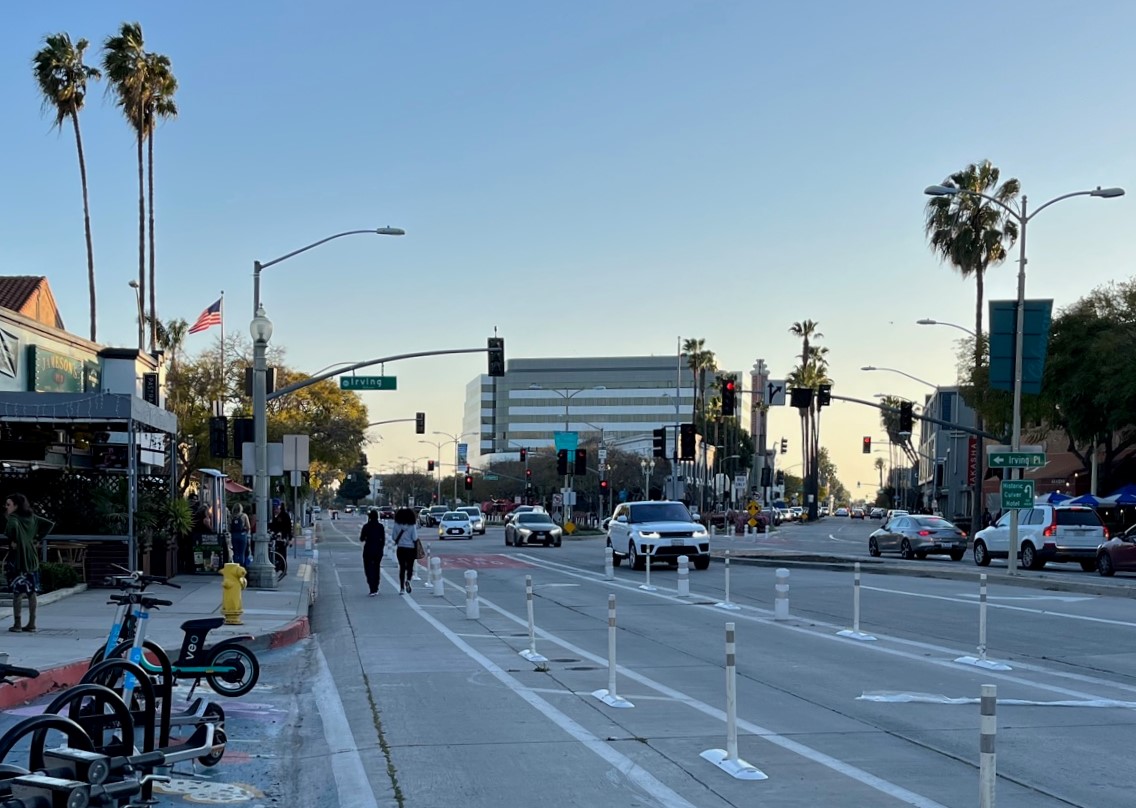
One of Southern California’s most promising and effective mobility projects is under threat. Culver City’s Move Culver City project includes 1.3 miles of dedicated bus lanes, including some shared bus/bike lane, about three-quarters of a mile of protected bike lanes, and numerous pedestrian-friendly curb extensions. Few cities are willing to implement bus and bike improvements in highly visible central locations where they are most needed, but Culver City opted to install low-cost quick-build upgrades exactly where they are most needed – in its walkable historic downtown, serving the Metro E (Expo) Line Station, civic center, and extensive dining and retail.
On Monday night the MoveCC project faces a key decision point at the 7 p.m. City Council meeting [agenda, MoveCC item A-1]. City staff are presenting the project’s post-pilot evaluation, and recommending some additional project work. The new conservative council majority (thanks to a costly campaign push by conservative interests, mainly developers) is less enamored with the project than the council that shepherded it for the past decade.
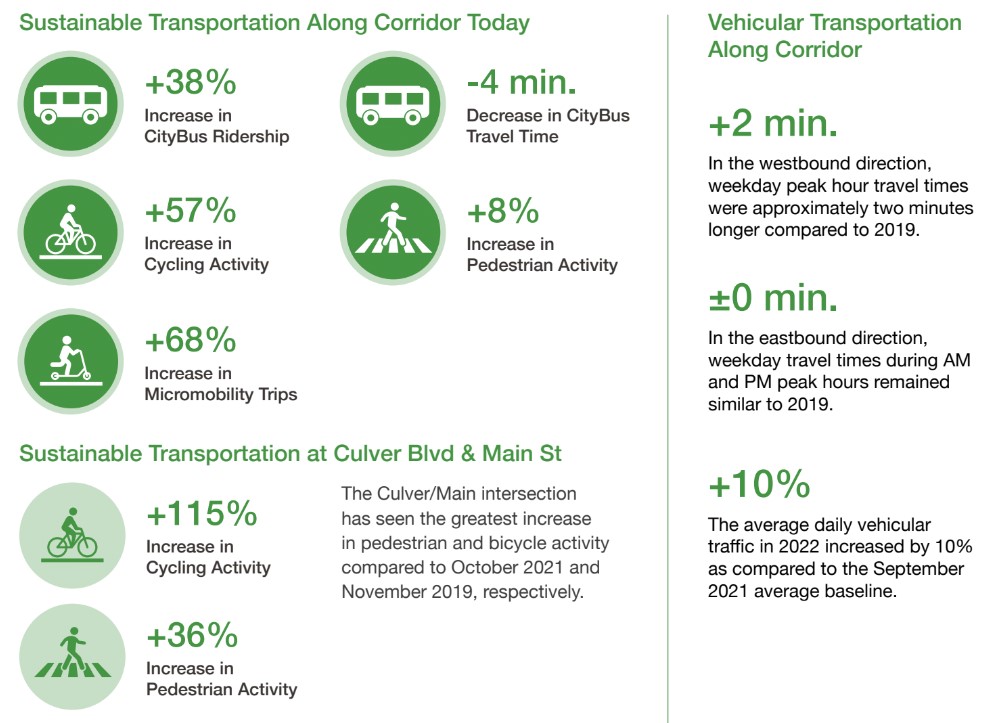
Similar to the mid-pilot evaluation last November, the city’s latest third-party evaluation of MoveCC is positively glowing. The city’s post-pilot report shows that bicycling, walking, and transit ridership are up, as is sales tax revenue. Specifically, Culver City found: (all bullets from MoveCC report)
- More people are riding bikes on the corridor
- Bus ridership is increasing on the downtown corridor. Ridership has grown throughout the Culver City Bus system as the pandemic’s impacts on travel subside, but the increase
in ridership on the mobility corridor has significantly outpaced the system as a whole. Bus ridership on the downtown corridor is close to 2019 levels and is outpacing both Culver City
Bus and Metro in growth. - More people are walking around the project area compared to pre-implementation.
- Move Culver City has not had a significant impact on peak vehicular traffic compared to the pre-pandemic condition. In the morning peak hours, traffic moves faster through the corridor than it did in 2019, while in the afternoon peak, average travel times have increased by up to two minutes. Traffic in the p.m. peak has “flattened” – peak congestion begins earlier and ends later than in 2019.
- The mobility lanes have not impacted emergency response times at Fire Station 1, which is located on the project corridor. Firefighters report that using the mobility lane helps them avoid traffic during peak hours.
- When adjusted for inflation, revenue of businesses located on the Move Culver City corridor (measured via sales tax receipts) has grown since 2019, while citywide business revenues are unchanged.
Read the full evaluation report. Interested stakeholders can attend next Monday’s council meeting and give public comment.
Streetsblog has migrated to a new comment system. New commenters can register directly in the comments section of any article. Returning commenters: your previous comments and display name have been preserved, but you'll need to reclaim your account by clicking "Forgot your password?" on the sign-in form, entering your email, and following the verification link to set a new password — this is required because passwords could not be carried over during the migration. For questions, contact tips@streetsblog.org.