What the Gas Stove Meltdown Has In Common With the Car Culture Wars

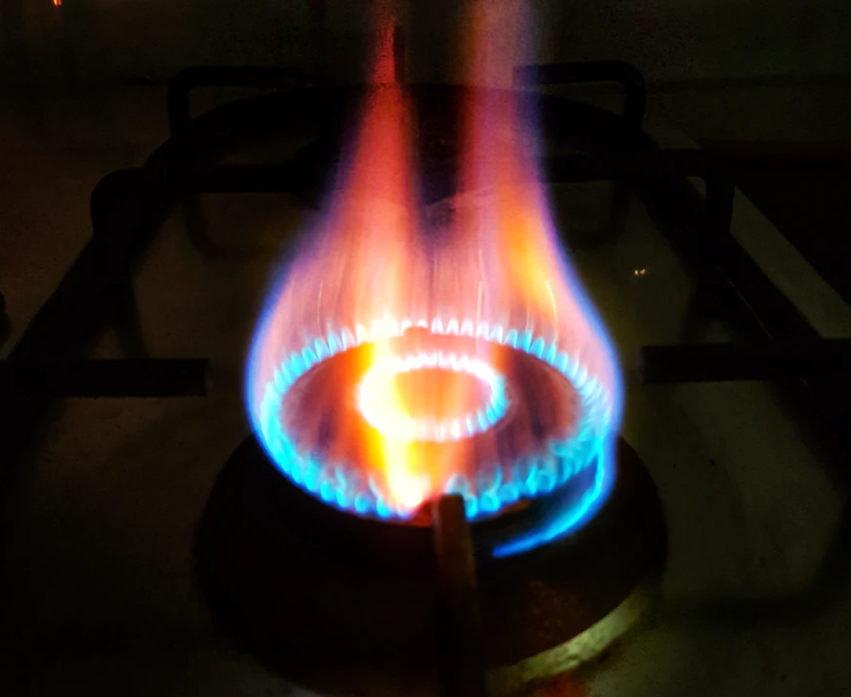
In a matter of days, environmental and public health advocates have found themselves embroiled in a culture war over whether to increase regulations on a deadly, polluting machine that has become so ubiquitous in American life that owning one feels, to many, like a constitutional right, even though it isn’t.
For once, that machine is not the automobile. (That “embroiled” pun should have been a hint.)
I’m talking, of course, about the gas stove, which has drawn the scrutiny of the Consumer Product Safety Commission following a recent study that found them responsible for roughly one in eight childhood asthma cases.
Controversy over the appliance definitely isn’t new; a lot of environmental groups have wanted to eliminate them from U.S. households for years, not least because studies show they release roughly as much methane annually as half a million gas-powered cars, and that 75 percent of those emissions occur when the thing is turned off. The debate reached a boiling point on Jan. 9, though, when a CPSC commissioner told Bloomberg that a potential ban on the device was “on the table” (even though it probably isn’t) — particularly enflaming the tempers of lawmakers with ties to fossil fuel industries like Democratic Sen. Joe Manchin, who asked whether the commission should be reevaluated in light of the mere insinuation of a ban.
“This is a recipe for disaster,” Manchin wrote (clearly, the puns will never stop).
Of course, the natural gas and automotive industries didn’t just have to capture the hearts of American consumers through ad-buys and cute catch phrases that equate their products with efficiency (Now You’re Cooking With Gas!), strength (Like a Rock!), or any number of other American Values . They also had to quite literally rebuild the country to sell their products, running millions of miles pipelines underground at the same time that millions of miles of auto-centric roads were being paved above it, all but ensuring that millions more people would have little choice but to rely on the products they sell. A cost-burdened renter in an apartment with a gas line probably can’t lobby her landlord to make the switch to induction, even if it’s making her kid sick; a commuter who lives on a 45-mile-per-hour arterial with no sidewalk, meanwhile, is functionally required to spend money to drive a block to the corner store if he doesn’t want to be killed.
The real accomplishment of the fossil fuel industries, though, is how they’ve convinced Americans that living this way is their own free and enthusiastic choice, if not an outright luxury or a birthright. What marketers have always understood about human beings if that if you can persuade them that a gas stove makes them an elite chef or a gas guzzler makes them a man, they won’t just tolerate the utter absence of other options. They’ll build their very identity around your product — and eventually, they’ll pass that identity down to their children, and to their children’s children, to the point where their love of it truly isn’t corporate manipulation any longer, but the very stuff of culture. Attempting to remove any part of that culture — be it their parking space at work or the way they cook their family’s most cherished recipes — will feel violent.
And that culture’s side effects — 43,000 car crash deaths a year, hundreds of thousands of childhood asthma cases, a swiftly dying planet, etc. etc. — will start to feel like they’re a price worth paying.
Here’s the good news: unraveling gas stove culture will almost certainly prove easier than unraveling car culture. One of the largest climate bills in U.S. history, the Inflation Reduction Act — which got that name to appease Joe Manchin himself — contains $4.5 billion in consumer credits to electrify consumer appliances like stoves and water heaters. About 77 cities have already banned natural gas hook ups in new buildings, even if 20 states have also preemptively banned future bans on gas line installation. Only 39 percent of U.S. households even have gas stoves anyway; capping a line costs about $100, after which it remains underground, invisible and largely forgotten.
Remaking a world built almost exclusively for automobile travel, though, will take far more money, time, political will, and patience with a culture that treats even the slightest whiff of opposition to the auto-centric status quo as a poisonous affront. Good luck to us all.

Streetsblog has migrated to a new comment system. New commenters can register directly in the comments section of any article. Returning commenters: your previous comments and display name have been preserved, but you'll need to reclaim your account by clicking "Forgot your password?" on the sign-in form, entering your email, and following the verification link to set a new password — this is required because passwords could not be carried over during the migration. For questions, contact tips@streetsblog.org.