In Car Culture, Crash Victims are Always Blamed (Even By Loved Ones)
Last month, I was hit by a distracted driver during my bike commute home. I had arrived at a four-way intersection in a residential neighborhood and observed a vehicle approaching from the right. I always stop and wait, assuming drivers will ignore the stop sign. In this case, however, the driver came to a stop, so I proceeded. When I got to the middle of the intersection, the driver hit me.
The physical impact, thankfully, was negligible. The psychological effect on my friends and family — and from them to me — was more thoroughgoing.
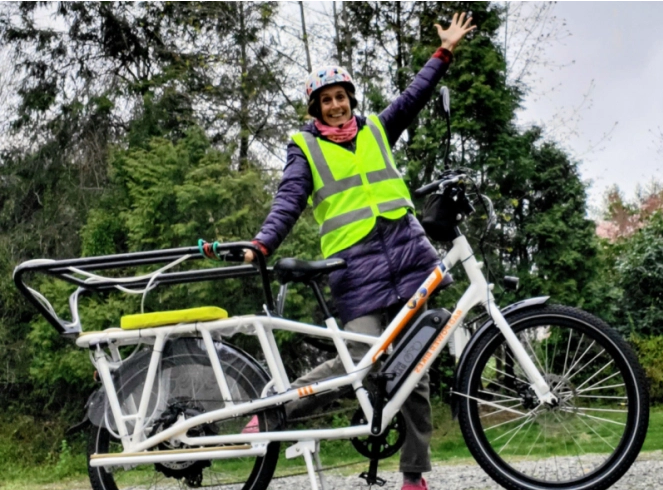
The crash knocked me off my large-frame electric cargo bike, which also fell over; my bag landed next to me on the ground. A neighbor who happened to be outside ran over and helped me pick up the bag and bike. As we moved out of the road and to the nearest corner sidewalk to assess my condition, the driver left the scene. I was not badly injured and the bike did not require costly repairs, so I opted not to involve the police. (I did try to report the incident later, but the police were not helpful for the reasons I just stated.)
The entirety of my 10.27-mile, round-trip commute is alongside motor vehicles. There are no protected bike lanes on my route, nor any alternative routes between my home and office. The traffic violence occurred at a point that I normally considered as a “safer” section of my ride. I now know that safety for cyclists at any point on a shared roadway is an illusion.
The crash also punctured another illusion: that my choice of active transportation had widespread understanding and support in my social orbit. When I told friends and family about the incident, two themes emerged: 1) that I should have expected to encounter vehicle violence, and 2) that the crash was my fault because I chose to ride a bike to work instead of driving. Among the responses I heard were:
- “I was not surprised as I have felt it was an imminent risk with your commuting.”
- “I know what a source of happiness [biking] is for you, but happiness shouldn’t come at the cost of your life or significant injury.”
- “Your biking dedication scares me, though, Kate. And you have at least one child, right? Please be safe.”
- “The accident seemed surreal. You didn’t have a scratch on you so it was easier to minimize, but the reality is, in the weeks following your accident we read about three more. They were all fatal.”
- “It was never about your skills, just the idiocy of others.”
- “I know it’s who you are. I have tried to make peace with it. I just try not to think about it a whole lot.”
- “We all need you, the world is better with you in it, but sometimes I wish the electric car was enough for you.”
My friends and family are not the villains of this story. Some have submitted testimony in support of bicycle-safety laws. Most are occasional leisure cyclists themselves. Their responses, however, indicated how much living we cede to car culture and how much blame we place on cyclists when systems of basic transportation fail them.
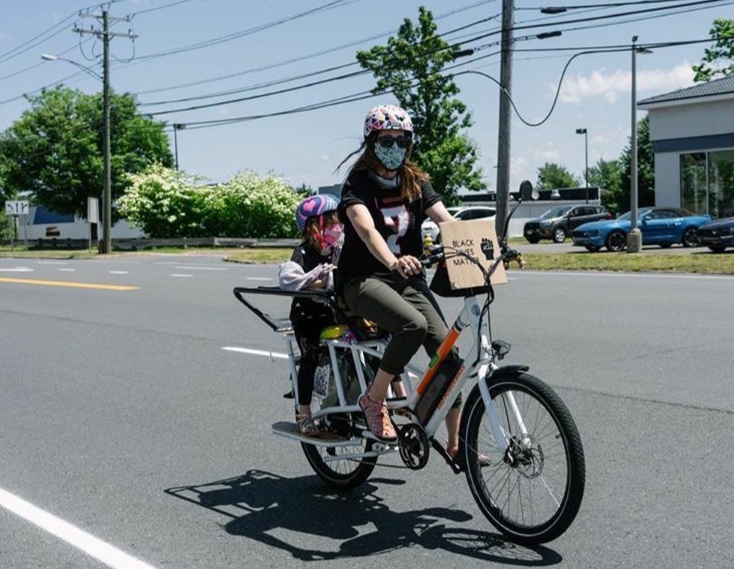
I am an experienced bike commuter. I have taken the League of American Bicyclists “Smart Cycling” traffic-safety courses. In truth, however, these are faux talismans to which I cling in an attempt to convince others that I have done my part to share the road safely. As bikers, we convince ourselves that if we were to die from traffic violence, changes would happen. The sad truth is that no number of dead cyclists seems able to loosen the stranglehold of car-centric thinking on our world.
I bike less now, only riding to work on days when I can make my return trip outside of “rush hour.” During biking my brain remains trapped in a hyper-vigilant state, triggered by all cars that feel too fast and too close.
Every day that I must drive, I miss the amazing joy of connecting with people I get while biking — the ability to experience my bioregion intimately, to hear birdsong, and get the exercise that, as a working parent, I find hard to squeeze in otherwise.
We desperately need to address traffic violence. Perhaps that should start with all of us examining our deadly alliance with the automobile.
Kate Rozen (@KRDemCT) is a transportation cyclist and safe-streets advocate living in Woodbridge, Conn., with her husband Justin and daughter Audrey.
Streetsblog has migrated to a new comment system. New commenters can register directly in the comments section of any article. Returning commenters: your previous comments and display name have been preserved, but you'll need to reclaim your account by clicking "Forgot your password?" on the sign-in form, entering your email, and following the verification link to set a new password — this is required because passwords could not be carried over during the migration. For questions, contact tips@streetsblog.org.
More from Streetsblog California
California Needs More Ways to Fund Transit, Not Fewer. Streetsblog Urges You to Vote No on 43


Op-Ed: Latest Arguello Tragedy Demands Action by Mayor, Other City Leaders
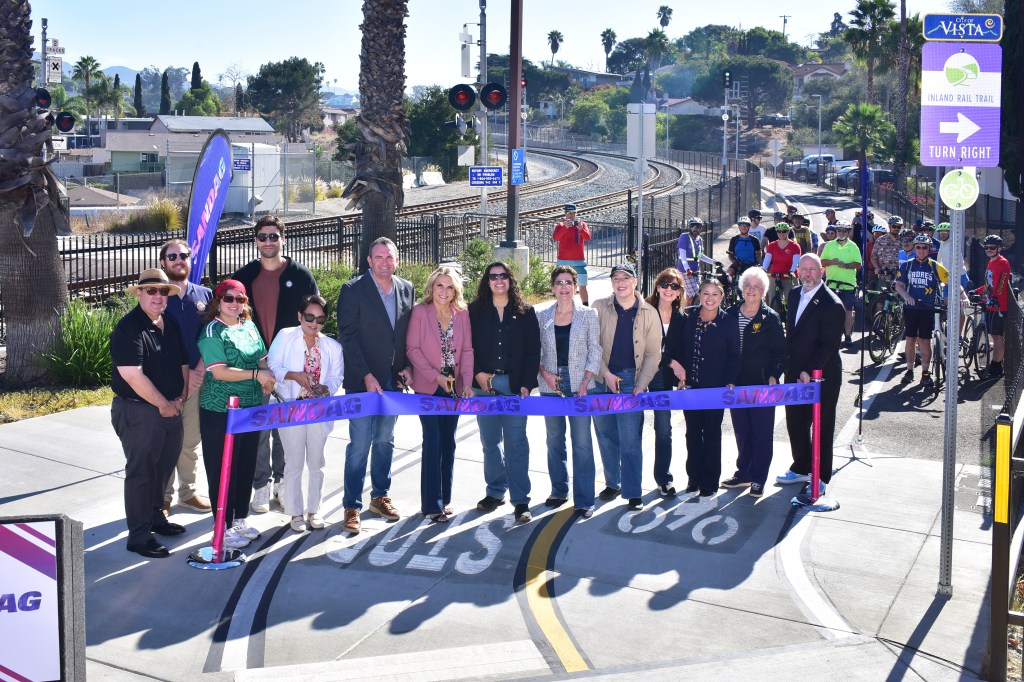
After More Than a Decade, Inland Rail Trail Finally Reaches Central Vista
After more than a decade of planning and delays, a new 1.1-mile segment brings the Inland Rail Trail into central Vista, creating more than 12 continuous miles of traffic-separated trail from Escondido.
The post After More Than a Decade, Inland Rail Trail Finally Reaches Central Vista appeared first on Streetsblog San Diego.