The Real E-Scooters Story Is Much More Boring Than Media Coverage Suggests

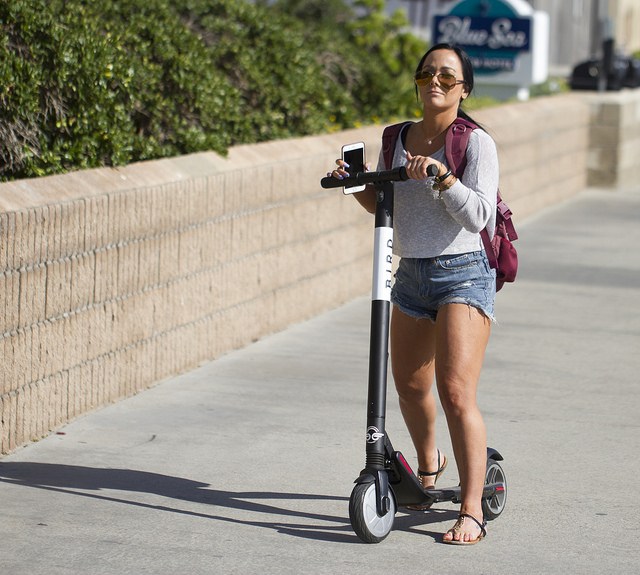
What if venture capital-backed firms dumped thousands of private scooters in American cities and … it mostly worked out okay?
There has been a lot of hyperbolic news coverage since scooter companies such as Bird and Lime entered markets in places as diverse as Santa Monica and Indianapolis. CBS Sacramento warned of “scooters set on fire and thrown into the ocean by people fed up with clutter.” KABC 790 in Los Angeles reported that scooters were “likely to be hazardous to users.” A writer in the LA Times offered only anecdotes in her apocalyptic story, headlined, “Bird scooters — so much fun, so damn dangerous.” The preview paragraph said, “People are getting hurt. Very, very hurt,” but the story offered no hard statistics.
In fact, e-scooters have been in many cities for several weeks now. And genuine analysis — as opposed to wild hot takes — has been far more positive.
The Dallas Morning News reported that local police say scooters aren’t causing any major issues. Executive Assistant Chief David Pughes told the paper there have only been four injuries since May 1, and they’ve been minor. And also — unsurprisingly — there appears to be no tie to crime. Police report only a couple incidents of people using scooters in a crime and say there is no reason to suspect the crimes wouldn’t have occurred anyway.
That aligns with what’s happening in Portland as well. Jonathan Maus of the news site Bike Portland writes that the experiment is going fine:
We’re almost three weeks into the City of Portland’s electric scooter pilot program and things seems to be going very smoothly. The injuries and deaths many predicted would befall reckless scooter operators haven’t happened. And the sidewalk obstructions and right-of-way issues appear to be no worse than before the scooters got here. Yes, there have been some immature people who’ve destroyed a few of them and we hear there are people downtown stripping them for parts, but those are expected outliers and not a really big deal.
Much of the scary news coverage has no doubt been motivated by fear of change — and, indeed, traveling by e-scooter in cities is a novel idea. In addition, the industry has been dominated by big tech firms who dump their products into public space first and ask for permission second (or not at all). As a result, cities like Louisville are scrambling to ink agreements with billion-dollar companies under tight timeframes.
But the hyperventilating about e-scooters obscures an important fact: Cities must focus safety efforts on drivers, who kill and injure urban residents at numbers that are hundreds if not thousands of times higher than the supposed danger of e-scooter users.

Streetsblog has migrated to a new comment system. New commenters can register directly in the comments section of any article. Returning commenters: your previous comments and display name have been preserved, but you'll need to reclaim your account by clicking "Forgot your password?" on the sign-in form, entering your email, and following the verification link to set a new password — this is required because passwords could not be carried over during the migration. For questions, contact tips@streetsblog.org.