Big Events, Like the Warriors Parade, Can Prove Transit’s Resilience

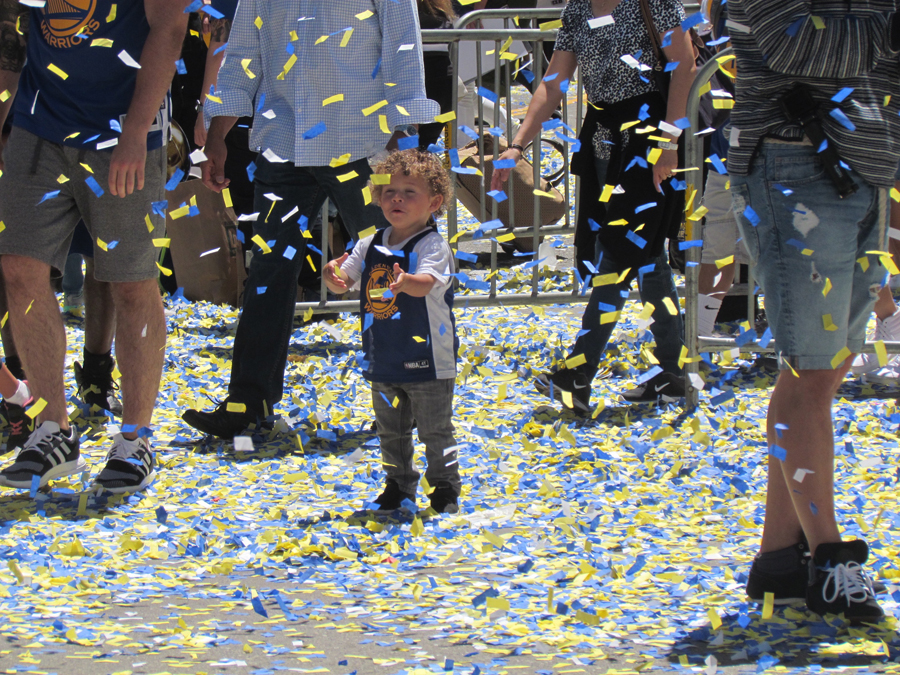
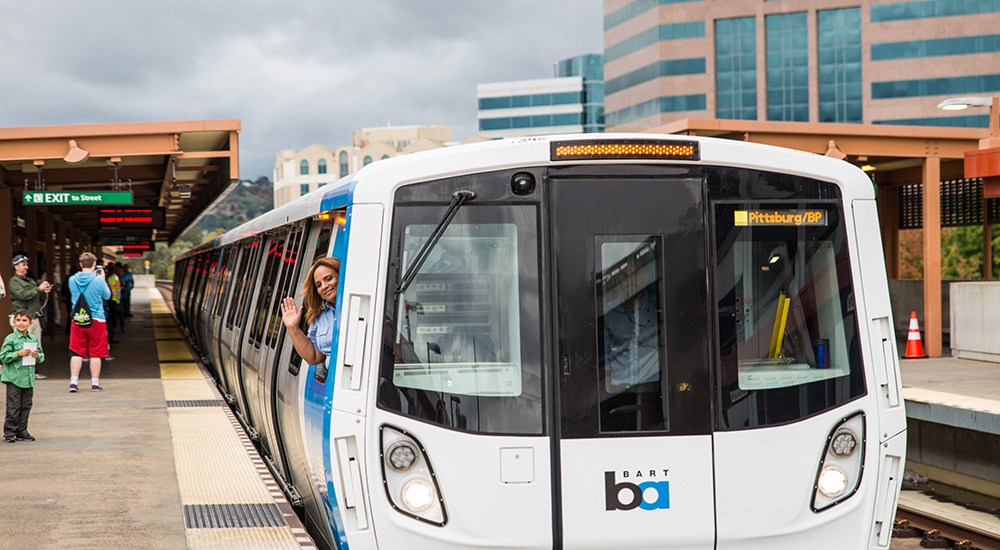
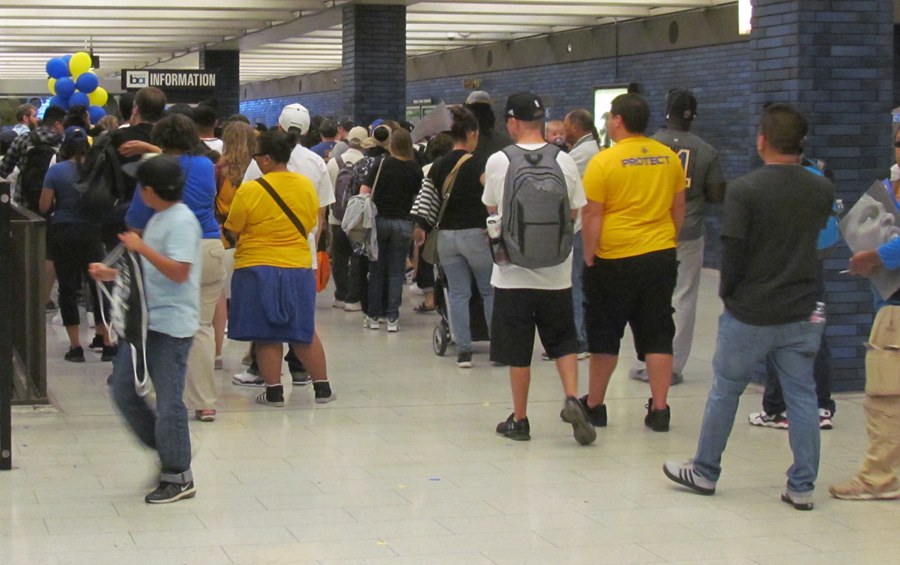
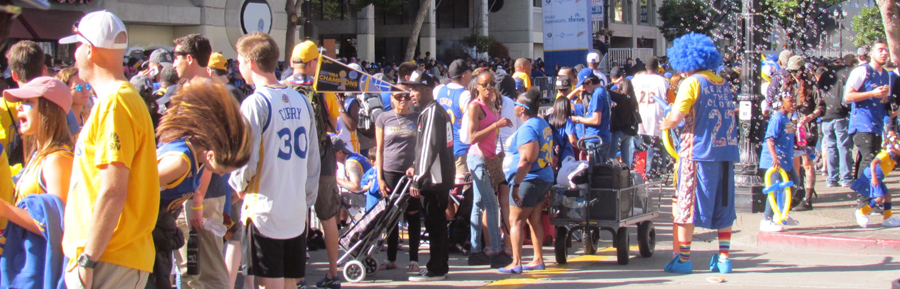
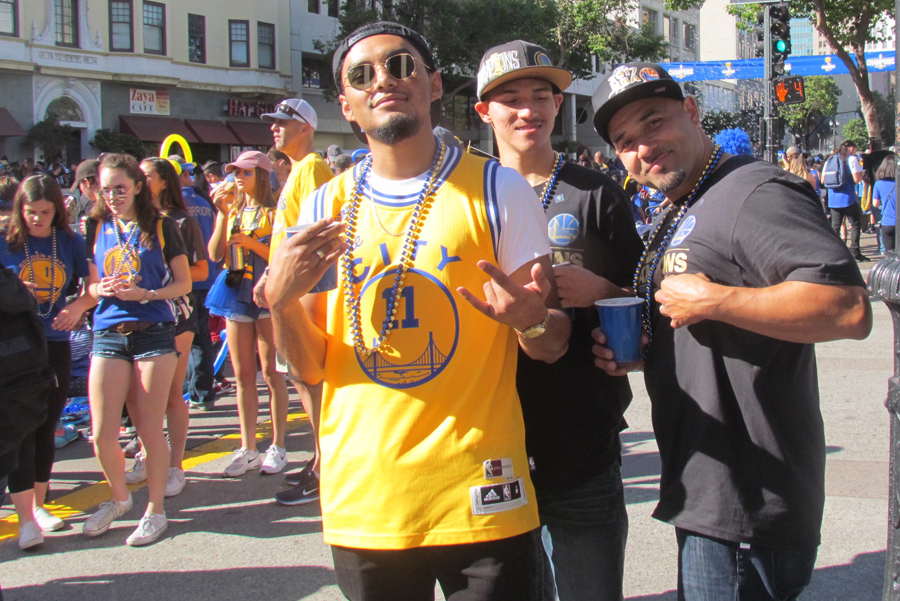
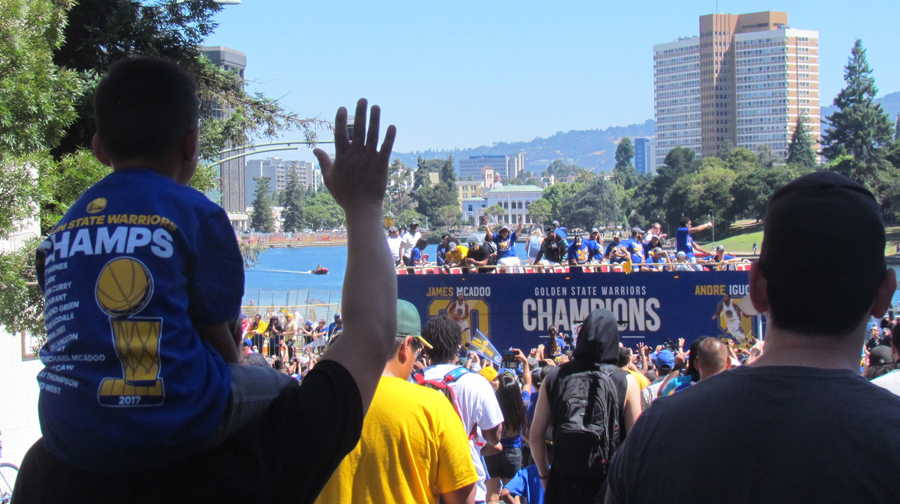
BART was ready. The city of Oakland was expecting 1.5 to 2 million people to pile into downtown this morning to celebrate the Warrior’s NBA championship. Oakland is the geographic center of the BART system, so for most people it made sense to use BART for at least part of their trip in to the parade.
BART has some experience with big crowds–on a daily basis, for one. Trains into San Francisco on most mornings are pretty much already at capacity. But BART also has to be ready for the occasional unusual event, in this case a happy one. BART had a game plan based on experience from the last time the Warriors won the championship, in 2015. That day came close to the record for ridership–topped only by the day of the Giant’s World Series victory parade, which happened to land on Halloween in 2012.
As of 2 p.m. this afternoon, the number of riders is very similar to where it was at 2 p.m. in 2015, although the post-parade rally is still happening as this is being written–so it’s possible BART ridership numbers will top the record by the end of today.
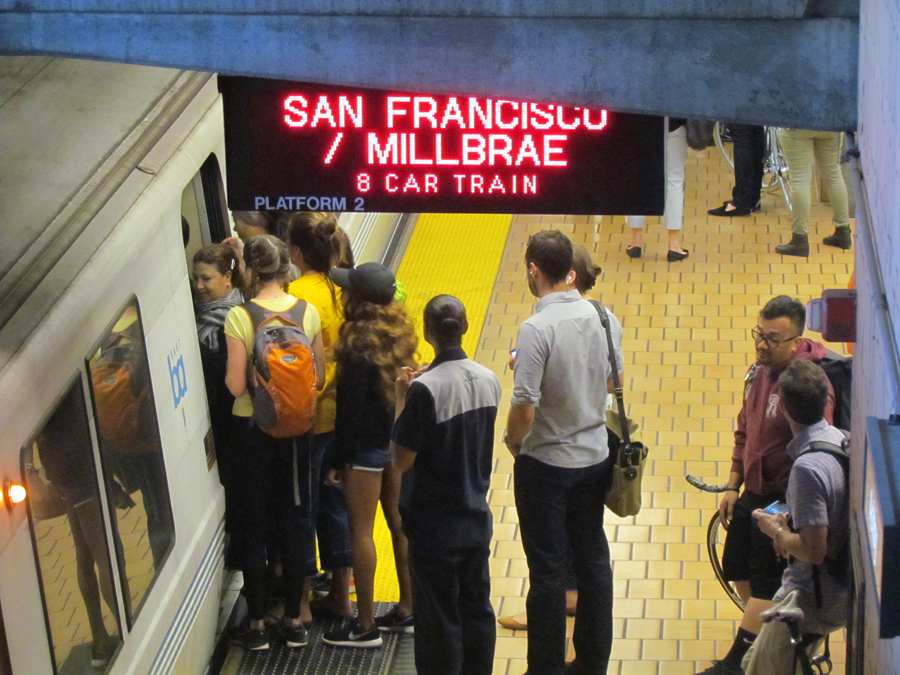
To deal with the crowds, BART rescheduled some trains and put longer trains on the lines serving the three stations closest to the parade route. BART employees staffed station entrances in downtown to help guide people. According to one staff person posted at a 19th Street Station exit, the most-asked question this morning was, “Where is there coffee?” That was followed closely by “Where are the restrooms?”
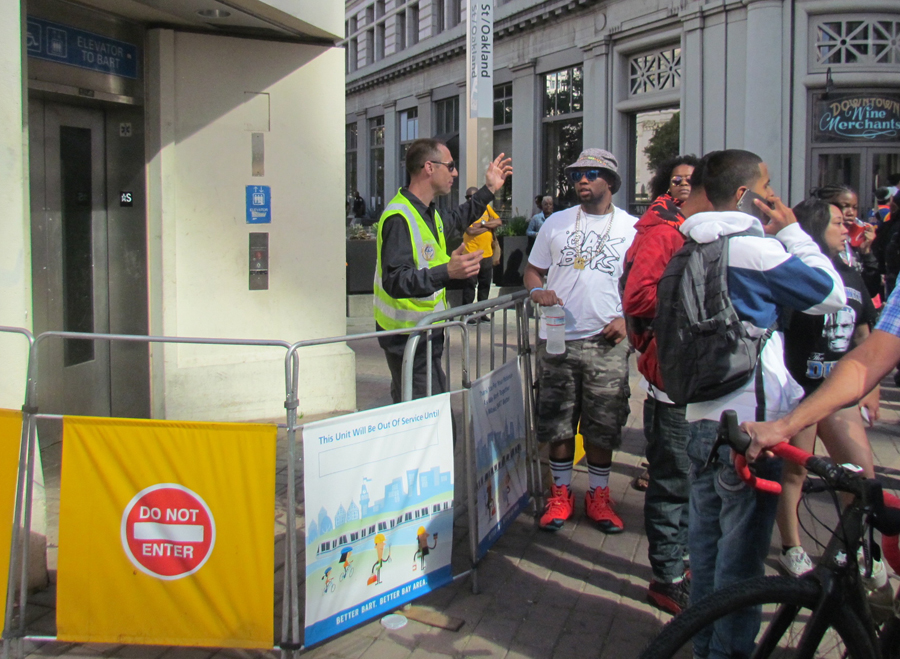
In 2015, BART didn’t anticipate how many people would be traveling into downtown from stations south of downtown, along the Fremont line. So this year they added more trains on that line, and also sent half of them during the morning runs back south from MacArthur, rather than sending them along to San Francisco. That meant that, for once, it was the Richmond-Fremont line that got a little more love rather than the trains heading to San Francisco, which usually get priority in terms of length and which leaves the station first.
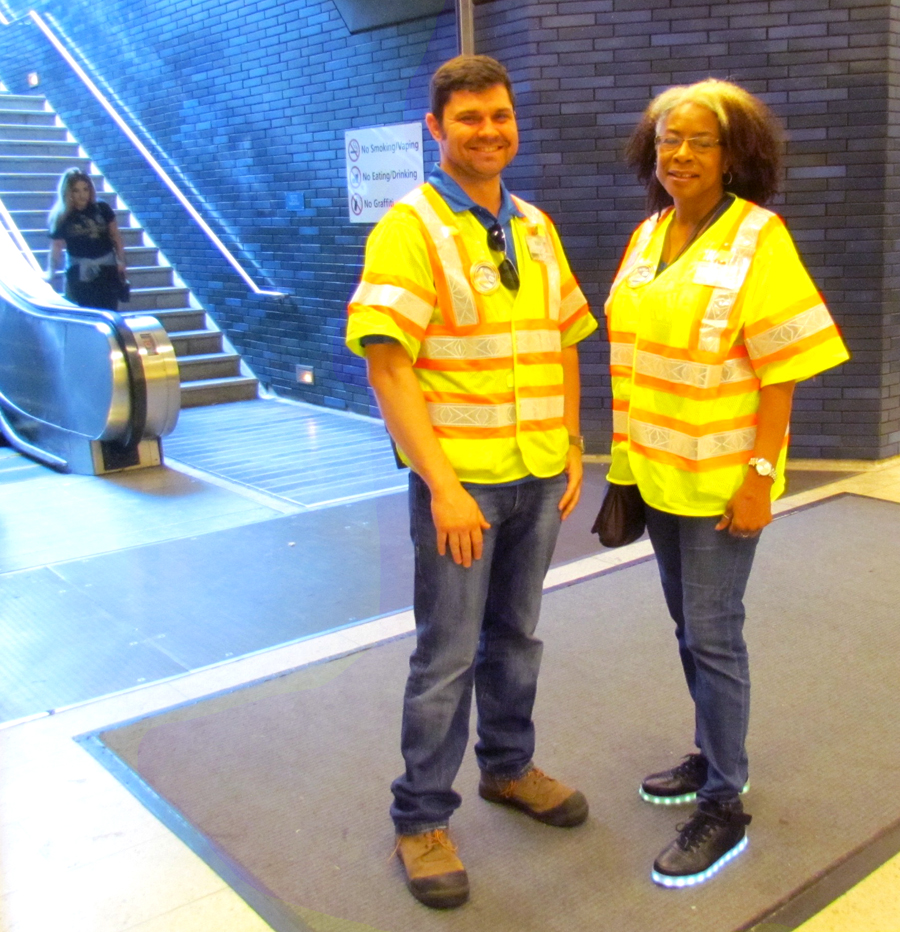
The day’s not over yet. It’s hot, and people were already dragging their feet. After a day in the sun with a lot of loud music and crowds, people might not be in such good moods anymore. But with a little patience, everyone will make it home okay.
Streetsblog has migrated to a new comment system. New commenters can register directly in the comments section of any article. Returning commenters: your previous comments and display name have been preserved, but you'll need to reclaim your account by clicking "Forgot your password?" on the sign-in form, entering your email, and following the verification link to set a new password — this is required because passwords could not be carried over during the migration. For questions, contact tips@streetsblog.org.