Fresno’s Measure D and Measure S: Two Taxes, Two Different Plans

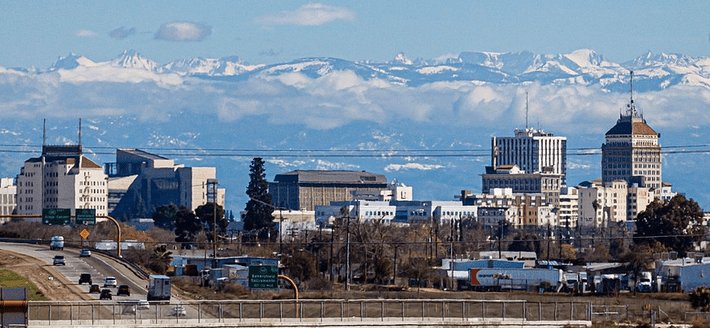
Streetsblog has written a lot about the effort to pass a new sales tax in Fresno County to replace Measure C, which has funded transportation projects for three decades and is set to expire next July. On November’s ballot, there are two measures to replace the tax, and they’re not exactly competing. Measure S is a county-wide tax that would replace the existing tax on July 1. Measure D is also a tax to replace the expiring Measure C but only applies in the City of Fresno.
There are a lot of key differences between the two measures, but the most important thing to note is that if Measure S passes, Measure D does not take effect no matter how many votes each measure receives. If both measures fail, the sales tax for all of Fresno County drops to 8.35% and the county’s funding for transit operations and road improvements collapses.
Measure S: A Countywide Transportation Plan
Measure S, also known as the Better Roads, Safe Streets initiative, would establish a half-cent sales tax dedicated to transportation throughout Fresno County. It is designed to replace Measure C, the existing half-cent transportation tax scheduled to expire on July 1, 2027. Thus, taxpayers will not see an increase in their tax bill.
The measure would generate an estimated $120 million in its first year and continue for 40 years. Its spending plan allocates 65% of revenue to local streets and roads and 25% to public transit, with the remainder divided among regional streets and highways, access and innovation programs, airport funding and administration.
Supporters argue that the measure would provide a reliable source of funding to repair local streets, improve safety, and maintain transit service. Opponents have raised concerns about the length of the tax, the cost to consumers, and spending priorities.
Unlike Measure D, Measure S establishes a framework for how transportation revenue must be allocated, along with independent audits and citizen oversight.
Streetsblog California has written a lot about Measure S, because the process to get the measure on the ballot was insane and involved a multi-year process to draft the measure, a signature drive, a move by a MAGA-aligned Board of Supervisors to prevent the measure from making the ballot, an intercession by Governor Newsom and the legislature, and a court case. You can read all of our coverage, here.
During all of that chaos, the city of Fresno decided that it needed a backup plan in case Measure S didn’t make it to the ballot or in case it failed. Supporters of Measure S urged the city to remove the measure from the ballot so it didn’t confuse voters, but by the time the court cases were completed, the deadline to remove Measure D had passed.
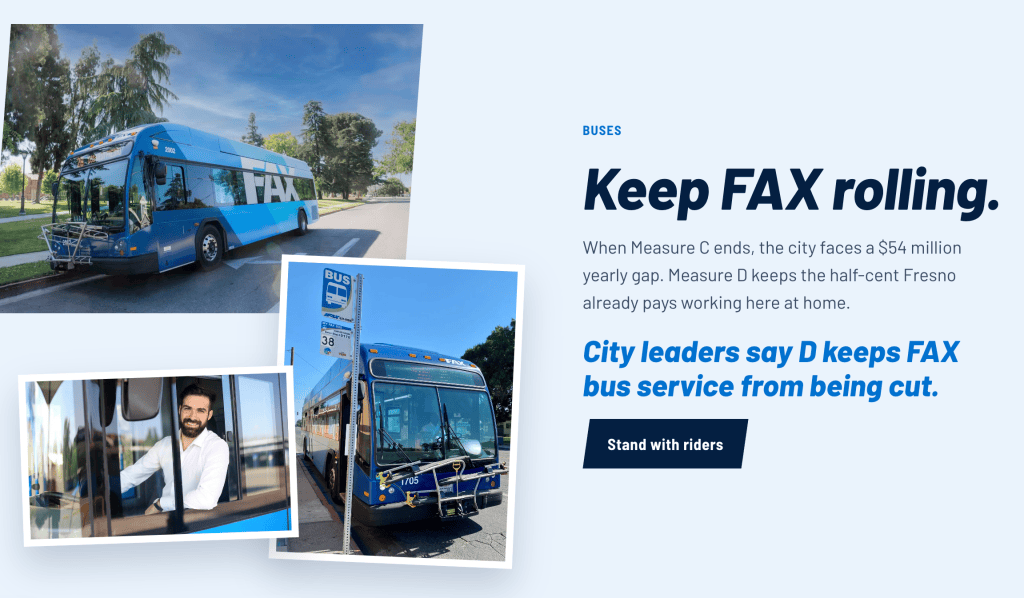
Measure D: Flexible Funding for Fresno
Measure D would establish a half-cent sales tax for the city of Fresno, generating an estimated $65 million annually. As noted above, if Measure S passes at the county-level, Measure D will not take effect regardless of how it performs at the ballot box.
Revenue would go into the city’s general fund, where the mayor and council would decide how to spend it via the annual budget process. Potential uses include street repairs, Fresno Area Express bus service, public safety, and other city services. The measure would not guarantee specific amounts for any of those purposes.
City officials have pursued Measure D as an alternative source of revenue as Measure C approaches expiration. If Measure S fails, Measure D could help the city address the resulting funding gap. But its general-fund structure means voters would have fewer guarantees about how the money would be spent.
The measure would last 10 years if activated and includes provisions for audits and citizen oversight.
Streetsblog’s Endorsement
Streetsblog California has endorsed Measure S. The publication has generally supported transportation taxes that include defined project lists or clear spending guidelines that help the state move closer to achieving its goals of reduced emissions, reduced car-dependency, and the creation of a robust multi-modal transit system.
Streetsblog neither endorses nor opposes Measure D because it isn’t really a transportation tax. Yes, it would replace Measure C funds for the voters who live in Fresno. Yes, Mayor Jerry Dyer and the councilmembers who worked on the language say it will go towards transportation. However, the language doesn’t specify that, so a new mayor and/or city council might choose to spend the money on something else.
So voters don’t know what the long term impact of passing Measure D would be. Generally, Streetsblog has opposed measures such as this one. But, with the existing transit funding stream from Measure C expiring in July, if Measure S fails at the county level the region is out of time to find a replacement before major cuts to transit service would happen.
If Fresno’s open-ended funding tax puts those cuts on hold, even if just for a couple of years, for the city’s transit that is a worthwhile goal. Is it enough to justify voting for a tax without a spending plan of any sort? That’s up to you.
Further reading: Fresnoland’s Measure D explainer, The Fresno Bee on Measure D, The Business Journal’s Measure S commentary and The Fresno Bee’s Measure S voter guide.
Streetsblog has migrated to a new comment system. New commenters can register directly in the comments section of any article. Returning commenters: your previous comments and display name have been preserved, but you'll need to reclaim your account by clicking "Forgot your password?" on the sign-in form, entering your email, and following the verification link to set a new password — this is required because passwords could not be carried over during the migration. For questions, contact tips@streetsblog.org.