Want to Win a Statewide Race? Embrace Transit Early and Often

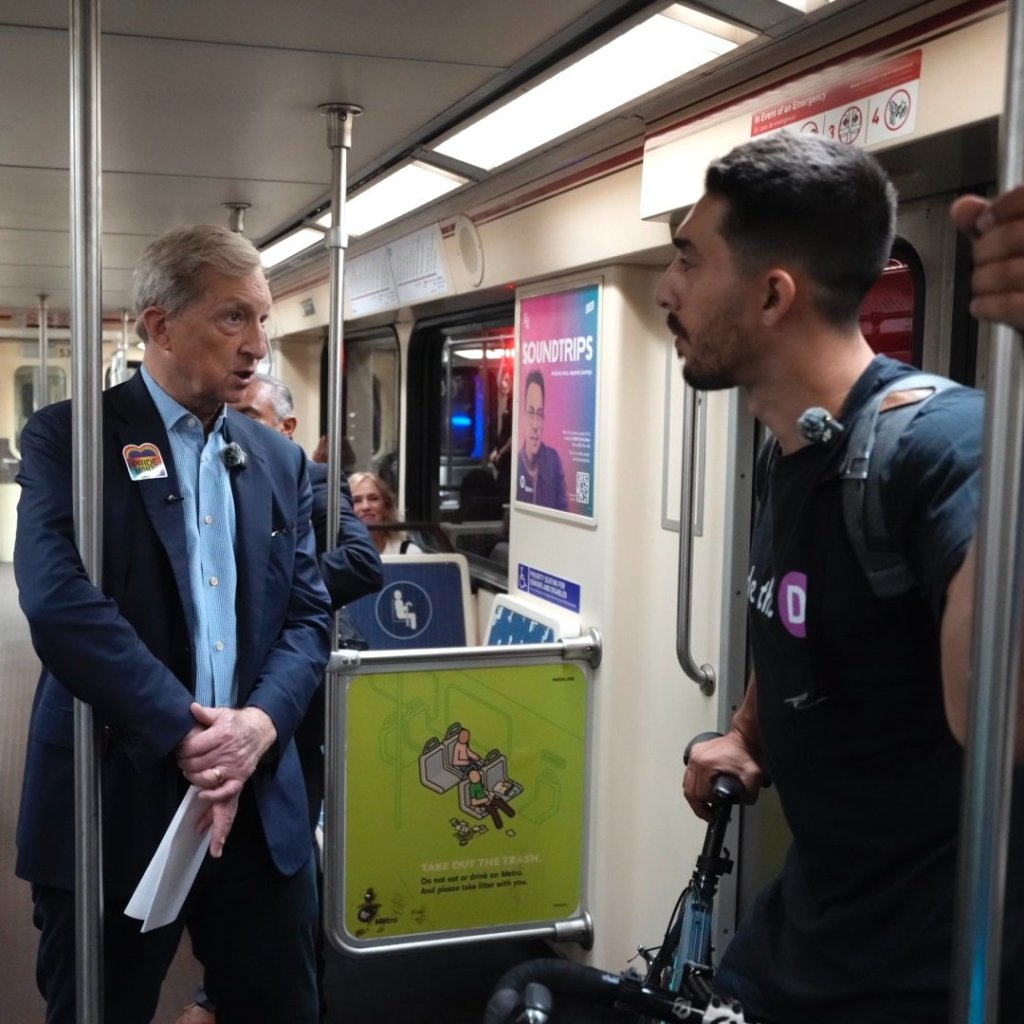
“No better day to ride the D (train) than election day,” posted Tom Steyer yesterday morning at 11:12 a.m. on X.
The problem isn’t that Steyer talked about transit on election day. The problem is that he waited until election day. California voters consistently support transit funding at the ballot box, yet no major candidate in the governor’s race made transit a centerpiece of their campaign.
In a crowded Democratic primary where candidates struggled to distinguish themselves from one another, a bold, unapologetic vision for better buses, trains, and public transportation could have provided exactly the contrast voters were looking for. Instead, candidates largely ceded the issue and spent the campaign talking about gas prices, taxes, and housing, leaving millions of transit riders without a champion in the race.
The impromptu election-day interview Steyer gave to Torched editor Alissa Walker may end up being the most substantive transit discussion of the entire governor’s race.
It almost certainly won’t be enough to save his campaign. As of election night, Steyer was running a distant third in California’s top-two primary. More mail ballots remain to be counted, but a deficit of nearly eight percentage points is a difficult gap to close.
Still, the election offered another reminder that transit remains a politically potent issue when candidates choose to talk about it.
Breaking: California Voters Back Transit Measure
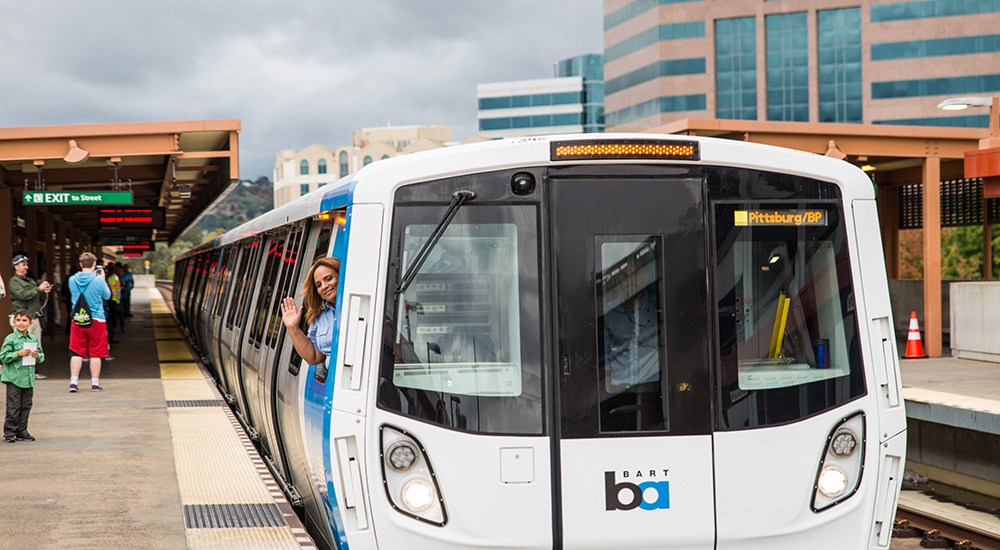
Voters in Sonoma and Marin counties overwhelmingly approved a ballot measure extending the Sonoma-Marin Area Rail Transit (SMART) district’s quarter-cent sales tax for another 30 years. For more, visit, “Election Result Underscores Message: Bay Area Wants Car Dependence to End” at Streetsblog San Francisco.
The tax, first approved in 2008 and set to expire in 2029, generates roughly $51 million annually and serves as the backbone of SMART’s operating budget. Early returns showed support hovering around 70 percent in both Marin and Sonoma Counties, well above the simple majority needed for passage.
The victory comes as Bay Area leaders prepare for larger transit funding fights this fall. Regional measures for the November ballot to support both transit regionally, and SF Muni in particular, gathered nearly twice the signatures required.
As we’ve written before, supporting transit appears to be a politically popular position.
Many Tax Measures Didn’t Pass
That lesson becomes even clearer when viewed alongside the broader election results.
With people’s budgets stretched thin by inflation, it was overall a bad night for tax and fee measures throughout California, demonstrating that the passage of Measure B in the Bay was a true victory for transit.
Just miles away in the East Bay, Oakland voters rejected a parcel tax that would have funded general services. In San Diego, a measure to tax vacant homes is also failing. Funds from that tax would also go to the general fund. Throughout Monterey County, smaller municipalities were also rejecting non-transit taxes. Heck, even San Francisco rejected a CEO Tax.
In Los Angeles County, voters rejected a new tax to fund emergency services.
In the City of Los Angeles, a new tax on hotel occupancy also failed. Two measures that clarified that taxes on cannabis products applies to all sellers of said products and that hotel/transient taxes apply to all short-term rentals did pass.
Taken together, the results suggest that voters were generally skeptical of new taxes. That’s what makes the SMART victory stand out.
Candidates looking for a way to stand out in future statewide races might want to take note. If transit is going to be part of a campaign message, it should be embraced early and often. That’s how to stand out in a crowded field.
Streetsblog has migrated to a new comment system. New commenters can register directly in the comments section of any article. Returning commenters: your previous comments and display name have been preserved, but you'll need to reclaim your account by clicking "Forgot your password?" on the sign-in form, entering your email, and following the verification link to set a new password — this is required because passwords could not be carried over during the migration. For questions, contact tips@streetsblog.org.