Eyes on the Street: East L.A. Median Stormwater Capture Project, Multiuse Path
Opening later this year, the project will capture and infiltrate rainwater and urban runoff - turning dried out and unmaintained large medians into recreation areas with paths, landscaping, and more than 300 trees.
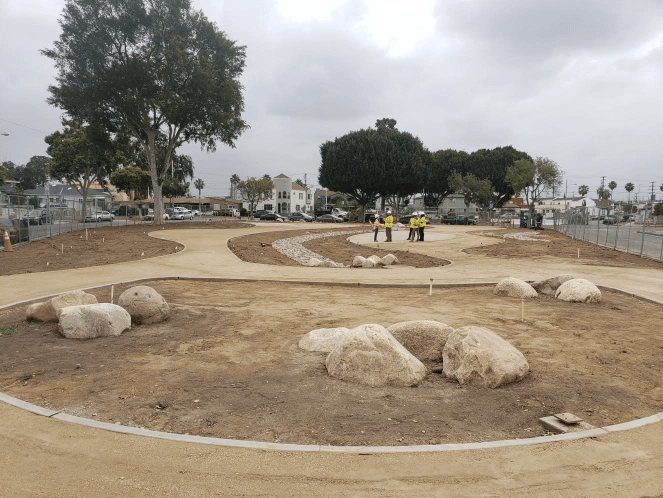
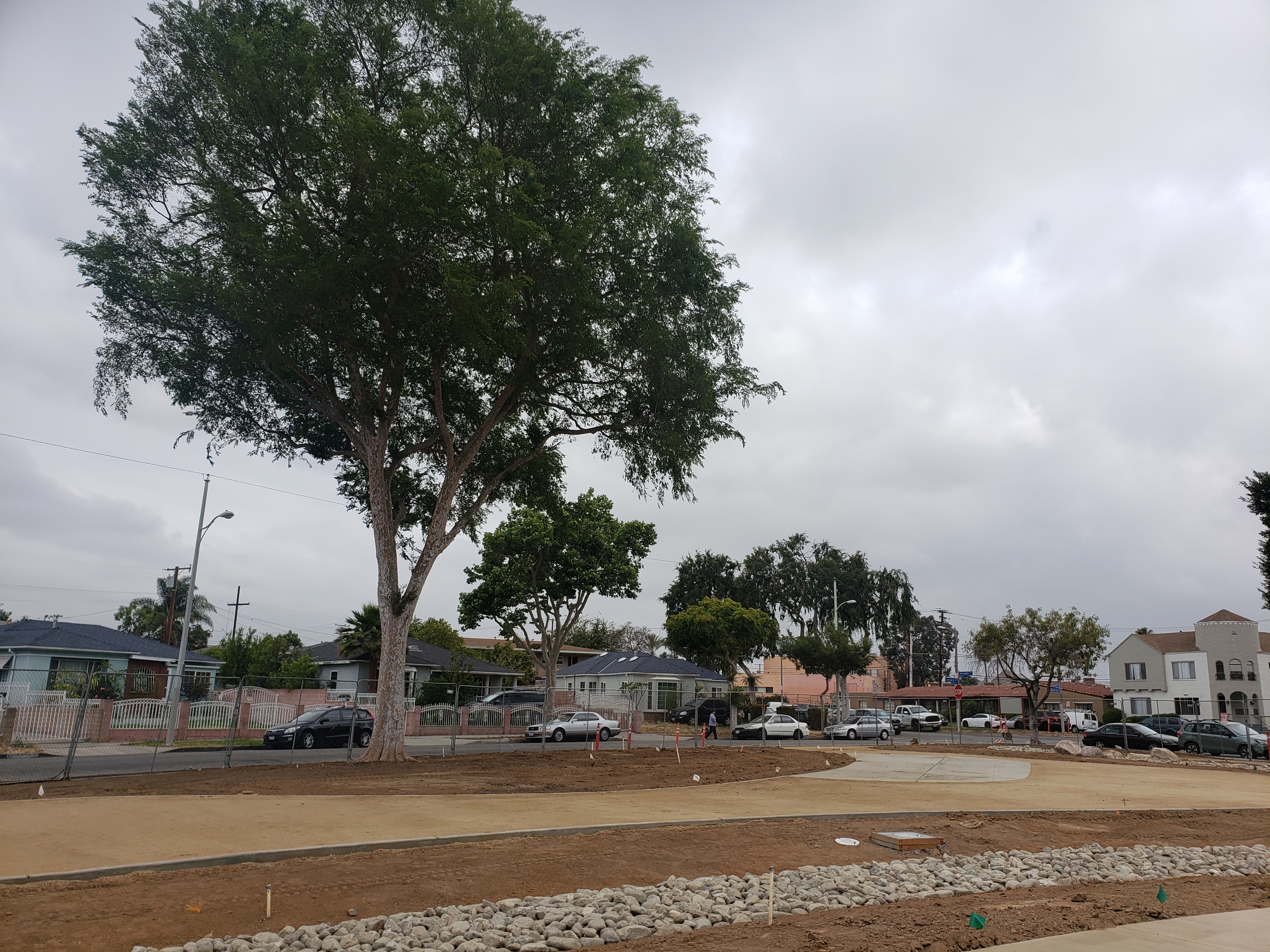
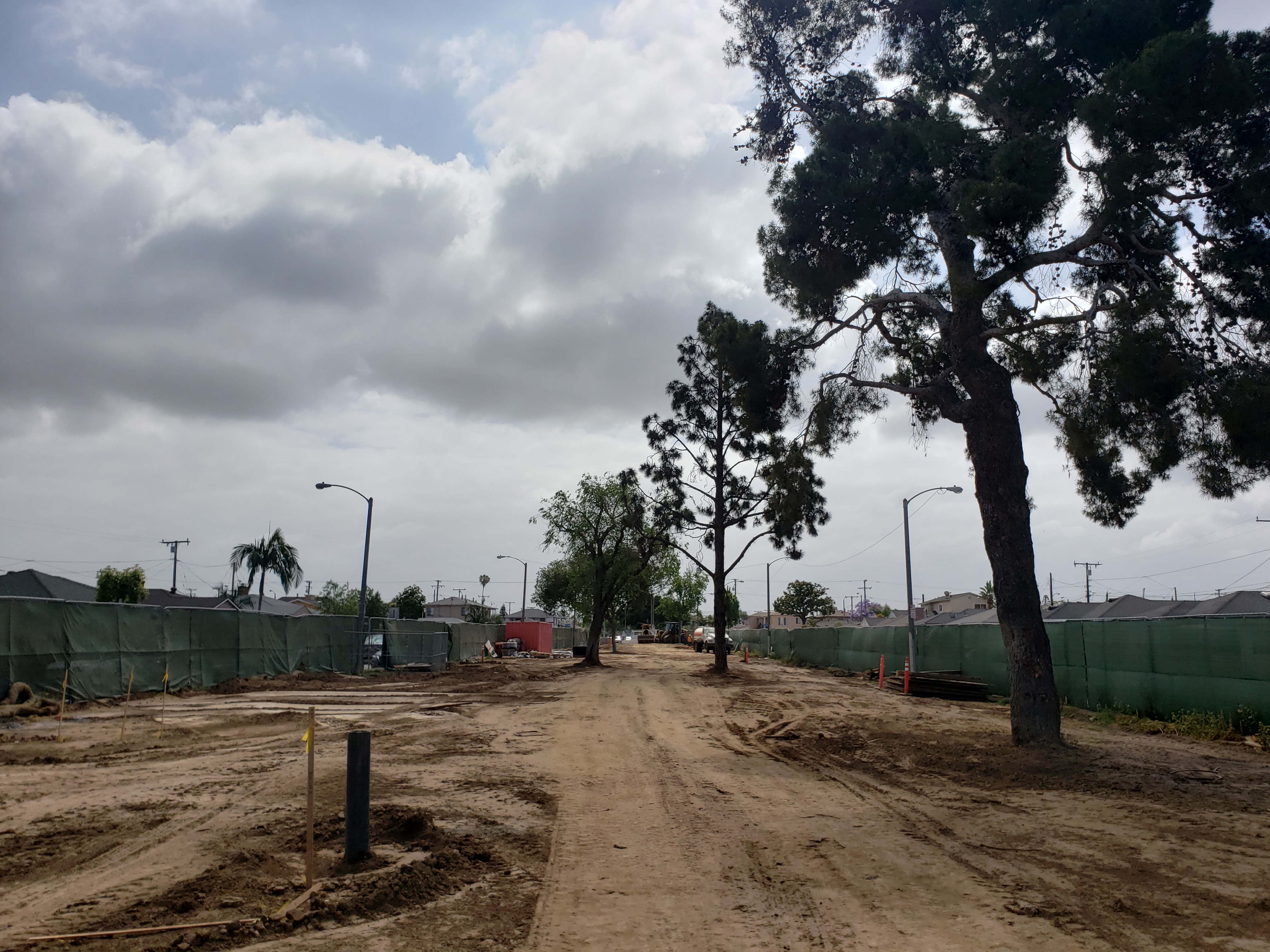
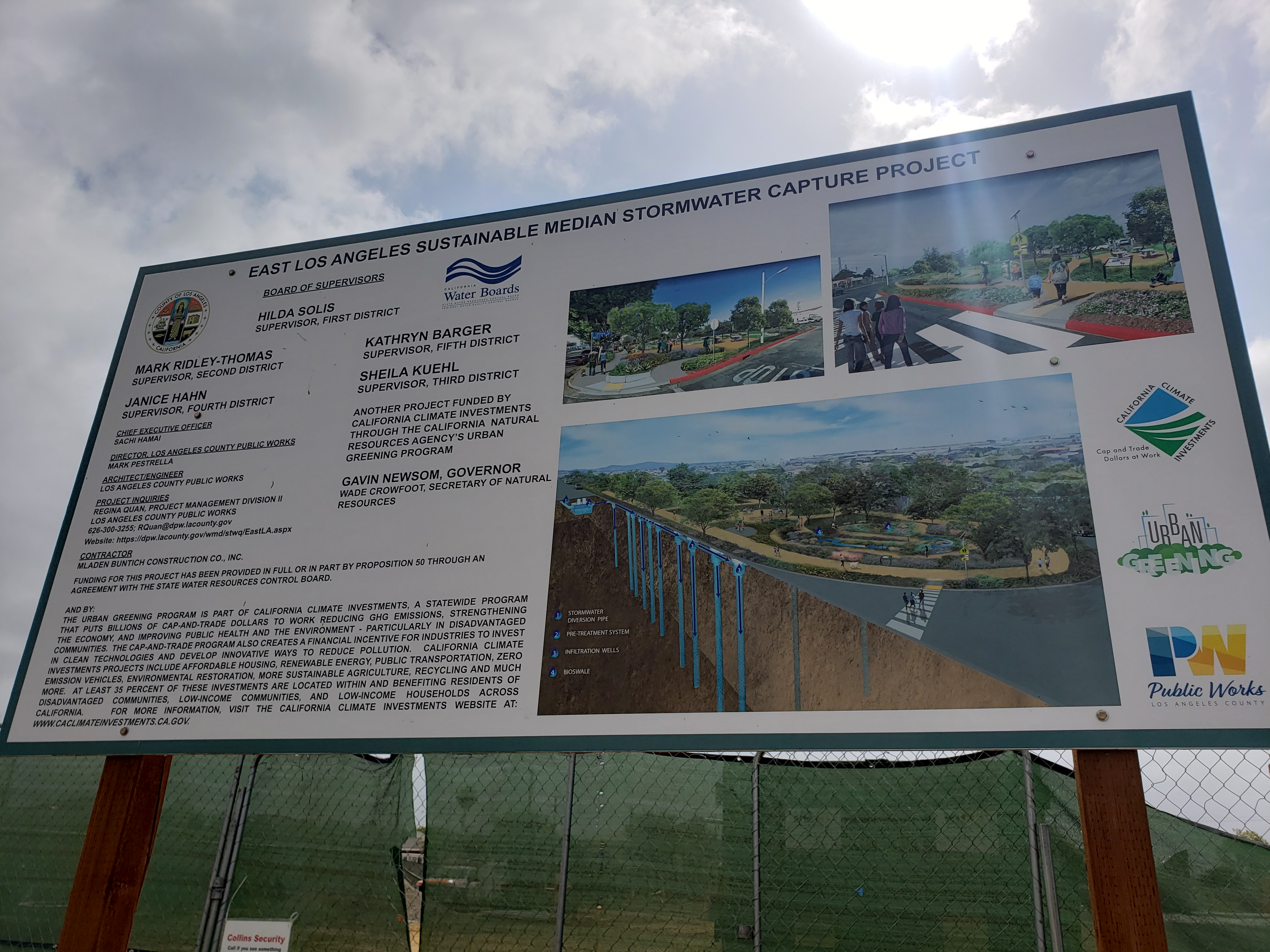
Los Angeles County Public Works staff recently gave Streetsblog L.A. a tour of its East Los Angeles Sustainable Median Stormwater Capture Project. In addition to capturing and infiltrating approximately 21 acre-feet of rainwater and urban runoff from a 3,000-acre area of mostly homes and commercial properties, the project is also turning dried out and unmaintained greenways into recreation areas complete with jogging paths, drought tolerant landscaping, and more than 300 trees.
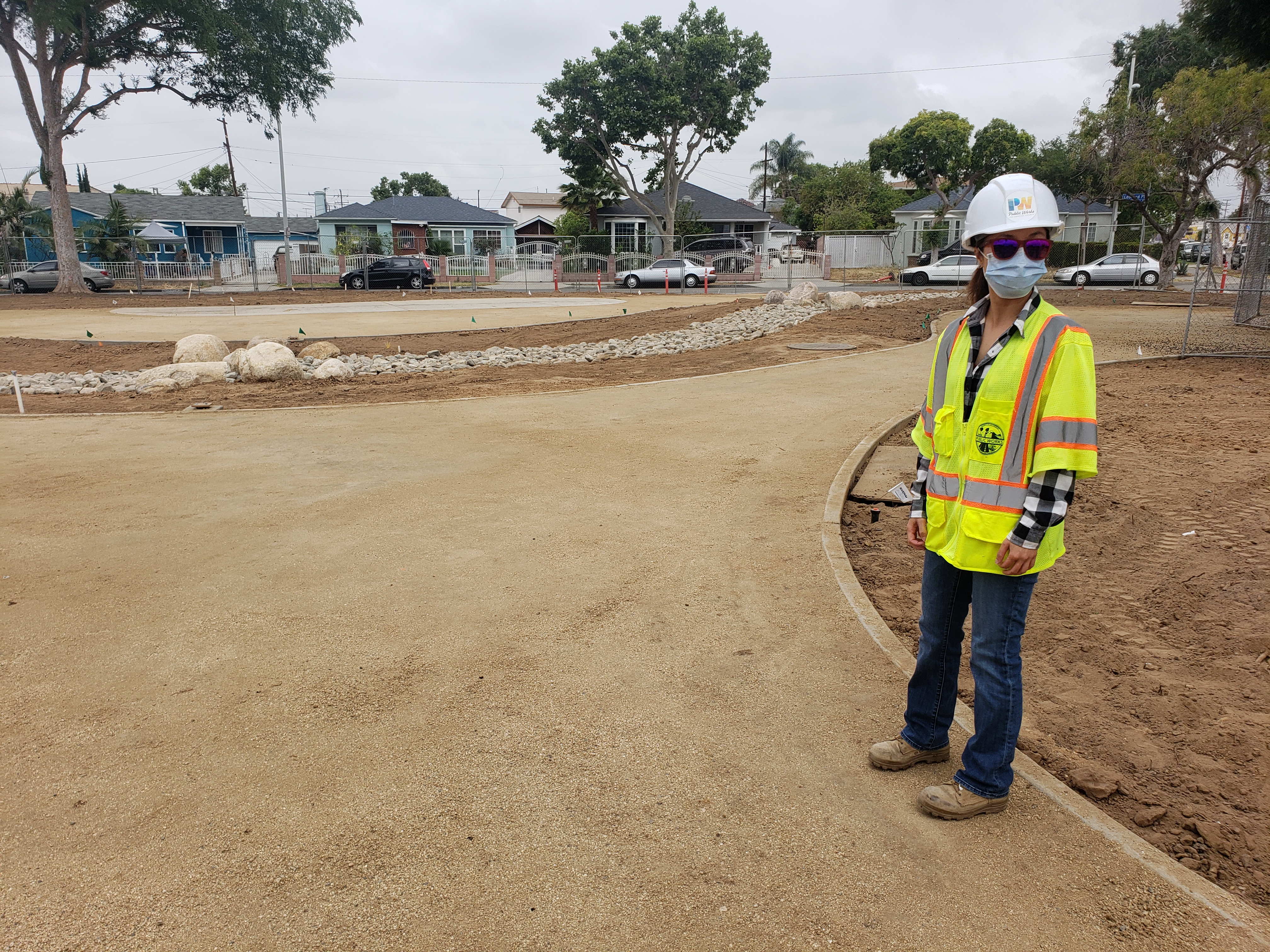
Most of the underground work has been completed, and the above ground work, which includes the landscaping and recreational uses, is currently underway, said Regina Quan, capital project management associate at LACDPW. Many of the medians got new curb ramps and walkway paths that are ADA compliant and will be getting soil and vegetation soon.
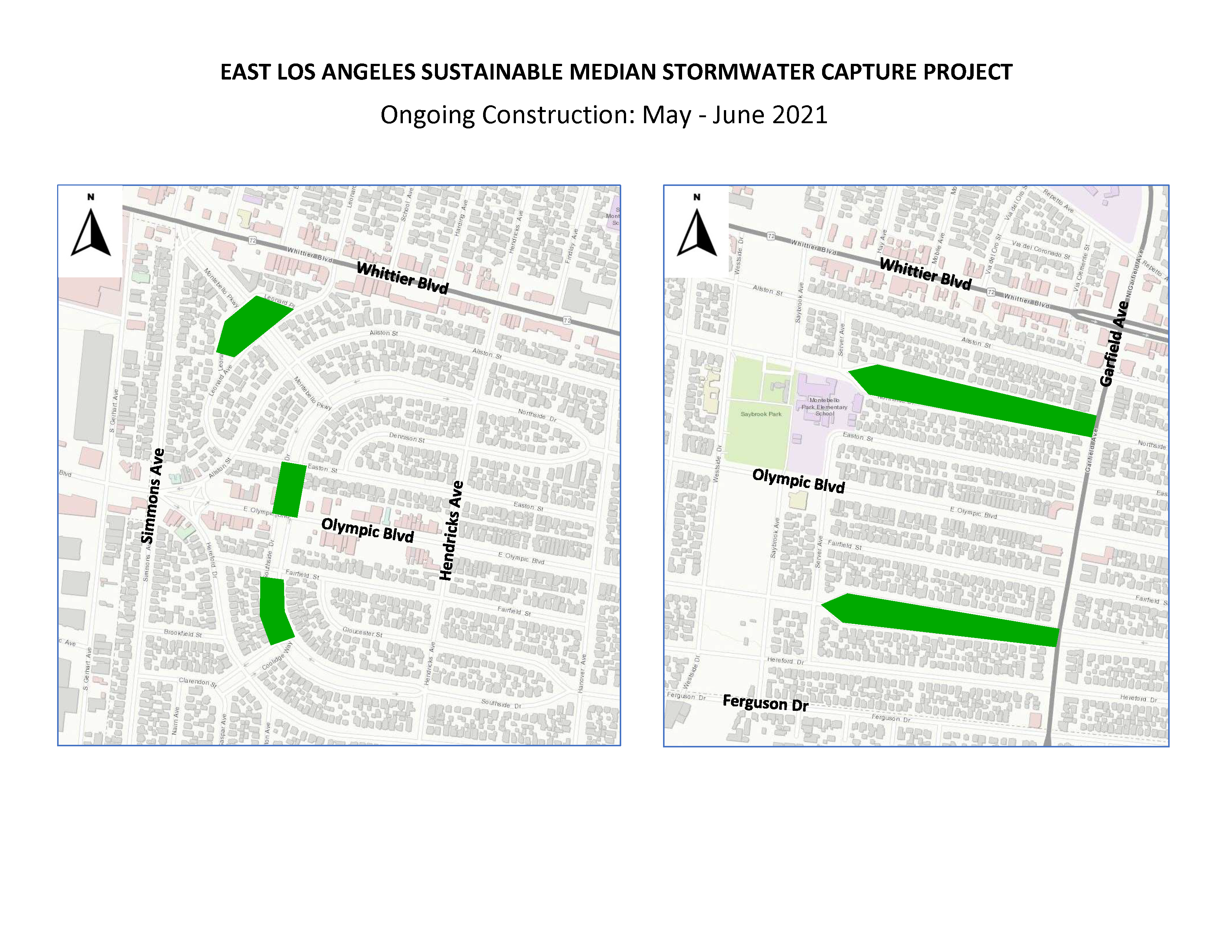
Encompassing five medians of varying size, the project is expected to be completed by the end of the year, Quan said.
Map of East Los Angeles Sustainable Median Stormwater Capture Project. Image: Los Angeles County Public Works
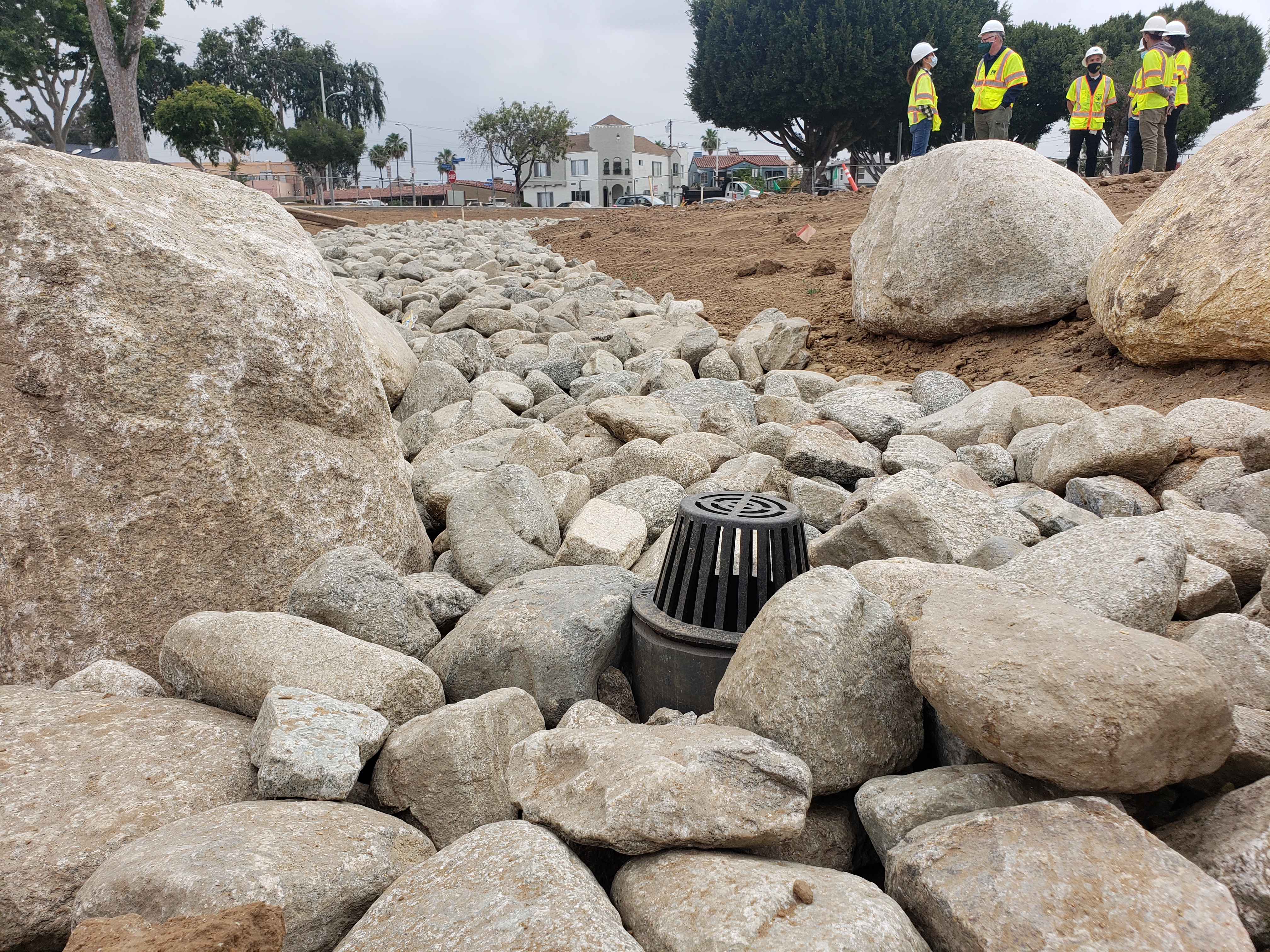
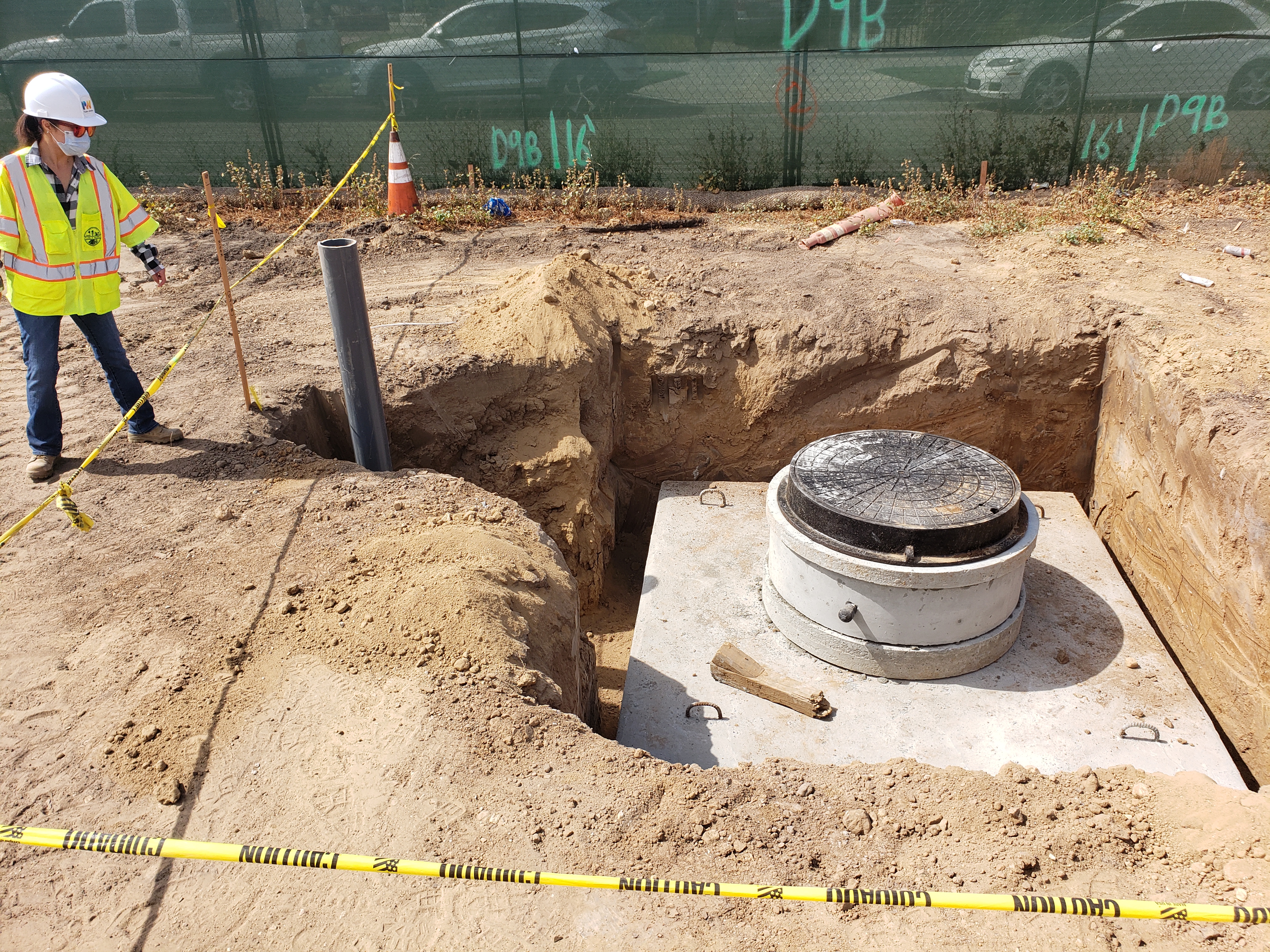
More than 100 drywells have been installed and go about a 100 feet depth. Water will get captured through existing storm drains and get pulled into the network of filtration systems before it enters into the drywells and groundwater supply. Rainwater will also be collected through bioswales and go directly to the drywells.
“We started August 2020 of last year, we’ll finish by the end of this year,” Quan said.
The filtration system traps trash, metals and bacteria; these will get separated and will be cleaned by maintenance staff after rainy days. A water maintenance program will include a water quality monitoring for both cleaning the filtration system and measuring the water quality before it enters the system and after to see how much the water improves before it goes into the ground.
Regina Quan, capital project management associate at LACDPW, stands at a nearly completed median. Most of the underground work has been completed for most of the medians in the East Los Angeles Sustainable Median Stormwater Capture Project. The above ground work, which includes the landscaping and recreational uses, is currently being worked on.A bioswale on a median near the corner of Montebello Parkway and Whittier Boulevard. While much of the water filtered through the medians will actually come from nearby runoff from adjacent streets, anything that falls on the median will enter directly into the dry well. Kristopher Fortin/Streetsblog LA
More than 300 native and drought tolerant trees will be planted as a part of the project. Wherever possible, the existing trees were kept. Kristopher Fortin/Streetsblog LA
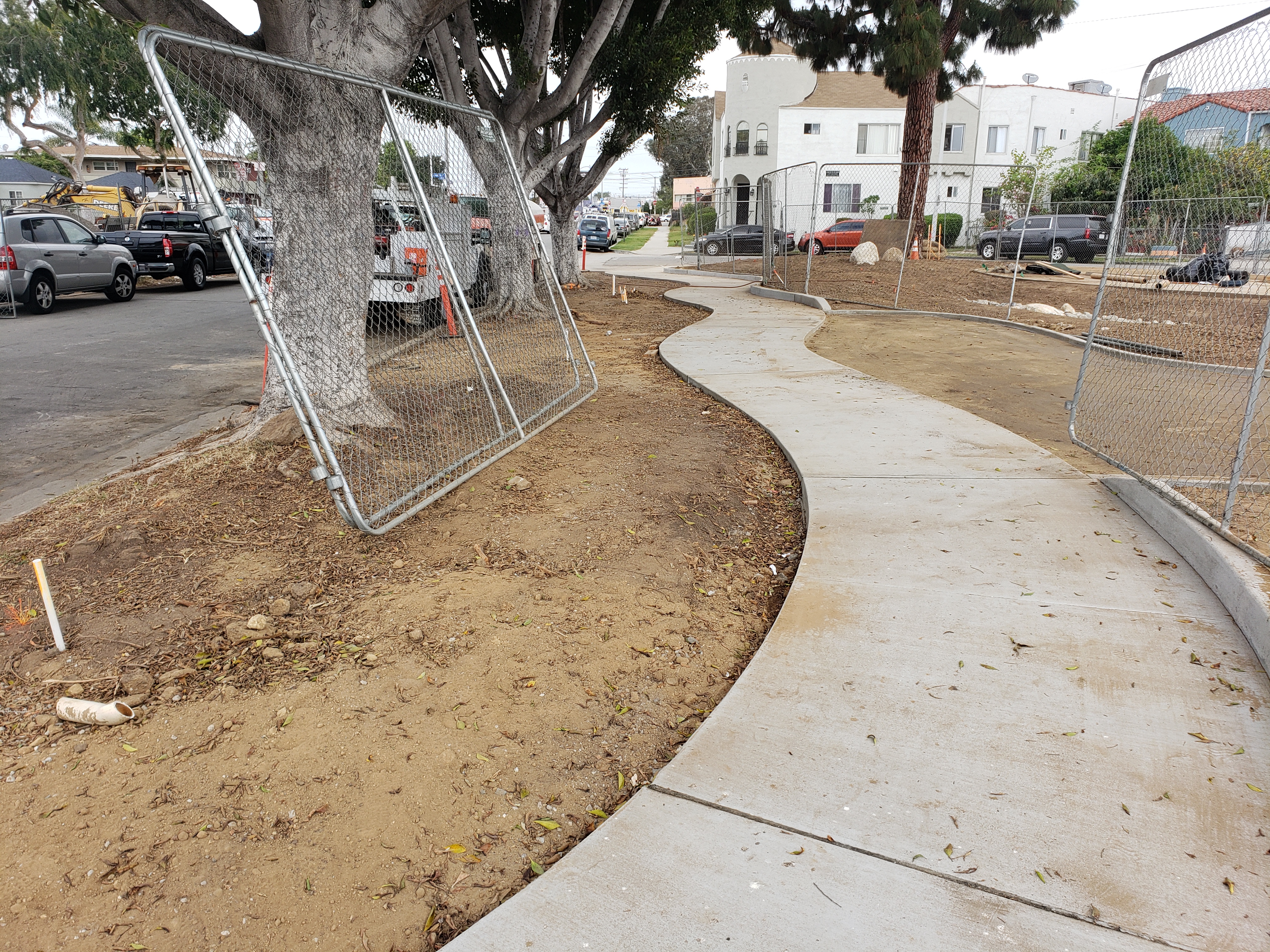
At a median near the corner of Montebello Parkway and Whittier Boulevard, new walkways carved out space for currently existing trees to allow for root growth. Kristopher Fortin/Streetsblog LAThe cover of a filtration system. Water will get cleansed by multiple filtration units before it enters into the drywell roughly 100 feet deep. Kristopher Fortin/Streetsblog LAMedian off Garfield Avenue and Olympic Boulevard. Kristopher Fortin/Streetsblog LAProject information signs at a median near Olympic Boulevard and Garfield Avenue. Kristopher Fortin/Streetsblog LA
SBLA San Gabriel Valley coverage, including this article and SGV Connect, is supported by Foothill Transit, offering car-free travel throughout the San Gabriel Valley with connections to the new Gold Line Stations across the Foothills and Commuter Express lines traveling into the heart of downtown L.A. To plan your trip, visit Foothill Transit. “Foothill Transit. Going Good Places.”
Streetsblog has migrated to a new comment system. New commenters can register directly in the comments section of any article. Returning commenters: your previous comments and display name have been preserved, but you'll need to reclaim your account by clicking "Forgot your password?" on the sign-in form, entering your email, and following the verification link to set a new password — this is required because passwords could not be carried over during the migration. For questions, contact tips@streetsblog.org.
More on the election, groundbreaking for light rail in Van Nuys and a bonus video from Streetsblog NYC on the chaos of people walking and bicycling in Central Park.
With rapidly growing ridership, improving customer satisfaction and long-awaited regional integration moving forward, the future of Bay Area transit is bright — but only if voters pass Measure RTM.
As part of a federally recognized 501c(3) public charity, Streetsblog can’t endorse candidates, but we do want you to vote. We can endorse ballot measures, and our full endorsements can be found at the bottom of this article.