Helmets Do Nothing, Says British Surgeon


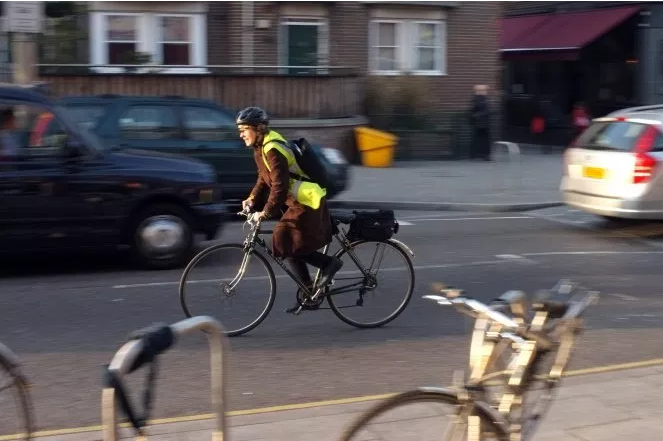
Many cyclists believe bike helmets will protect their skull if they ever get into a crash, but a British neurosurgeon claimed they are not worth the trouble.
Dr. Henry Marsh, a neurosurgeon at St. George’s Hospital in London who treats patients with cycling injuries, argued that most helmets are ineffective and “too flimsy” to keep riders safe.
“I ride a bike and I never wear a helmet. In the countries where bike helmets are compulsory there has been no reduction in bike injuries whatsoever,” Marsh said at the Hay Literary Festival earlier this year, according to the Telegraph. “I see lots of people in bike accidents and these flimsy little helmets don’t help.”
Cyclists rode over 3 billion miles a year in the United Kingdom, but they are not required to wear protective headgear, unlike in Australia and parts of the United States, where cycling without a helmet can earn a ticket from the cops.
Marsh told the festival crowd he has been riding bikes in Great Britain for four decades and “has only been knocked off once,” adding, “I wear a cowboy hat and cowboy boots. I look completely mad.”
Instead, he believes helmets gives cyclists a false sense of security on the road.
He pointed to a January, 2016, study by the University of Bath that found cyclists wearing a helmet are likely to take more risks on the road than if they just wore a baseball cap.
“People’s perceptions of safety influence their risk taking,” psychologists Tim Gable and Ian Walker wrote. “People using protective equipment against specific hazards might also be unduly inclined to take risks that such protective equipment cannot reasonably be expected to guard against.”
But helmet-wearing cyclists also influence motorists who veer three inches closer to cyclists while trying to pass them because they perceive those cyclists as safer, Walker has found in earlier studies.
“Many people have theories to say that cyclists can make themselves safer if they wear this or that,” Walker said in a release referring to his 2013 study. “Our study suggests that, no matter what you wear, it will do nothing to prevent a small minority of people from getting dangerously close when they overtake you.”
Yet there’s plenty of evidence that helmets are effective in low-speed collisions, and Marsh acknowledged children should wear helmets while riding in traffic.
Many cyclists continue to swear by helmets. Crash victims, as well as professional cyclists including Tour de France champion Geraint Thomas, want the UK to require cyclists to wear the headgear.
Olympic rowing gold medalist James Cracknell told the Telegraph that he nearly died in 2010 when a car’s side view mirror smashed his head at 70 miles per hour.
“There is no downside to wearing a helmet except having messy hair. And you have to remember that eight out of 10 kids who have cycling accidents are not on the road,” he said. “Even if you don’t care enough about yourself to wear a helmet other people care about you.”

Streetsblog has migrated to a new comment system. New commenters can register directly in the comments section of any article. Returning commenters: your previous comments and display name have been preserved, but you'll need to reclaim your account by clicking "Forgot your password?" on the sign-in form, entering your email, and following the verification link to set a new password — this is required because passwords could not be carried over during the migration. For questions, contact tips@streetsblog.org.