A New Approach to Retrofitting a Dangerous Suburban Road

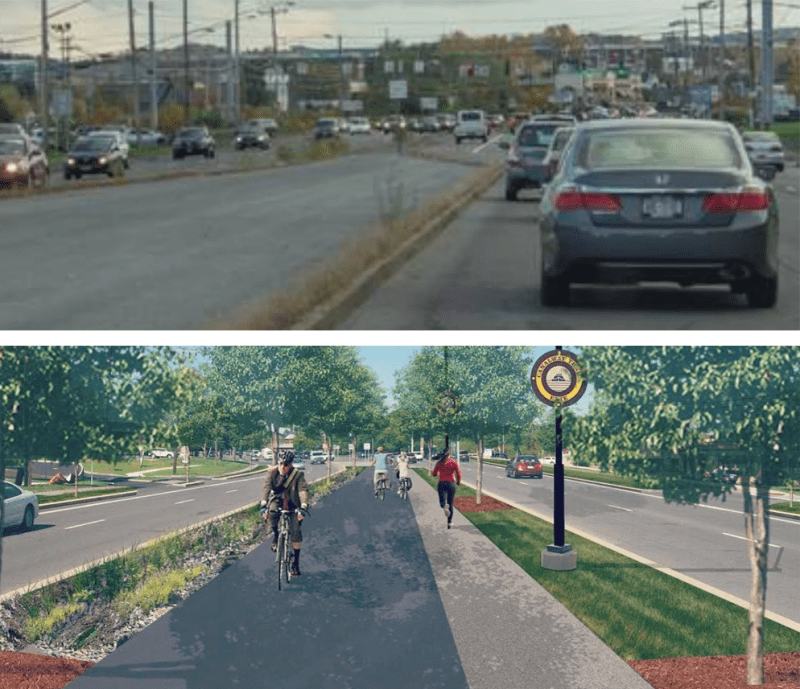
Erie Boulevard East in Dewitt, New York, is ugly, stressful, and dangerous. It’s also entirely unremarkable in America’s suburban landscape.
The defining feature of this grey, six-lane road is its weed-lined concrete median. If you even try to walk or bike on Erie Boulevard, you’ll immediately feel like you’re doing something wrong.
The street has “absolutely no regard to aesthetics or humanity,” said Sam Gordon, Dewitt’s director of planning. “It’s existed that way ever since that was put in.”
Erie Boulevard typifies suburban roads that were designed and built to funnel motorized traffic. But it’s about to get an overhaul drawn up to meet completely different goals: safety, walkability, bikeability, and public health.
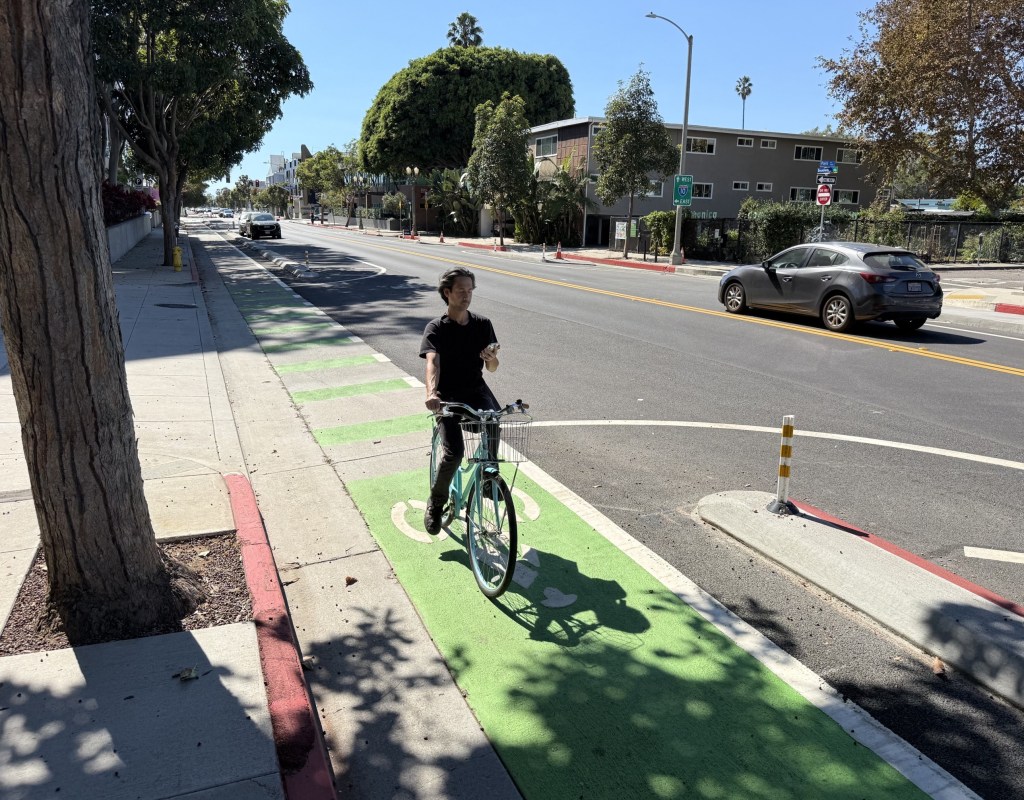
The cities of Dewitt and Syracuse, with help from the state of New York, which contributed $18 million to the project, will be repurposing two of the car lanes along 2.75 miles of Erie Boulevard to make room for a center-running bikeway and pedestrian safety improvements at intersections.
Dewitt is a suburb that developed during the heyday of the auto era. It has no real town center save a shopping mall. But Erie Boulevard is lined with stores and restaurants — the problem is that people can only get to them by car, given the current design of the street. Gordon thinks this project could serve as a model for other suburban communities that want to retrofit dangerous, car-centric roads as safe, useful biking and walking connections.
The greenway is the result of a sustained public engagement process and an international design competition. The center-running design was chosen from 70 entries, Gordon said. Working with Alta Planning + Design, the cities decided that a bikeway in the median would be safer than curbside protected bike lanes because, like many suburban arterials, Erie Boulevard is riddled with driveways.

The dimensions of Erie Boulevard and the roads it crosses present challenges at intersections. Junctions are wide, with lots of turning movements, so traffic signals will have dedicated bicycle phases to separate people on bikes from motorists crossing the greenway. Intersections will also get upgraded walking infrastructure, including pedestrian islands and high-visibility crosswalks.
In addition to serving as a local biking connection, the greenway on Erie Boulevard will link up with the larger Erie Canalway Trail System, eventually running all the way from Buffalo to Albany. Erie Boulevard itself runs over a filled-in part of the canal system, which has been significantly rerouted since it opened in the first half of the 19th Century.
Gordon hopes the project will reconnect people to that heritage. “There’s no reference to that along the corridor,” he said. “The reason why central New York exists really can be attributed back to the history of the Erie Canal. And that’s basically been erased.”
Construction on the Erie Boulevard redesign is slated to start in spring 2019 and wrap up in 2020.


Streetsblog has migrated to a new comment system. New commenters can register directly in the comments section of any article. Returning commenters: your previous comments and display name have been preserved, but you'll need to reclaim your account by clicking "Forgot your password?" on the sign-in form, entering your email, and following the verification link to set a new password — this is required because passwords could not be carried over during the migration. For questions, contact tips@streetsblog.org.