An Update on Contactless Fare Payment across Agencies in California

Evan Tschuy is a Bay Area-based hiker and transportation advocate, and the creator of Hiking by Transit, a project mapping hikes accessible via public transit in suburban and rural areas across Northern California and the Sierra Nevada.
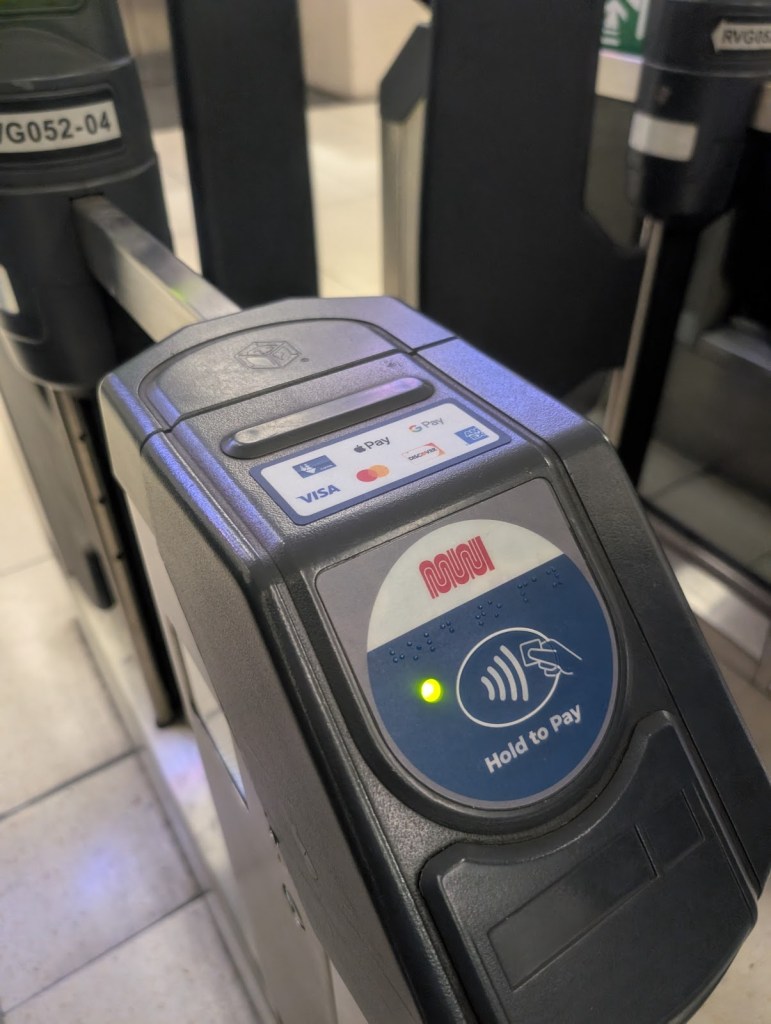
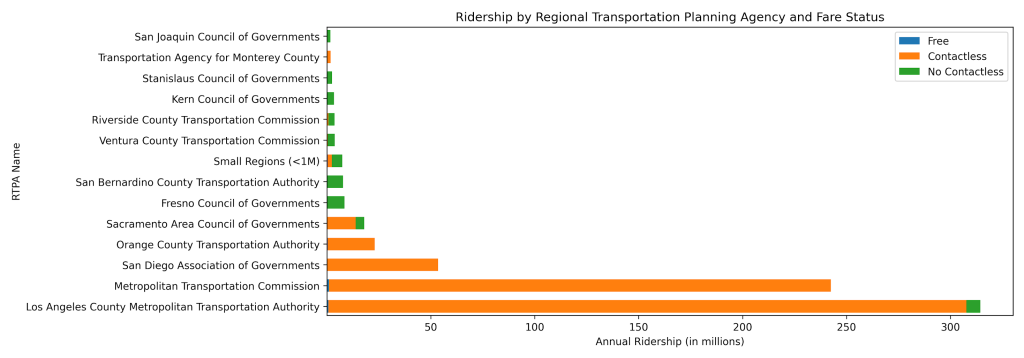
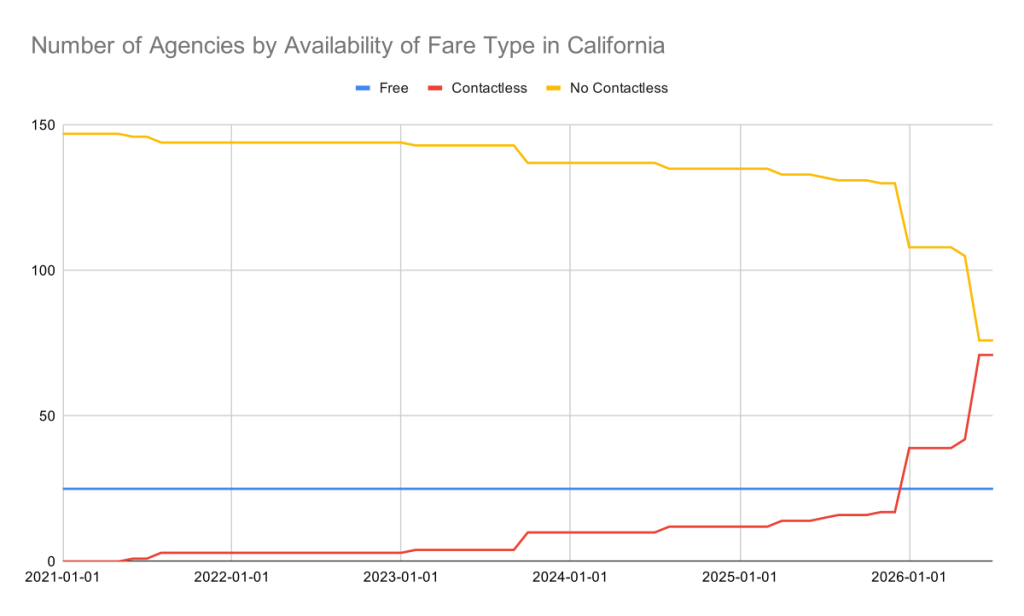
This month, Los Angeles County is welcoming a new generation of contactless fare payment. In the lead up to the World Cup, LA Metro and partner agencies launched the ability to use any contactless credit or debit card, including mobile wallets, to pay an adult full fare. This change is occurring across California: at the beginning of 2025, under a quarter of trips in California took place on systems that either accepted contactless fare payment or were fare-free. Within the next year, that will be closer to 95% of trips, from Redding to Victor Valley and beyond.
This “open-loop” fare payment – paying with a normal contactless credit card, Apple Pay, or Google Wallet, instead of a single-purpose transit card – makes life easier for both riders and operators. Occasional riders, like visitors, tourists, or people on infrequent regional trips no longer have to look up fares, get change, or purchase a farecard. Agencies no longer have to handle as much cash, speeding up boarding times and reducing physical labor costs.
The new technology also allows new fare policies.Oakland’s AC Transit has used the new technology to roll out fare capping, where a rider pays a regular fare each time they tap until they’ve reached the price of a monthly pass, after which additional rides cost nothing.
From Regional Pilots to Statewide Adoption
The California Integrated Travel Project (Cal-ITP) was created in 2019 by the state to lead a statewide effort to modernize transportation across the state, and make transit an easy and obvious choice. It provides both a long term vision for how transit could be improved across the state, and the technical support and procurement to implement it to agencies that often lack sufficient in-house technical staff. Their efforts, along with state grants, have made it the standard for even small agencies to appear on Google Maps and even have real-time tracking.
The first agency in the state to roll out contactless payment was Monterey County’s Monterey-Salinas Transit, launching in early 2021 as a Cal-ITP pilot, followed by a handful of other small agencies. In 2024, San Diego launched the first large-scale, multi-operator deployment. In both Los Angeles and San Francisco, this summer’s World Cup gave agencies a rallying point: transit needs to be the default way to get around to avoid gridlock, and to get people on board, riding needs to be frictionless. The Bay Area’s Clipper 2.0 launched in December, while TAP Plus is rolling out now.
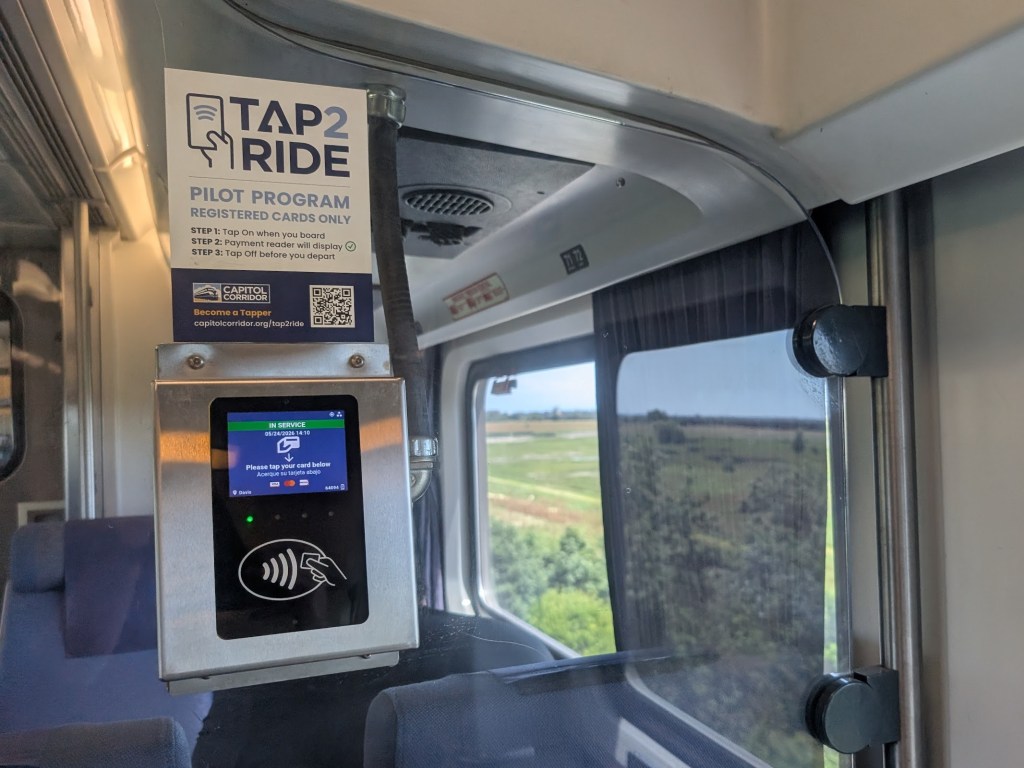
Regional rail agencies are also beginning to adopt contactless payment: Southern California’s Metrolink commuter rail is launching a six-month pilot on its San Bernardino and Arrow services, and the Sacramento-to-San Jose Capitol Corridor train will become the first intercity line nationwide to take tap-to-pay fares when it expands its Tap2Ride program, which until now has required advance registration.
The Central Valley and Inland Urban Transit
After deployments in California’s big three coastal metros and Sacramento, cities up and down the Central Valley are close behind, though progress is uneven. Earlier this year, transit in Redding and Stockton launched contactless payment, with Modesto and Bakersfield set to follow in the coming months.
These agencies, often serving relatively large cities which lack the taxbase and political support of the state’s largest regions, have the greatest need and sometimes the hardest time getting needed support for modernization. Fresno approved a contract for a farecard in early 2020, before then going fare-free. Since bringing back fares, the agency has not restarted procurement for a new farecard or contactless, leaving them as California’s largest cash-only agency by ridership.
Smaller agencies in the Central Valley are only now beginning to look at fare modernization: Butte County and the ACE commuter railroad just launched new fare platforms that don’t yet support contactless while rural Kern Transit and the City of Turlock have it in planning documents but aren’t currently pursuing procurement.
Rural Regions: Haves and Have Nots
Agencies in rural regions of the state, further away from the midsize cities of the Valley, tend to work with neighboring agencies as peers to operate services where passengers need to travel across county lines for even basic services.
The Lake Tahoe region, which sees crippling congestion when it quintuples in population during the busy winter and summer seasons, runs fare-free transit in an attempt to provide congestion relief.
On the North Coast, the three agencies from Mendocino County up to the Oregon border were early adopters of Cal-ITP’s programs and worked together on scheduling and on fare modernization. Today, all three take contactless and run coordinated transfers up 101. The Central Coast will fill in the gaps as the last two agencies between the Bay Area and Greater Los Angeles launch contactless fare payment later this year.
The services running north and south along the spine of the Sierra Nevada are a much more complex story. Eastern Sierra Transit, running from Reno and through the Owens Valley to Southern California, can be reserved online like more traditional intercity coach bus tickets, but cash payment on board is offered where space permits.
To the north, up to the Oregon border, the Sage Stage requires seat reservations over the phone and cash payment when boarding. Other agencies in the region, like Lassen Rural Bus, also only offer cash fare payment. These agencies serve very small numbers of riders – potentially as low as three figures monthly – and are structured for riders that have either planned ahead, like riders heading to or from the Pacific Crest Trail, or who are regular riders and know the system well, so the administrative overhead of fare modernization is hard to justify.
Besides administrative constraints, physical conditions in the mountainous regions of the state are also a major source of problems. Trinity Transit has worked closely with Cal-ITP on researching the feasibility of always-on internet based technologies including real-time tracking and contactless fare payment. Trinity County is mountainous, and a lack of cell service historically kept their buses disconnected. A pilot using Starlink demonstrated satellite internet provides great connectivity, but proved too costly to implement without further dedicated state funds.
Who’s Benefitting? Who’s Getting Left Behind?
Cal-ITP’s push for contactless fare payment is about lots of things, but a common theme is the need for a better customer experience. New technology can make it easier to choose transit – for a visitor who’s arrived without a car, for someone who decided to try transit and skip the hassle of parking downtown, or for someone who otherwise might choose a ridesharing app..
Agencies benefit from the higher ridership, and from the lower costs of fare collection as they move away from handling cash. Faster fare collection on busy urban services can lead to faster dwell times and faster transit.
Cal-ITP also has a major platform called Benefits, which allows riders who qualify for discount fares – Medicare cardholders, seniors, and other eligible riders – to register their card and get a discount fare every time they tap on many of the small and midsize agencies they work with. In March, San Luis Obispo became the first region to roll out a new Benefits feature allowing a rider to register once and get discounts on multiple cooperating agencies.
In contrast, LA Metro maintains that TAP Plus discount fares will be launching some time next year, while Clipper only plans on offering them contactless at some undetermined point in the future.
As part of the 2021 contactless pilot, Monterey-Salinas Transit and Cal-ITP studied equity for unbanked riders – riders without access to a bank account and dependent on cash payments. The pilot came with fare capping, meaning riders can pay as they go, without ever spending more in a week or month than a pass costs. This is only available when using contactless, meaning riders without a debit or credit card – generally the ones in the most precarious financial situations – needed to pay for a pass up front, or pay more over time in single-ride cash fares. The agency and Cal-ITP partnered with Cash App to launch the ability to load a Cash App debit card with cash at retail locations around the area, a program that Cash App has since expanded nationwide.
What’s Next?
The state shows no sign of slowing down. The state knows that its goal to get more Californians on board means making a more attractive system that can handle more riders more efficiently. As more and more agencies bring contactless fare payment online, it becomes more and more of an expectation from both new riders and from state partners, and smaller agencies will have more local and regional expertise to draw upon when deploying the technology themselves.
Besides reaching a point of saturation in deployments on bus agencies around the state, California will not have a truly statewide fare payment system until the way to pay is clear statewide. A new statewide standard for marking tap-on/tap-off systems, with decals on the door or marking on the fare reader, should be developed.
Other rail agencies should follow in the steps of the Capitol Corridor. Gold Runner trains currently require advance ticket purchase, but unreserved services like the Pacific Surfliner should launch contactless fare payment. The Pacific Surfliner already accepts Metrolink fares for the core sections of its line, and as Metrolink draws nearer to their 2028 Olympics deadline of contactless fare payment across their system, the two agencies will have to work to create a new understanding of how shared ticketing will work.
Discount fares remain a major unresolved issue. Clipper and TAP both need to push to complete a rollout of their discount fare programs, and Cal-ITP should work toward expanding Benefits into a statewide register-once program.
However, with some 95% of trips on transit agencies taking contactless, with realtime tracking, California’s efforts are emerging as one of the most ambitious statewide transit modernization efforts in the country – as long as we keep the momentum going.

Streetsblog has migrated to a new comment system. New commenters can register directly in the comments section of any article. Returning commenters: your previous comments and display name have been preserved, but you'll need to reclaim your account by clicking "Forgot your password?" on the sign-in form, entering your email, and following the verification link to set a new password — this is required because passwords could not be carried over during the migration. For questions, contact tips@streetsblog.org.