Should San Diego bring back bikeshare?

The following article first appeared at BuildSD.
When I first moved to San Diego, I noticed that despite the perfect weather and expanding bike lane network, something was missing: A bikeshare program. But if you’ve lived in San Diego before 2017, you might know that the city already had a fledgling bikeshare program. Launched in 2014, DecoBike had a couple hundred stations at its peak, stretching from Downtown to Pacific Beach. Then, just five years after it launched, it was unceremoniously wiped off the map. Why? And, despite the troubled history, is there any hope for giving bikeshare a second try?
DecoBike’s implementation was rough from the beginning; a victim of poor infrastructure and confused motivations. When it launched in 2014, DecoBike’s goal was to provide 1,700 bikes at 185 docks across San Diego. DecoBike members could use either a membership card or a credit card to undock their rental. While bikeshare in San Diego was initially pitched as a tool for reducing congestion for commuter trips, bikeshare docks were first installed in beach areas, ostensibly for their tourist appeal.
The early DecoBike system also had problems with lower ridership than expected, alongside other issues. A landmark 2015-2016 grand jury report synthesized much of the problems that DecoBike faced. Titled “San Diego’s Bikeshare System Needs Help,” the report found problems with neighborhood opposition, station placement, and uncooperative local government.
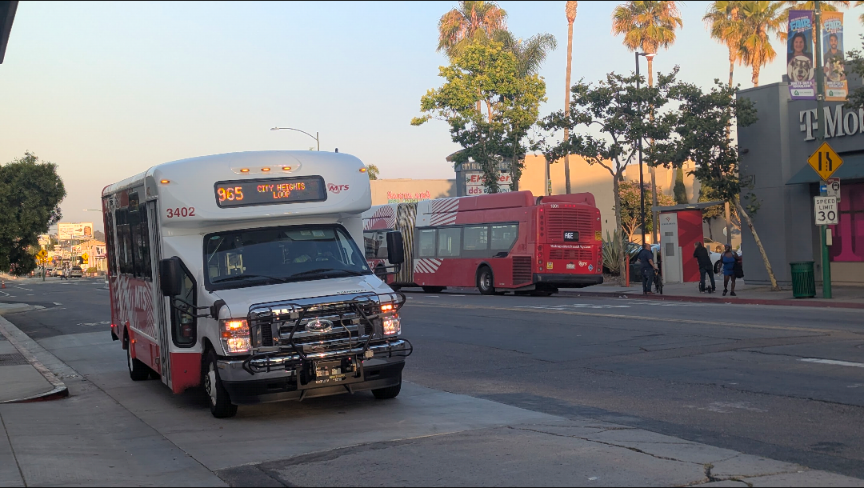
The report detailed that major tourist locations like Balboa Park repeatedly had station locations rejected,and criticised MTS for being uncooperative in placing stations near major transit stations such as Old Town Transit Center–important for the stated goal of solving the first-and-last mile problem. Meanwhile, the neighborhood of City Heights had no bikeshare access, despite requesting it, drawing concerns the program favored tourists over local residents, especially in historically disadvantaged areas.
The report continued by observing that no stations were installed in places like La Jolla due to community claims of being an “eyesore,” per the grand jury report. The neighborhood of Pacific Beach turned out to be one of DecoBike’s biggest critics, on account of the stations taking business away from local bike rental shops by the beach. So it goes, the free land and official support placed the independent shops at an unfair advantage. Fifteen such stations were ultimately closed in 2017, but it wasn’t long before the rest followed. Finally, DecoBike faced problems with the performance of its docking stations. 80% of the initial 85 rental kiosks had to be moved – either due to low usage, excess shade (preventing proper function of the solar panels), or because of resident or business complaints.
DecoBike also faced criticism for its high costs. While users could pay for a membership, costs for short trips could rapidly add up. Even a half-hour rental cost $5, over double MTS’ fixed-route local bus fare. But the death blow for DecoBike, later DiscoverBike, was that it was eventually not the only micromobility system in San Diego. Once the city approved dockless operators alongside DiscoverBike, the city was flooded with “armadas” of dockless rental bikes and scooters. The system struggled to compete with its dockless alternatives, especially since it could be difficult to find a dock near your destination, especially outside of downtown.
Under its new name, DiscoverBike faced dwindling ridership until its operating permit was pulled in 2019 for an unspecified breach of contract.
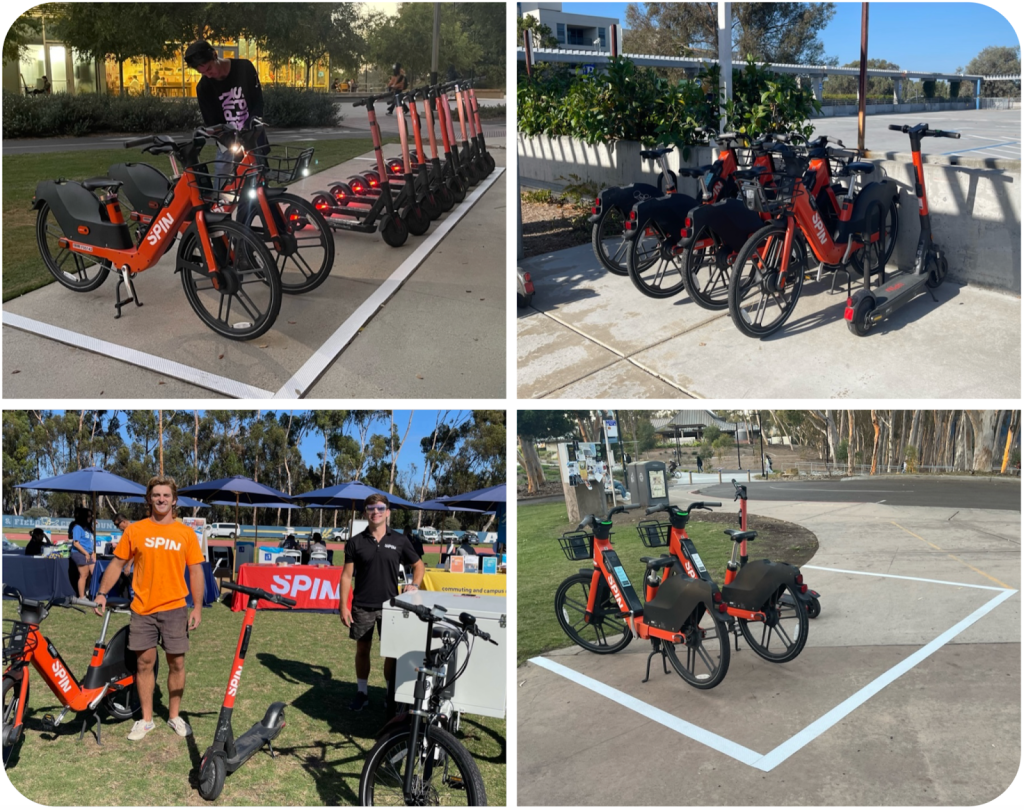
DiscoverBike was not the only bike share program in San Diego County–its patchwork of cities means different operators and service models have also graced the region. Most recently, the City of Encinitas had a bike share program operated by BCycle, but it too was shut down because the operator couldn’t make the costs pencil out. Today, San Diego’s only micromobility options are isolated to the college campus. The last holdouts from the hodgepodge of dockless operators are UC San Diego and San Diego State University, who have each contracted with Spin. At UC San Diego, approximately 800 scooters and 24 bikes exist at important campus locations. While technically a dockless system, bikes and scooters must be parked at one of 700 designated locations on campus. These bikes and scooters must be located through the Spin app. San Diego State’s partnership with Spin functions in a similar way.
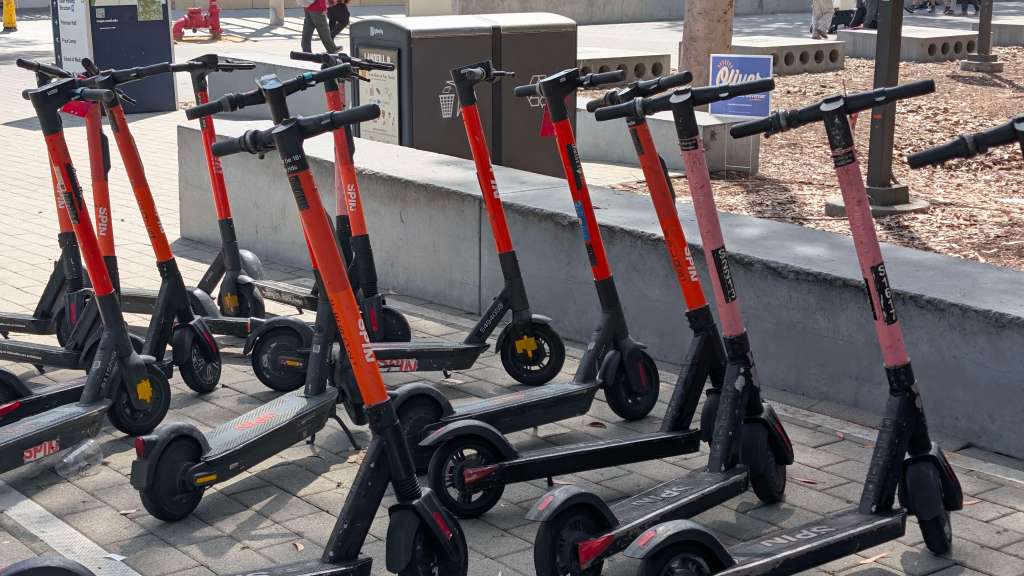
San Diego writ large, however, remains one of the only large cities in the United States not to have any form of citywide rentable micromobility, which could also be an important measure to accomplish the goals outlined in the City’s 2022 Climate Action Plan, which sets an ambitious goal of 10% bicycle modeshare for all daily trips by 2035.
While DiscoverBike faced many problems of its own creation, they were surely compounded by San Diego’s piecemeal bicycle infrastructure. However, San Diego’s Bicycle Master Plan, last updated in 2013, is currently being updated again. As recently as April 2026, San Diego’s Mobility Board sent a letter to the Mayor asking the city to prioritize reimplementing bikeshare, placing it back in the public discourse.
Since the first plan’s implementation, numerous bicycle projects have been implemented. The 30th St Bikeways, Hillcrest and Bachman Place bikeways, and many others have been constructed in recent years by both the City of San Diego and its partners at SANDAG. In a way, bike infrastructure in San Diego is a bit of a chicken-and-egg. Political will for improved bike infrastructure is weak, and unfortunately San Diego remains a city in love with its cars. But as its bike infrastructure continues to improve and become more connected, cycling can only become a more popular and appealing mobility option.
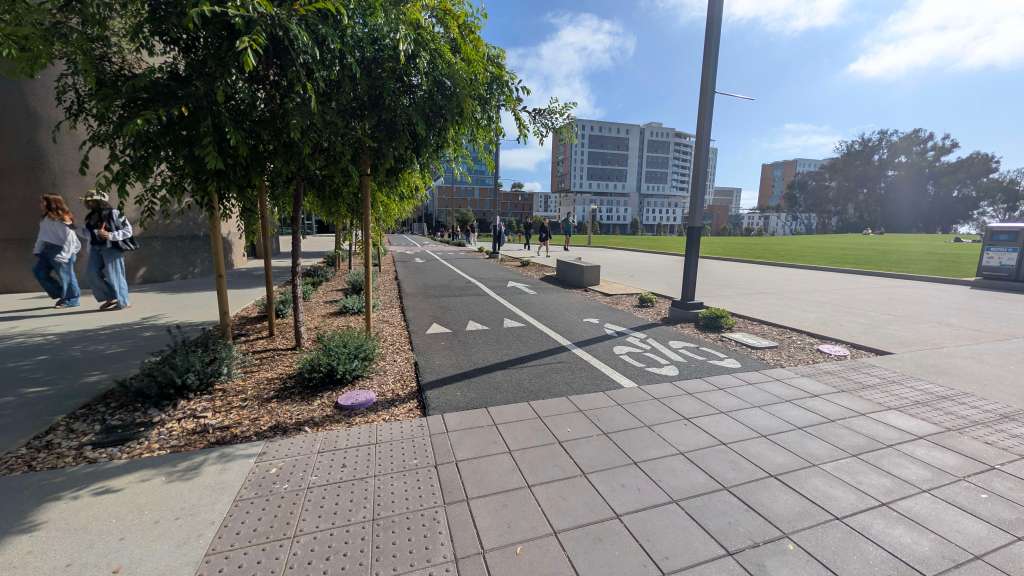
There’s also the question of whether to choose a dockless or docked system. While dockless systems provide more freedom in mobility (and eliminate the burden of having to maintain charging docks), they also mean micromobility vehicles end up spread throughout a service area. Maintaining a system of docks means that bikes can be found in a predictable location. They also cut down on thefts. UC San Diego’s model provides a middle ground which could be emulated – fixed locations which could be adopted without having to maintain docking stations might be a flexible middle ground.
A future micromobility system will face difficult choices, yes, but I would contend that a well-designed micromobility system would do wonders for San Diego. A new bikeshare system has enormous appeal because it can enable connections from the Trolley system to important destinations. While an excellent system, the San Diego Trolley has not captured the tourist market very well. There is no trolley service to the beach, Balboa Park, or important neighborhoods such as Pacific Beach, uptown (North Park/Hillcrest), or the airport. While bus service exists as an alternative, many tourists and even some San Diego residents hesitate to learn the bus system, plus, using transit usually takes longer than biking would. Micromobility could enable quicker first-and-last-mile connections between these important destinations, especially as improved bicycle infrastructure continues to be implemented.
Of course, there are numerous risks and considerations to be had. Safety is one such concern, but maintenance considerations, dock requirements, and vehicle distribution burdens should not be discounted. As bicycle use becomes more normalized, safety issues will be reduced and can be mitigated. For example, the city could implement a helmet program and improve traffic enforcement for both private automobiles and bicycles.
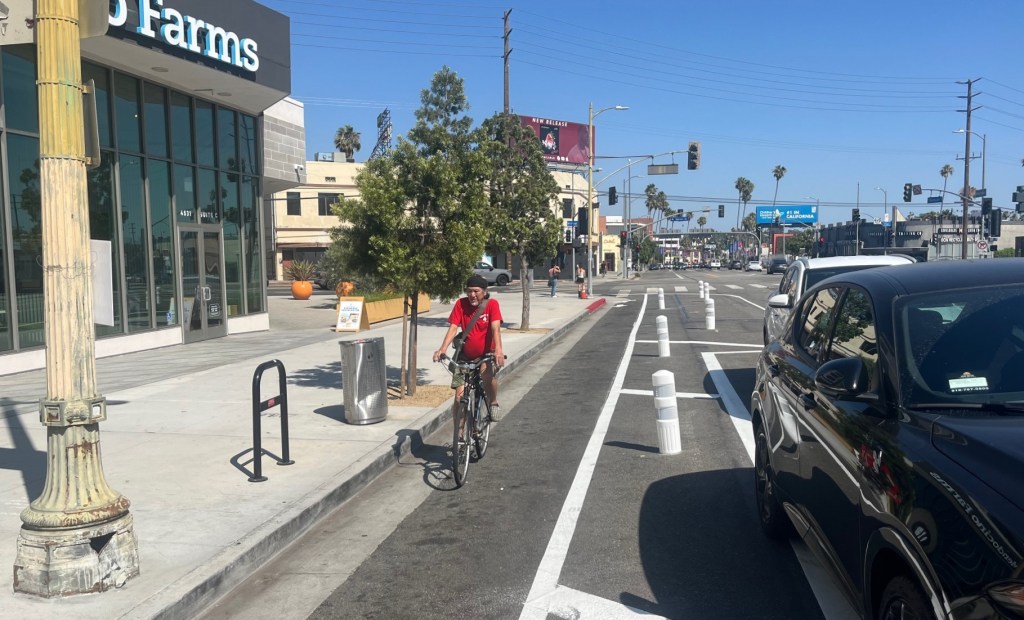
There’s also the problem of theft and maintenance. Most bikeshare bikes are designed to be resilient to wear and tear, but they often sit in the sun, so it’s not unusual for them to be in poor condition. The maintenance-resilient design comes at the cost of ease of use–DecoBike’s vehicles were made of a heavy steel frame and had an internal three-speed hub which was inadequate for getting up to speed or over hills. This meant that even modest hills could be a problem for human-powered cycling. A good micromobility system should consider an appropriate ratio of familiar bicycles and nimbler scooters, as well as whether to use electric boosting systems or pedal-powered cycling, a split mastered by Metro Bike Share in Los Angeles.
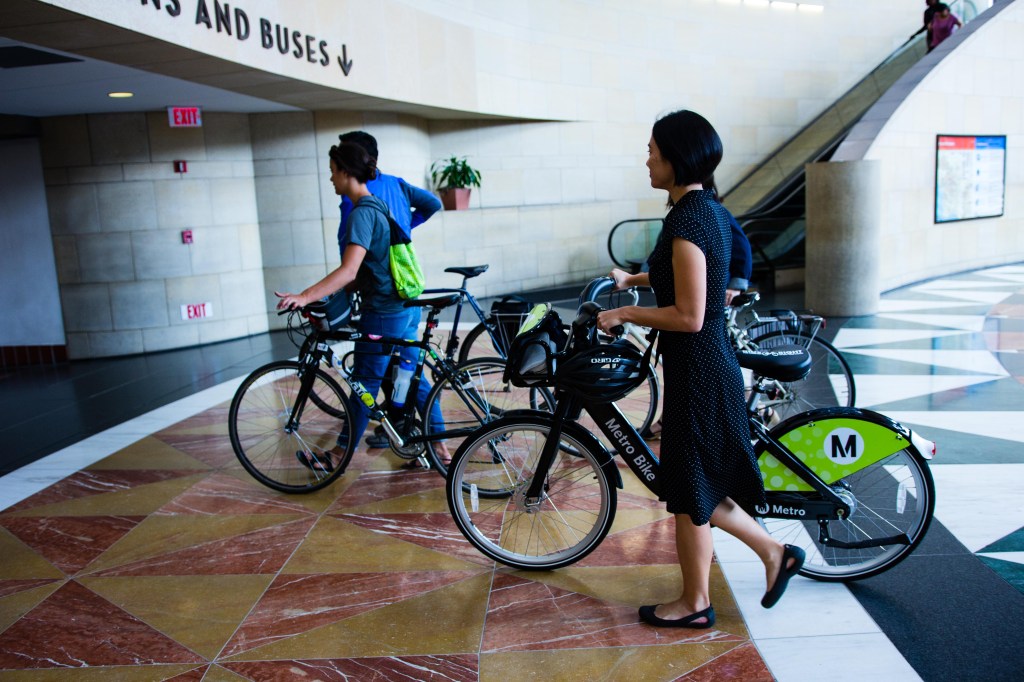
As a city, we should take advantage of our good topography, ideal weather, and strong tourist market to put a dent in car travel with a strong active transportation system. A successful bikeshare or scootershare fleet, implemented properly, could achieve this. As the City seeks to achieve its ever more ambitious climate and active transportation goals, maybe it’s time to give this old idea a second chance?

Streetsblog has migrated to a new comment system. New commenters can register directly in the comments section of any article. Returning commenters: your previous comments and display name have been preserved, but you'll need to reclaim your account by clicking "Forgot your password?" on the sign-in form, entering your email, and following the verification link to set a new password — this is required because passwords could not be carried over during the migration. For questions, contact tips@streetsblog.org.