Op/Ed: Oil Shocks Will Keep Coming. High-Speed Rail Can Boost Our Resilience.

Alan Minsky is the Executive Director of Progressive Democrats of America and a resident of California.
If and when oil once again moves freely through the Strait of Hormuz, there is little doubt that global energy prices — and America’s security — will continue to be subject to the whims of profiteering oil giants and foreign dictators.
That is why it is so vital that the next Governor of California continues the work underway to protect the state from the economic consequences of future energy shocks.
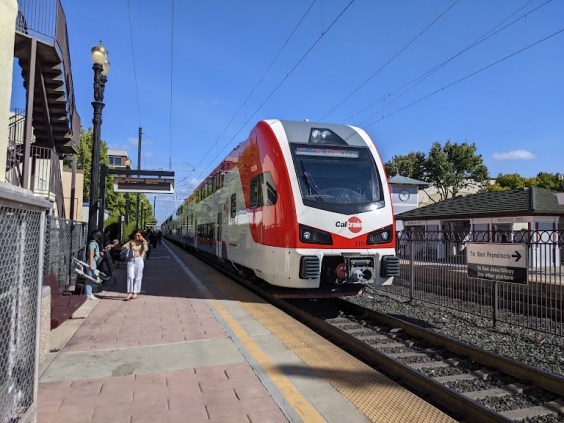
California is steadily building a new economy that runs on locally produced electricity and is connected by a world-class high-speed rail system. California High-Speed Rail will run on electric power and won’t require fossil fuels to operate. According to California state transportation plans, the bullet train will form the spine of a modern statewide transportation system that will include electric vehicles and trucks, electric buses and electrified regional and commuter trains.
California is not alone in its quest to electrify everything. China is aggressively building an “electrostate,” according to a recent Washington Post report. Along with massive EV, solar and wind production, over the past twenty years China has built over 30,000 miles of electric high-speed rail — the largest bullet train network in the world. Even though it remains the world’s largest oil and natural gas importer, China’s economy is becoming increasingly cushioned from global oil price shocks.
China’s vast high-speed rail network has provided highly efficient and popular commuting options for its workforce. China’s first high-speed rail line, the 72-mile Beijing-Tianjin Intercity Railway, was opened in 2008 and carries workers at speeds of up to 217 mph between China’s second and eighth-largest cities. During rush hour, trains arrive every 3 minutes. Between 2008 and 2023, the line carried 340 million passengers. Imagine the enormous energy use — and traffic jams — if those riders had commuted every day in their own cars.
More than ever, Californians deserve an option like this. With the future of the Strait of Hormuz in play, crude oil prices continue to fluctuate well above pre-war levels. Prices at the pump have hit Californians hard, averaging well above $5 a gallon—the highest in the nation—and reaching $6 a gallon or higher in some parts of the state.
In California’s “electrostate” future, high-speed rail will provide fast, clean and affordable commuting options between the Central Valley and Silicon Valley, San Diego and L.A., and more, making it far easier to live in more affordable parts of the state while commuting into major job centers.
The high-speed rail system will also serve as a renewable energy producer. The project is building its own solar farms and battery storage systems that will provide enough energy to both power the bullet trains and feed excess clean energy into the state’s grid during the summer months. If there are blackouts caused by heatwaves, California’s high-speed trains will keep running while the high-speed rail stations will serve as cooling centers and electric vehicle charging stations.
Though polls show Californians strongly support the project (a UC Berkeley-Politico poll found that 67% of state voters favor continuing construction, while only 33% oppose it), progress has undoubtedly been slowed by a lack of stable funding and byzantine federal and state regulations. But last year the state Legislature approved a $20 billion investment that will allow the California High-Speed Rail Authority to finish the initial segment in the Central Valley and begin issuing bonds and attracting private dollars for extensions into major metro areas.
The system’s first tracks will be laid this year and talks are underway to secure deals with private investors.
Other regions across the country are now seeing the value of the high-speed, electrostate strategy. California is creating a blueprint for how America can prepare for a volatile geopolitical future that will not end with the war with Iran. As Californians prepare to choose their next Governor, it is imperative that we select someone who fully understands this farsighted plan and will accelerate it, starting on Day One.

Read More:
Streetsblog has migrated to a new comment system. New commenters can register directly in the comments section of any article. Returning commenters: your previous comments and display name have been preserved, but you'll need to reclaim your account by clicking "Forgot your password?" on the sign-in form, entering your email, and following the verification link to set a new password — this is required because passwords could not be carried over during the migration. For questions, contact tips@streetsblog.org.