Talking Headways Podcast: Fixing Mobility as a Service

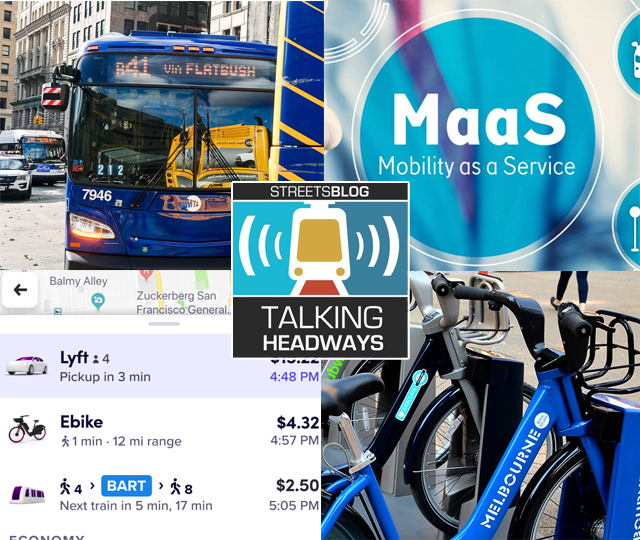
This week we’re joined by David Hensher, director of the Institute of Transport and Logistics Studies at the University of Sydney. David chats about the failed concept of “Mobility as a Service,” which aimed to unite disparate transportation modes under a single service. Hensher proposes a new way to reduce travel and emissions called “Mobility as a Feature.”
The text of a portion of the interview is available below. Click here for a full, unedited transcript.
Jeff Wood: First, let’s define Mobility as a Service. MaaS, as I’ll call it, I guess, the rest of the show. What is Mobility as a Service? At least in theory.
David Hensher: It’s an ecosystem where you can integrate, in a very simple way through a digital platform, information that gives you a number of ways by which you could travel. It provides a one-stop convenience solution to traveling. But on top of that, it also provides incentives to maybe get you to consider more sustainable modes of transportation in your overall travel patterns.
It is more than a trip planning app because a trip planning app basically gives you information which is great, like Google Maps. MaaS is supposed travel behavior in a sustainable way that’s aligned with societal goals like reducing emissions and reducing congestion and so on. And if it doesn’t do that, the MaaS as a digital platform may not be of great value to bring the sort of outcomes that we might aspire to as a society.
Jeff Wood: What are the limitations of MaaS as it’s being implemented now?
David Hensher? (17m 32s): One of the problems we’re finding is it’s become more of what Sampo Hietanen from Whim says is an “ego”-system rather than ecosystem. The suppliers of transportation are showing limited interest because they don’t think there’s any financial attractiveness to the actual customer.
When it comes to government, which is mainly the provider of public transport, they seem to be sotted with the idea that somehow MaaS is going to change travel behavior and get lots of people using public transport. But, they say, “We’re not gonna subsidize it anymore than we do at the moment through MaaS.”
We’re not convinced that having an app to know what’s going on is necessarily gonna be enough to make a difference, to change your behavior because many people are creatures of habit and the changes in service levels that are gonna be required are not enough to make them go variety seeking and change their behavior. It will at the margin but it won’t make much of a difference. The biggest issue is who’s going to be the aggregator or the broker in making this happen and who’s gonna provide the financial incentives to support switching behavior.
I have to say that in transportation it’s levels of service that really determine your choices, not cost. MAAS can only offer financial incentives. It can’t offer unique ride-share services or unique public transport to people who subscribe to MaaS.
So at the moment it’s stuck in a hole, it’s niche, it’s not likely to be scalable as it’s being interpreted at the moment. So, the question is what do we need to do to break that nexus so it has a chance? And I think it’s been pretty much doom and gloom to date with a lot of people getting excited about it, but not much being delivered.
Sampo Hietanen, my co-author, was really the pioneer in this stuff through whim in Finland. He’s basically said it’s just not working. He’s relied on venture capital for a long time and now he’s run out and he still hasn’t developed a profitable market.

Streetsblog has migrated to a new comment system. New commenters can register directly in the comments section of any article. Returning commenters: your previous comments and display name have been preserved, but you'll need to reclaim your account by clicking "Forgot your password?" on the sign-in form, entering your email, and following the verification link to set a new password — this is required because passwords could not be carried over during the migration. For questions, contact tips@streetsblog.org.