Metro Board Approves Orange Line BRT Improvements

This morning, Metro’s board of directors voted to move forward with improvements to the Metro Orange Line Bus Rapid Transit (BRT) line, scheduled to break ground in fiscal year 2019. The project, described below, will improve speed and reliability for the popular cross-valley bus line. It will also lay the groundwork for later conversion to light rail, currently scheduled for the 2050s.
The board approved the staff recommendation accepting the design features of the project and determining that it is statutorily exempt from full environmental studies under California Environmental Quality Act (CEQA) guidelines. The CEQA exemption is on the grounds that California exempts a project that will “increase… passenger or commuter service on high-occupancy vehicle lanes already in use.”
The Orange Line improvements will include:
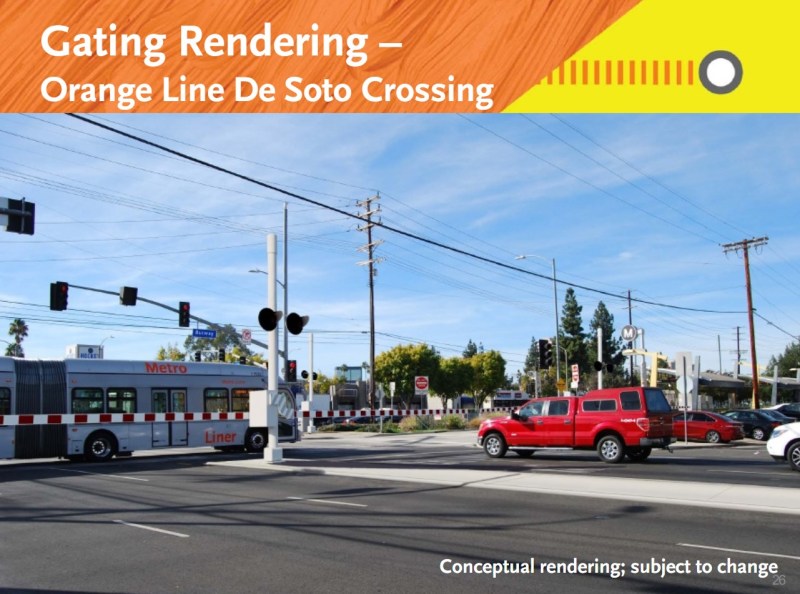
- railroad-type traffic gates at up to 35 at-grade crossings
- grade separation (bridges) over Van Nuys Boulevard and Sepulveda Boulevard – both bridges will include aerial stations and bike paths
- closure of Tyrone Avenue where it intersects the Orange Line (due to ramping up for the Van Nuys bridge)
An earlier proposed project design had featured a single mile-long bridge from Van Nuys Blvd. to Sepulveda Blvd. According to the staff report, that extended bridge was deleted from the plans in favor of two “more cost-effective and efficient” smaller bridges.
The use of railroad-type gate arms to block car traffic for BRT would apparently be the first use of this feature in the United States, possibly in the world. Metro staff cite a precedent where the city of Fort Collins, Colorado, uses somewhat similar gate arms. Fort Collins uses gates perpendicular to their busway. The gates there span across the busway in order to keep cars from turning onto the bus-only street. Metro’s planned gates will operate like railroad gates, parallel to the busway. While buses are present, the gates will block car traffic from illegally intruding into the busway.
The Measure M expenditure plan has $286 million designated for Orange Line improvements, with a groundbreaking planned for fiscal year 2019 and the opening in FY2025. The project received an additional $80 million Local Partnership grant funded by state gas tax (S.B.1) revenue, though this may be in jeopardy if the tax is repealed.
This fall, Metro is planning to install pilot Orange Line gates to test and verify activation for BRT. The location for the pilot will be a small L.A. City Bureau of Street Services access road, just east of Sepulveda Boulevard, south of Delano Park.
Streetsblog has migrated to a new comment system. New commenters can register directly in the comments section of any article. Returning commenters: your previous comments and display name have been preserved, but you'll need to reclaim your account by clicking "Forgot your password?" on the sign-in form, entering your email, and following the verification link to set a new password — this is required because passwords could not be carried over during the migration. For questions, contact tips@streetsblog.org.