Study: People Want to Pay for Parking Separately From Rent
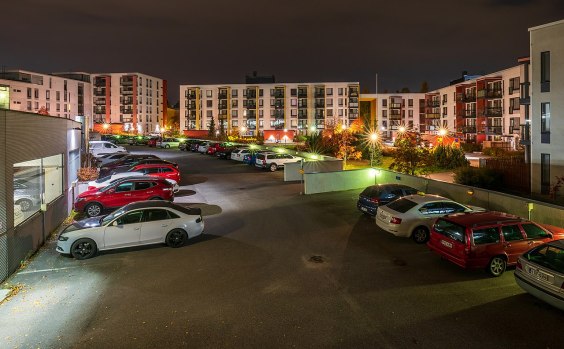
Parking reform advocates, backed by urban policy researchers, have long argued for “unbundling” the cost of parking from residential leases, rather than including it in the cost of rent. This is usually so that households with fewer cars don’t get stuck paying for parking they don’t need. According to new research, however, the policy is also popular among those with more cars than average, who would often happily pay for the extra spaces they need.
Earlier research pioneered by UCLA professor Donald Shoup points to the “high cost of free parking” in all facets of life, including rental housing agreements. Past studies have noted a 20 percent parking premium on apartments in Portland, OR an additional $200 dollars per month in Los Angeles, and an average of $1,700 per year for structured parking across the U.S. Advocates have pushed for unbundled parking mainly to eliminate hidden subsidies for drivers and help lower costs for those who don’t drive or who own fewer cars.
But a recent study in Melbourne, Australia, suggests that even those who benefit most from parking subsidies would rather be given the chance to pay for more than what they’re allocated.
Out of 424 respondents—all living in apartment buildings—more than one-third said their available parking does not match their need, with 15 percent having too much parking and 20 percent having more cars than parking spaces. More than 40 percent of respondents also say they were receptive to paying separately for parking. Around 23 percent would opt for fewer parking spaces and 20% would opt for more. The researchers note, “living in a household with two or more cars increased the odds of being receptive to unbundling off-street car-parking by over three times.”
The researchers point to some potential risks of unbundled parking that might need to be addressed. For example, residents might simply park on the street if curbside parking isn’t well-managed.
Overall, however, their study paints a promising picture of moving toward a system where the costs of parking are allocated more fairly.
Editor’s note: This article originally appeared on State Smart Transportation Institute and is republished with permission.
Streetsblog has migrated to a new comment system. New commenters can register directly in the comments section of any article. Returning commenters: your previous comments and display name have been preserved, but you'll need to reclaim your account by clicking "Forgot your password?" on the sign-in form, entering your email, and following the verification link to set a new password — this is required because passwords could not be carried over during the migration. For questions, contact tips@streetsblog.org.